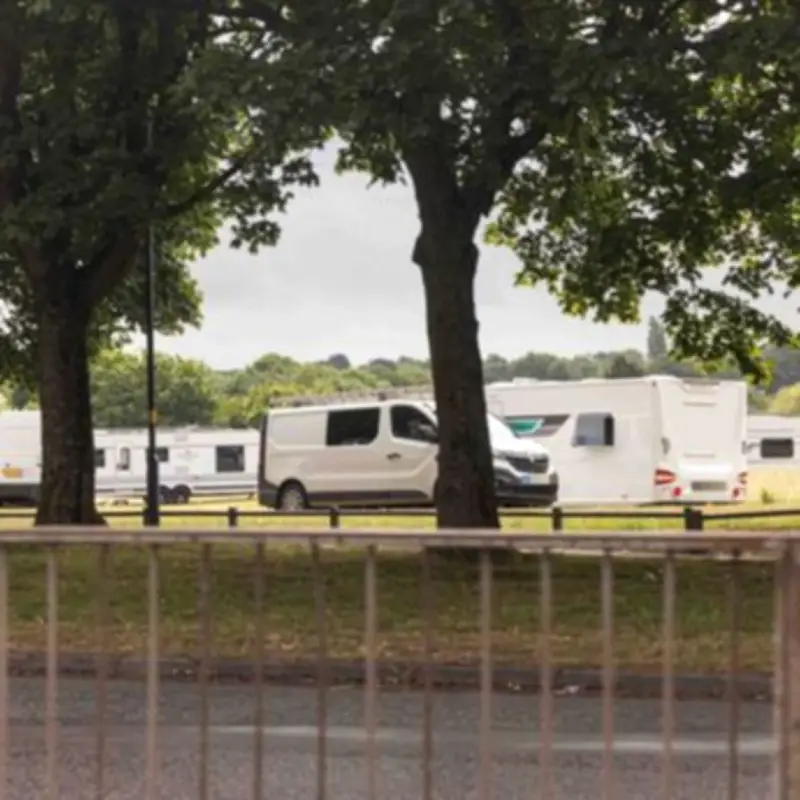
Birmingham City Council has confirmed that its pilot programme to introduce temporary sites for travellers is 'not progressing'. With unauthorised encampments in Birmingham's green spaces leading to clean-up costs and disruption, the council had previously expressed its intention to launch a 'negotiated stopping' programme to improve the situation. This would have involved allowing the travelling community to use unused pieces of land in the city for 'short-term stays'.
The council was considering this move due to ongoing issues with its small number of permanent transit sites, which are typically where travellers would be directed. One such site, located on Proctor Street, has suffered repeated damage and vandalism in the past. The 'negotiated stopping' pilot had already been delayed before, causing frustration among councillors over what they described as 'glacial progress' of the plans.
This week, the council revealed that the pilot will not proceed because 'it has not been possible to identify enough suitable sites'. A council spokesperson stated: 'Throughout 2025/26, council officers were involved in the process for identifying and reviewing the suitability of sites within council ownership for a 'negotiated stopping' pilot programme for travellers within Birmingham. However, after a thorough search, it has not been possible to identify enough suitable sites that meet the requirements for a negotiated stopping programme. This includes geographical spread across the city, suitable size of site(s), accessibility, and impact on neighbouring amenities. As a result, it has not been possible to progress with consultation on any proposed sites or the pilot programme for negotiated stopping.'

The spokesperson added that the council is currently reviewing its Local Development Plan for Birmingham, which includes a policy to 'consider future planning applications for both transit and permanent sites to meet the needs of Gypsies, Travellers and Travelling Showpeople'. They also noted: 'The West Midlands Spatial Development Strategy (SDS) will look at the wider needs for plots and pitches across the West Midlands area and how these needs might be met and apportioned in each local authority area. An initial consultation on the SDS is expected in late 2026.'
'We're working closely with communities and partners'
Earlier this month, Birmingham City Council announced that its Gypsy and Traveller service is now led by a dedicated team focused on improving engagement and building trust. The council has also been collaborating with partners, including West Midlands Police, education services, housing providers, and charities, to 'improve outcomes for GRT communities'. Additionally, the council has reopened its transit site on Proctor Street to provide a 'safe and managed space for those travelling through the city'.
Paul Langford, executive director of City Housing at Birmingham City Council, said: 'This is an exciting opportunity to create real change. We're working closely with communities and partners to better understand needs, challenge misconceptions, and build a service we can be proud of. Building trust is key. We're starting to see positive changes, with partners working more closely together and residents feeling more confident in sharing their experiences with us.'