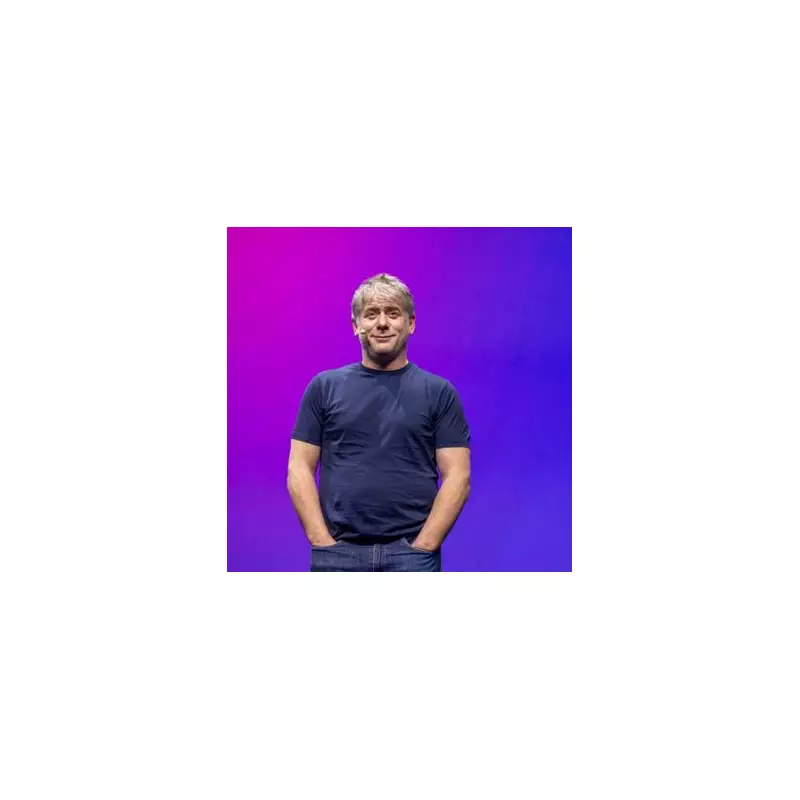
Greg Jackson, the chief executive of Octopus Energy, has declared that selecting London as the venue for Kraken's highly anticipated £7 billion initial public offering would be a straightforward decision—but only if the UK can demonstrate a sustained reversal in capital flows and attract significant new investment into its markets.
A Clear Preference for London Listing
In his strongest indication yet that the company might favour London over New York for the eagerly awaited listing of its technology subsidiary, Jackson revealed his preference for launching on the London Stock Exchange. This would keep his innovative tech company firmly within the UK's financial ecosystem.
"I'd really love it to be in London," Jackson stated in an interview, adding: "If we start to see the capital coming back into the market, if we start seeing the direction reverse, it becomes a no brainer."

Background to the Potential Flotation
Last December, Octopus Energy sold a stake in Kraken to new investors, securing an $8.65 billion valuation and setting the stage for a possible public offering within the next few years. Since then, an intense competition has emerged between London and New York over which financial centre will secure this landmark flotation.
Losing out on Kraken's market debut would represent a significant blow to London's reputation as a premier global exchange, exacerbating years of lacklustre performance and a shortage of new listings. Jackson previously warned ministers and LSE executives that Kraken's management might be compelled to choose New York unless the UK demonstrated greater urgency and reform.
Regulatory Challenges and Investment Hurdles
Jackson criticised what he termed "Byzantine rules" that discourage pension funds from supporting UK equities and cash-strapped scale-up enterprises. For years, British entrepreneurs have struggled to secure the funding needed to grow from start-ups to IPO-ready businesses, often turning to overseas investors or facing acquisition by American competitors.
Neither of the primary backers in Kraken's December funding round—Fidelity International and the Ontario Teachers' Pension Plan Board—are UK-based, raising concerns that new investors might push for a foreign listing.
Government Intervention and the 'Hustle' Factor
The entrepreneur's latest comments coincided with his company securing a further £25 million investment into Kraken from the British Business Bank. This taxpayer-funded initiative is part of broader regulatory reforms designed to help UK companies expand domestically without seeking overseas capital.
Business Secretary Peter Kyle championed the Kraken stake as evidence that ministers were demonstrating the necessary "hustle," describing it as the "biggest and riskiest equity investment from the BBB" and promising similar multimillion-pound initiatives.
"This is a faster, bigger, bolder and riskier approach from government," Kyle stated. "I am behind this. I am there to shoulder the risk... We need to have more confidence in private investment... because we are the start-up founder of Europe."
Ensuring Britain Has 'A Seat at the Table'
Jackson suggested the BBB's investment would ensure Britain maintains influence when listing decisions are made. "At the moment we've only got one British investor," he noted. "All the rest are global."
When asked if this investment demonstrated the hustle he had advocated, Jackson responded: "It's a great example of it. If you look at the fact we've seen this decline from 40 per cent of pension assets being deployed in the UK to four per cent, you only reverse that by changing rules. And you change rules by relentlessly identifying what should be done, and pushing it."
Beyond Regulation: The Need for Entrepreneurial Energy
The Octopus founder emphasised that alongside regulatory work, Britain needs to better channel entrepreneurial excitement—what he called "animal spirits." He pointed out that when Kraken announced its initial funding round, the New York Stock Exchange celebrated by displaying the company's name in Times Square and broadcasting announcements across its trading floor.

Jackson called on the LSE to champion success stories "publicly and loudly," suggesting that major capital raises and IPOs in London should be prominently displayed across Piccadilly Circus.
"The big thing is, of course, companies have got a huge responsibility to this themselves," he added. "By stimulating these conversations, we have the opportunity to create the noise I grew up in the 1980s during that wave of that strike privatisation. And they were news events as much as [they] were financial events. Let's start trying to recreate that."