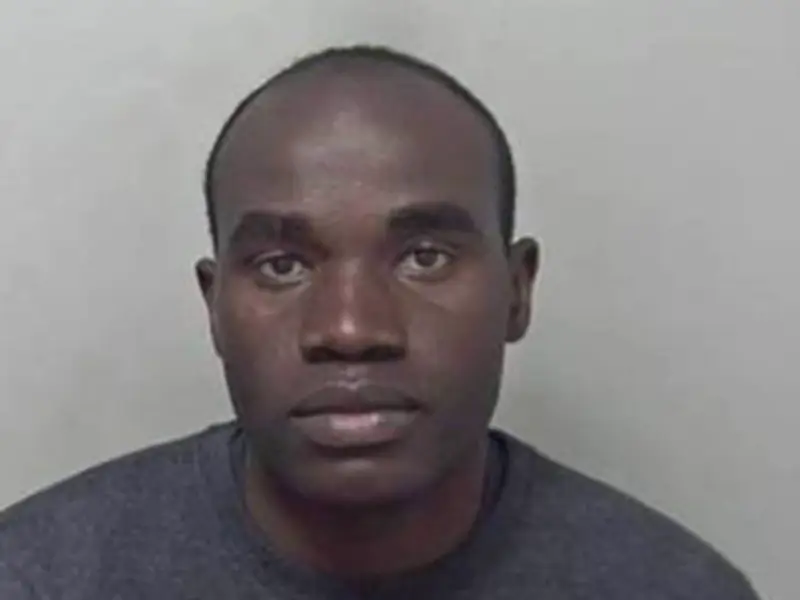
Two migrant boat pilots who steered dangerously overcrowded dinghies across the English Channel have been jailed, becoming the first offenders sentenced under tough new laws targeting those who endanger lives at sea.
Sentences Handed Down at Canterbury Crown Court
Afghan national Mohammad Tajik, 32, was handed a two-year sentence at Canterbury Crown Court on Wednesday for a perilous crossing on January 17. Sudanese national Alnour Ali, 26, was jailed for 27 months for a separate trip on April 9.
Judge Simon James blasted the pair for risking lives, saying it was "obvious" how dangerous it was to attempt to cross "one of the busiest shipping lanes in the world" in the craft.

"The inherent dangers of seeking to navigate one of the busiest shipping lanes in the world in a vessel which was never designed to undertake such a journey are obvious," the judge said during sentencing. "However, the risk of death and serious injury are significantly increased when boats have no navigational aids, are overcrowded, and those on board are not adequately equipped with safety equipment."
New Border Security Legislation
Endangering others during a journey by sea to the UK is an offence that came into force in January as part of new border security legislation. Tajik was the first to be convicted under the new law, having pleaded guilty at the same court on April 21.
Prosecutor Daniel Bunting said: "He was piloting and let go of the tiller with consequences – no one was in control. He had no experience or knowledge of piloting a boat; he was asking others to look on YouTube for assistance."
He added that the Crown's case against him related to the conditions, including the very cold temperatures in January. Footage shown to the court depicted an overcrowded boat with people sitting around the edge, "which did not appear to be a safe way of travelling," Mr Bunting said.
In a police interview, Tajik admitted piloting the boat but said he did so to stop it going round in circles shortly before interception around 12:15 pm. Mr Bunting told the court that in both cases, there was a lack of safety equipment expected for such a crossing.
Details of the Second Case
For Ali, drone footage was played in court showing the boat with 74 people on board, where Ali is seen driving while wearing a pink hat. Passengers are seen straddling the side of the boat, with some legs dangling in the water.
A French boat came alongside the dinghy and handed out life-jackets, at which point Mr Bunting said Ali had the opportunity to stop. "The Crown says there was a clear and obvious risk that, being heavily overcrowded, a wave or gust of wind could have capsized the boat," Mr Bunting said.
The boat left the French coast at 7:24 am and was intercepted several hours later just past 10 am. It was the same day that separately two men and two women drowned in the Channel. Ali's charge was previously referenced by the National Crime Agency in relation to this and subsequently reported by the press, the court heard.
Defence Arguments
Ali's barrister, Paul Hogben, said the press release caused a "great deal of public hostility" which has had a "punitive effect" on Ali, his reputation, and "any risk to his safety in the future." In court, Judge James made clear that Ali is not being sentenced in relation to those four deaths and said misinformation was "unhelpful."
He said: "It is very important to make it absolutely clear you had no knowledge of, let alone responsibility for, others being injured or killed. I am not being invited to sentence you on that basis."
Barrister Paul Hogben told the court that Ali was of good character and was ordered to steer the boat by armed people traffickers when he embarked. He was born in a village in the Darfur region of Sudan, where he and his parents, three brothers, and six sisters were forced to flee their home during the civil war.
"Because of the war in Sudan, he has had no contact with family in over a year; he does not know if his parents or siblings are alive or dead," Mr Hogben said. "He has not previously attempted to cross the Channel, he was not paid for piloting the boat, and he was ordered to steer the boat by armed people traffickers."

The court also heard from barrister Niall Doherty, defending Tajik, that the father-of-one left Afghanistan after witnessing the Taliban shoot and kill his father and brother for refusing to put yellow powder in food served to soldiers in their restaurant, which they believed would have fatal consequences. Tajik feared he would also be targeted and fled to seek asylum, first trying in Greece where he was refused, before travelling on to Europe and the UK. Both have submitted claims for asylum since being in the UK, the court heard.