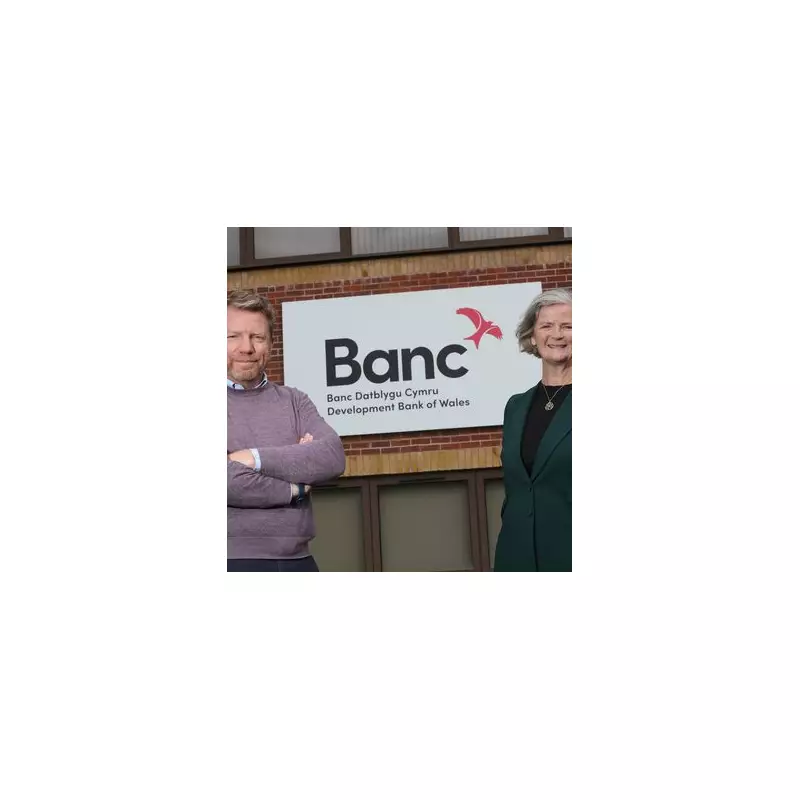
Celebrated by the First Minister as the "jewel in the crown of Welsh Government", the Development Bank of Wales is currently marking a significant milestone: £1bn invested since its creation in 2017. On the surface, this figure is impressive, supported by thousands of loans and claims of tens of thousands of jobs created or safeguarded across Wales.
However, a deeper examination of the data reveals a troubling disconnect. The bank's activity, while substantial in volume, is not building the transformative, high-growth economy that Wales desperately needs to secure its future prosperity.
The Problem with £1bn in Investments
The core issue becomes clear when the £1bn of investment is broken down. This capital has been spread across more than 5,000 individual investments, resulting in an average transaction size of just under £200,000.

This cautious approach mirrors the behaviour of a traditional high street bank, not a dynamic economic development institution with a mandate to transform the Welsh economy. While these smaller loans help individual businesses with short-term challenges, they are incapable of producing the productivity gains and global scaling that only high-growth firms can deliver.
Failing the Start-up and Tech Sectors
This structural weakness is starkly evident in the bank's support for new and innovative businesses.
- Start-up Support: Since its launch, the bank has funded 787 start-ups. With Wales producing over 20,000 new business registrations annually, this means the development bank reaches less than half of 1% of all new founders. This is a critically weak foundation for building a stronger entrepreneurial pipeline.
- Technology Funding: The bank highlights its backing of 292 tech ventures with £89m of its own capital, plus £196m in co-investment. In practice, this equates to just over £300,000 of development bank funding per company. This pales in comparison to major UK innovation hubs, where seed rounds often exceed £1m. In the 2024/25 financial year, only £8.2m went to early-stage tech ventures—a sum that would barely fund a single modest seed round in London or Cambridge.
A Lack of Exits and Strategic Impact
A healthy scale-up ecosystem is defined by successful exits, which recycle capital and attract further investment. The most revealing statistic from the Development Bank of Wales is its exit record: just 30 exits from a portfolio of 252 equity-backed businesses.
This astonishingly low number for an institution with a mandate to grow high-value businesses indicates a failure to cultivate genuine high-growth firms. The poor performance suggests that the high-risk function of venture investing might be better outsourced to professional venture capitalists who possess the necessary expertise and risk appetite.
Furthermore, the bank's claim to "fill the gaps left by commercial lenders" is undermined by its own data, which shows it often replicates the behaviour of high street providers. Many of its smaller deals could be handled more efficiently by a body like MicroLoans Ireland, which issued twice as many microloans last year with only 19 staff compared to the Welsh bank's 280 employees.
The conclusion is inescapable. The future success of the Welsh economy will not be built on the back of small, low-risk loans. Wales needs a development bank that is prepared to take bigger risks, make fewer but larger strategic investments, and back far more founders from the very beginning. Until its strategy and institutional culture are reformed to match the ambition of its entrepreneurs, Wales will continue to miss out on building the high-growth companies essential for tomorrow's economy.