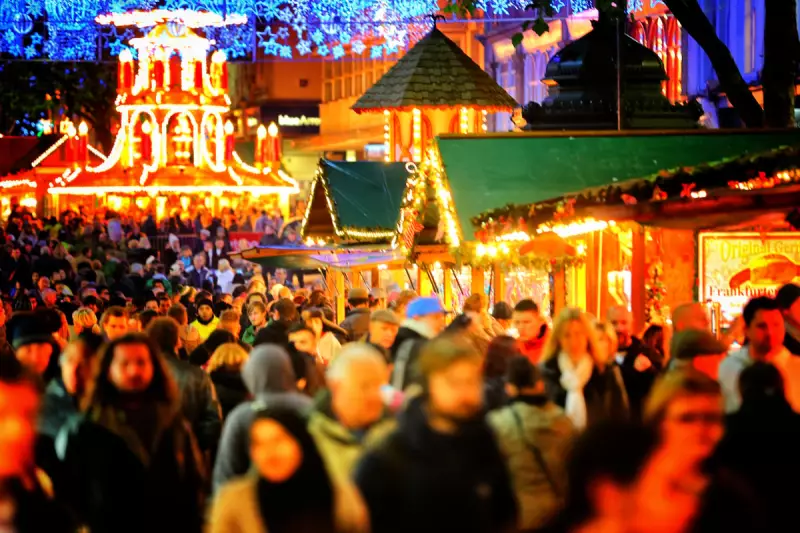
The transformation of Birmingham's city centre during the festive season represents one of the most remarkable urban success stories in modern British history. What began as a modest collection of German stalls has evolved into an economic powerhouse that fundamentally changes the city's atmosphere each winter.
From Post-War Trauma to Festive Celebration
The journey to establishing a German market in Birmingham was far from straightforward. The shadow of the Second World War loomed large over any potential German cultural presence in the city. Between August 1940 and April 1943, the Luftwaffe conducted 77 raids on Birmingham, resulting in 2,241 deaths and 6,692 injuries. The devastation extended to 12,391 severely damaged houses and 302 destroyed factories.
Dr Steve McCabe recalls the sombre atmosphere in Birmingham during the 1970s, particularly following the tragic pub bombings of November 1974 that claimed 21 lives. "The city had always had a short period of repose between the closing of shops and the influx of evening pub-goers," he notes, contrasting this with the vibrant evening economy visible today.

The Market's Humble Beginnings
The breakthrough came through an established relationship between Birmingham and Frankfurt, formalised in 1996. Kurt Stroscher, Frankfurt's director of festivals and events, proposed the novel idea of bringing a traditional German Christmas market to Birmingham. The first iteration in 1997 featured just 10 stalls in Victoria Square, but its immediate success convinced Birmingham City Council to expand the concept.
It took four years for the vision to properly materialise. In 2001, the market returned with 24 stalls, beginning its journey toward becoming the massive attraction it is today. The market has since almost trebled in size, drawing visitors from across the Midlands and beyond to enjoy glühwein, schnitzel, bratwurst, German beer and handcrafted items.
Economic Powerhouse and Job Creator
The economic impact of Birmingham's Frankfurt Christmas Market is nothing short of extraordinary. A five-year partnership deal between Birmingham and Frankfurt, operational since 2023, has secured the market's immediate future. The event now generates over £350 million for the city through direct spending at the market and secondary expenditure on accommodation, transport, meals and shopping.
Perhaps even more significantly, the market supports an estimated 7,000 jobs directly resulting from its annual operation. This economic benefit explains why German-style Christmas markets have become almost ubiquitous in major towns and cities across the UK during the festive period.
The Complex History of Christmas Markets
The tradition of holding markets in the lead-up to Christmas dates back centuries. Vienna claims the oldest market, granted by Duke Albrecht I in 1296 for a 14-day December fair. The Dresden Striezelmarkt (1434) and Nuremberg Christkindlesmarkt (1628) were among the first German cities to establish the Christmas market tradition we recognise today.
As Elizabeth Djinis explained in her 2022 Smithsonian article, these markets originally sold meat, baked goods and other festive commodities, typically located near churches with stallholders charged fees to generate revenue. A Frankfurt police order in 1869 strictly regulated trading periods and permitted only "genuine Christmas objects" including toys, Christmas trees and gingerbread.
The popularity of traditional German markets waned with the rise of department stores selling mass-produced goods, often relegating them to town outskirts. The irony lies in their revival during the 1930s, when the Nazi regime rehabilitated Berlin's Christmas market to the city centre as propaganda tool, creating an "experiential event" that attracted millions.
Dirk H.R. Spennemann and Murray Parker of Charles Sturt University note that the Nazis decreed all items sold should reflect national pride, transforming the markets from primarily mercantile operations to immersive festive experiences using garlands, glass balls and fairy lights.

A Lasting Legacy
Today, the abiding popularity of Christmas markets stems from our desire to immerse ourselves in nostalgia and an idyllic version of Christmas that may never have truly existed. Birmingham's Frankfurt Market represents this perfectly – a tradition with complex historical roots that has become an essential part of the city's festive identity.
The next time you enjoy an unfeasibly large bratwurst and German beer in Birmingham's city centre, take a moment to reflect on the remarkable journey that brought this German tradition to a city once devastated by Luftwaffe bombs – now united in festive celebration and economic prosperity.