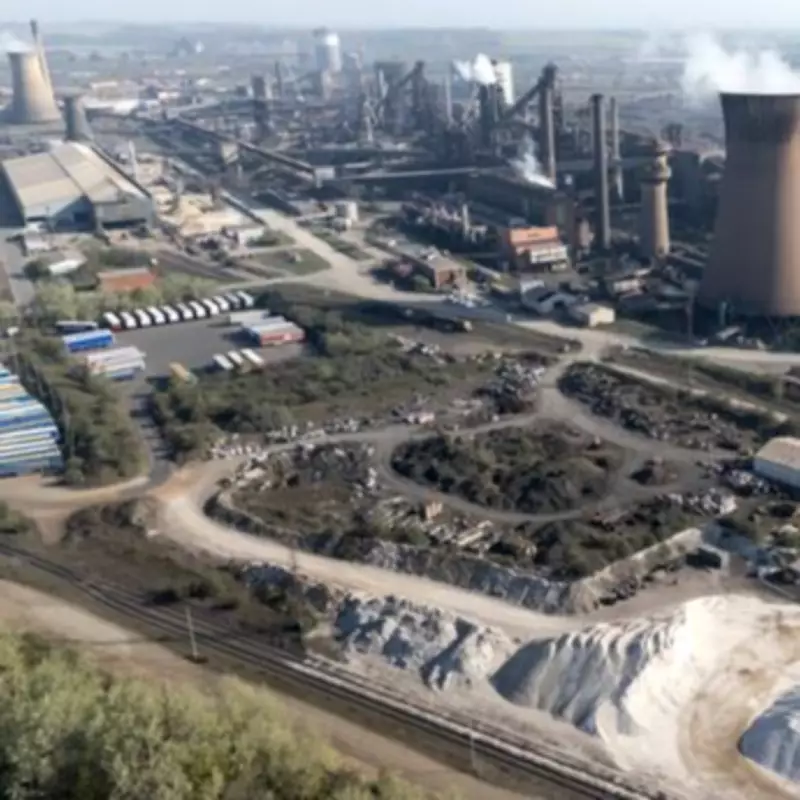
Government Nears British Steel Nationalisation to Save Scunthorpe Plant
The government is reportedly moving towards full nationalisation of British Steel, including its crucial Scunthorpe works, in a move that has been welcomed by industry body UK Steel. This significant intervention would provide much-needed certainty for the 3,500 workers employed at the Scunthorpe plant and others across British Steel's operations.
Legislative Action Under Consideration
According to detailed reporting in the Financial Times, the government is actively examining how to use legislation to take complete control of the steel operation. This development comes at a critical time for the industry, with the government having already spent substantial resources to maintain operations.
Earlier this month, it emerged that keeping the Scunthorpe blast furnaces operational costs approximately £1.3 million daily. These furnaces represent the UK's last two remaining blast furnaces, following the government's emergency intervention to rescue the plant in April last year using special legislation.

Financial Implications and Ownership Challenges
The business currently remains under the ownership of Chinese conglomerate Jingye, which has reportedly rejected a £100 million offer from the government in recent weeks. By June, the government is expected to have spent an astonishing £615 million just to keep production running at the facility.
This nationalisation push aligns with the recently outlined UK Steel Strategy, which details ministers' commitment to "take robust action" to protect domestic steel production capabilities. The strategy emphasizes the strategic importance of maintaining a viable steel industry within the United Kingdom.
Industry Response and Strategic Importance
Gareth Stace, director general of UK Steel, expressed strong support for the potential government intervention. "If this goes ahead, we strongly welcome the Government's decision to step in and secure the future of British Steel," Stace stated. "This would provide vital certainty for the workforce, the company's customers and the wider supply chain at a critical moment."
Stace emphasized that steel is a foundation industry and a recognised strategic national asset, noting that maintaining domestic production capability is essential not only for economic growth but also for national security and resilience. He expressed hope that this move would mark the beginning of a clear and credible long-term plan for British Steel.
Future Investment and Competitive Challenges
The industry leader called for a detailed investment strategy that supports a managed transition to low-carbon steelmaking, along with broader action to address the sky-high energy prices in the UK that are undermining the competitiveness of the steel industry.
"With the right backing and a supportive policy environment, the UK steel sector can be competitive, support thousands of high-quality jobs, and play a central role in delivering the UK's industrial and decarbonisation ambitions," Stace added, according to reports from Grimsby Live.
Government Position and Ongoing Discussions
A government spokesperson confirmed their commitment to safeguarding UK steelmaking, stating: "We have been clear that safeguarding UK steelmaking is our priority. We continue to engage with the owner to find a solution that protects workers, production and the national interest, and we will not comment further while discussions are ongoing."
Recent Positive Developments
In a separate but related development earlier this month, Grimsby Live reported that the Scunthorpe works is set to benefit from a record £70 million order from Nigeria. The contract for 120,000 tonnes of billet—to be used in modernisation of the country's ports—will see production at the plant ramp up significantly.
At the time of this announcement, British Steel CEO Allan Bell stated that the UK Export Finance-backed order was proof of British Steel's stabilisation and would bolster the long-term sustainability of the business. This positive development was greeted with approval by trade unions representing steel workers.