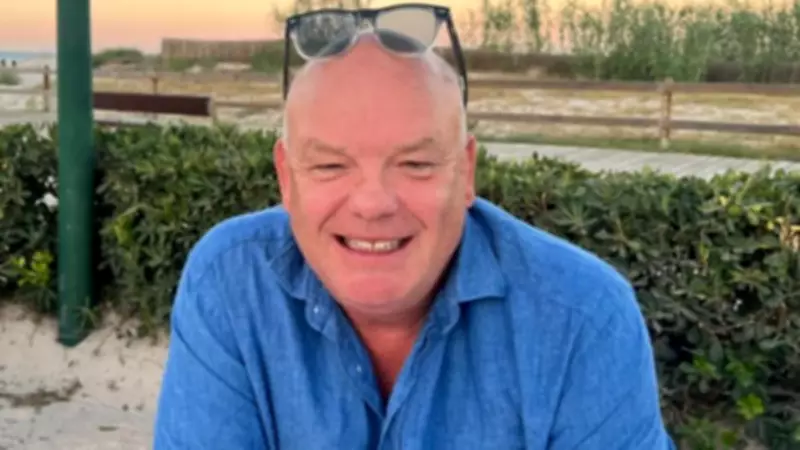
A hospice worker from Bristol is lacing up her running shoes alongside six friends to take on the AJ Bell Great Bristol Run 2026, raising vital funds and awareness for Brain Tumour Research after her husband was diagnosed with an incurable brain cancer. Debbie Linton, 59, head of retail for Longfield hospice in Gloucestershire, is preparing for the challenge on May 10 after her husband Dave Linton, 60, of 31 years, was diagnosed with a glioblastoma in November last year following a sudden onset of symptoms. What began as mild fatigue and memory lapses quickly escalated. Within days of suffering a severe headache, Dave, a senior programme manager, was referred for a scan and received a devastating diagnosis just 48 hours later.
Debbie said: “It came completely out of nowhere. One minute we were living our normal lives and within days everything changed. Hearing the diagnosis was awful, it felt like the ground had just disappeared beneath us. You don’t have time to process it, and suddenly you’re faced with something so huge and life-changing.”
Following a biopsy shortly after diagnosis, Dave began a three-week course of radiotherapy in December 2025, followed by ongoing chemotherapy treatment. He is currently on his fifth round, with one more cycle planned and regular scans to monitor progress. Encouragingly, recent results suggest the tumour has shrunk. Despite the challenges, Debbie and her family are determined to make the most of every moment while supporting efforts to find better treatments.

Debbie said: “We take each moment as it comes. That’s how we cope, just focusing on the here and now. Dave is incredibly strong and positive, and we’re determined to keep living life as fully as we can.” Debbie, who works in a hospice, initially questioned whether she could take on the physical 10k. But with encouragement from friends, she decided to go ahead. Debbie said: “I nearly pulled out because everything felt overwhelming. But then I thought, ‘No. I’m going to do this, for Dave and for everyone affected by brain tumours’. If we can raise awareness and funds to help others, then it’s worth every step.”
Brain tumours kill more men under the age of 70 than any other cancer, yet just 1% of the national spend on cancer research has been allocated to brain tumours since records began in 2002. The group has already raised more than £3,300, helping to fund essential research, such as that taking place at the Brain Tumour Research Centre of Excellence at the University of Nottingham. Scientists at the centre are using artificial intelligence, advanced brain imaging and genomic techniques to better understand glioblastoma recurrence and accelerate progress towards improved treatments.
Letty Greenfield, community fundraising manager at Brain Tumour Research, said: “Debbie’s story is a powerful reminder of how brain tumours can impact families and turn lives upside down. We are incredibly grateful to Debbie and her team for taking on this challenge during such a difficult time. Their determination to raise awareness and vital funds will help drive forward the research that is so urgently needed.” Brain Tumour Research funds sustainable research at dedicated centres in the UK. It also campaigns for the government and larger cancer charities to invest more in research into brain tumours in order to speed up new treatments for patients and, ultimately, to find a cure. The charity is the driving force behind the call for a national annual spend of £35 million in order to improve survival rates and patient outcomes in line with other cancers such as breast cancer and leukaemia.