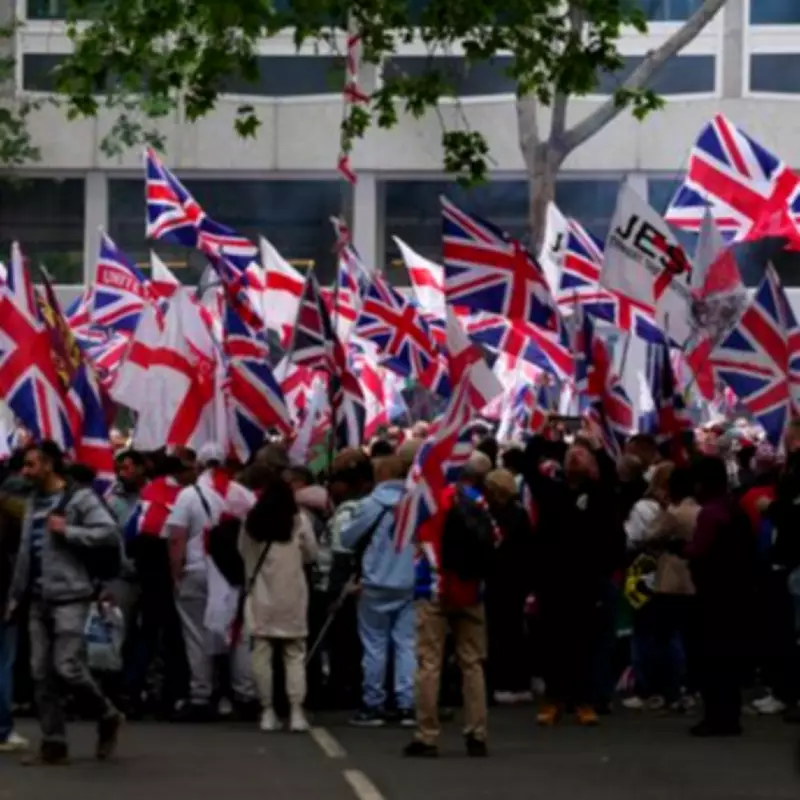
Two major protests in London on Saturday, May 16, are expected to cost the Metropolitan Police a staggering £4.5 million to police. The Unite the Kingdom rally, led by far-right activist Tommy Robinson, and the annual pro-Palestine Nakba Day rally will draw tens of thousands of people to the capital.
Protest Numbers and Policing Operation
Police estimate that 50,000 people will attend the Unite the Kingdom rally, while 30,000 are expected for the pro-Palestine demonstration. To manage the events, authorities will deploy armoured vehicles, police horses, dogs, drones, and helicopters. Around 4,000 officers will be on duty, with the Metropolitan Police aiming to prevent clashes between the two groups.
Deputy Assistant Commissioner James Harman confirmed that the policing operation will cost £4.5 million, with £1.7 million allocated to bringing in officers from other forces. The Metropolitan Police Federation noted that many officers have had leave cancelled and rest days withdrawn to meet the requirements.

Morning Gatherings and Reactions
Crowds began gathering early in the morning for the Unite the Kingdom march, with many waving Union flags. Meanwhile, pro-Palestine protesters in South Kensington were seen carrying Palestine flags and signs reading 'smash the far right'.
Tommy Robinson, whose real name is Stephen Yaxley-Lennon, posted on X (formerly Twitter) saying, "Today, we Unite The Kingdom and the West in the greatest patriotic display the world has ever seen." In contrast, Daniel Kebede, general secretary of the National Education Union, stated, "We’re marching today to show that we will not allow Tommy Robinson and the far right to divide our communities."
Sabby Dhalu, co-convener of Stand Up To Racism, warned that violence broke out during Robinson's previous Unite the Kingdom demonstration, which was one of the largest far-right street demonstrations in recent British history. She added that the far right is exploiting the cost-of-living crisis to stir up racism and blame migrants and refugees.
Government and Legal Responses
Justice Secretary David Lammy said authorities would act 'swiftly' if protests turned violent. In a post on X, he stated, "The Unite the Kingdom march organisers are spreading hatred and division. They do not reflect the Britain I’m proud of. Peaceful protest is a fundamental right and one I will always protect. But if protest turns violent, we will act swiftly, with extra court capacity in place."
Prosecutors have been issued new guidance to consider whether protest placards, banners, and chants viewed on social media may amount to offences of stirring up hatred. The Crown Prosecution Service (CPS) said the revised advice reflects 'the changing international context' and follows separate guidance on fast-tracking hate crime prosecutions.
Director of Public Prosecutions Stephen Parkinson emphasised that the guidance is not about restricting free speech but about preventing hate crime and protecting the public, particularly during heightened tensions.
Government Actions and Technology Use
The Government has blocked 11 foreign nationals, described by Prime Minister Sir Keir Starmer as 'far-right agitators', from entering the UK ahead of the rally. Those barred include Polish politician Dominik Tarczynski, Belgian politician Filip Dewinter, anti-Islam commentator Valentina Gomez, and Dutch activist Eva Vlaardingerbroek.
Visiting a Met Police command centre in Lambeth on Friday, Sir Keir said the Unite the Kingdom organisers were 'peddling hatred and division, plain and simple'. Met Commissioner Sir Mark Rowley noted that hate crime has escalated over the past two to three years.
Commander Clair Haynes confirmed that drones would monitor both protest routes for potential clashes. Officers in Wembley will monitor CCTV feeds from the FA Cup final to identify supporters travelling towards demonstrations. For the first time, organisers and speakers who break the law by using the events as a platform for extremism or hate speech will face prosecution.

Live facial recognition technology will be used for the first time in a protest policing operation, with cameras set up in Camden, an area not on the march route but expected to be used by many attendees. Biometrics and Surveillance Camera Commissioner Professor William Webster warned that police forces could face legal challenges over the technology, as it is not 'foolproof'.