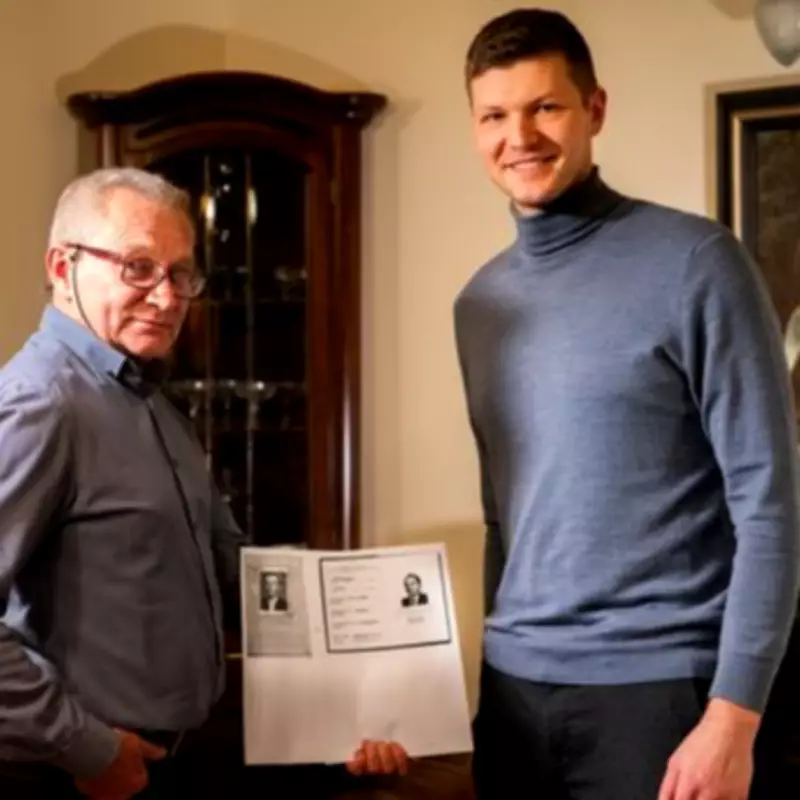
Nazi Kidnap Survivor's Lost West Midlands Life Revealed in £100k Inheritance Case
Jozef Domanski was just 14 years old when Nazi forces forcibly removed him from his family home in Poland in 1941. Like thousands of other Polish children during World War II, he was deported to Germany and subjected to forced labour. Although he survived the war and was liberated in 1945, he tragically never reunited with his family in Poland.
A New Life Built in the West Midlands
After the war, unable or unwilling to return to a homeland devastated by conflict, Domanski made his way to Britain. He quietly settled in Kidderminster while working in Wolverhampton, later moving to Essex. He worked in a factory and maintained regular correspondence with his family back in Poland, particularly his sister Helena.
In 1976, he wrote reassuring letters home after suffering a work injury, insisting he had no chronic health issues. Despite this regular communication, he never returned to Poland and consciously chose to remain unmarried and without children.

The Decade-Long International Investigation
When communication suddenly stopped, family members attempted to track him down. His brother's wife visited his old UK address during a trip to Britain but couldn't locate him. For decades, the family feared Domanski had vanished forever.
The turning point came when a local authority instructed Finders International, the UK's largest probate research firm, to locate Domanski's next of kin. What followed was more than ten years of complex legal and genealogical work requiring cooperation between specialists in the UK, Germany, and Poland.
Simonne Llewellyn, chief executive of Finders International, said: "This was an incredibly moving case that required extensive collaboration across borders. The combined efforts of researchers in the UK, Germany and Poland were essential in finally reconnecting Jozef Domanski with his family."
Emotional Reunion Through Probate Research
The intricate research was led by Benjamin Ratz of GEN SPZOO, who worked closely with Domanski's sister Helena Sadowski before her death. Domanski's nephew and family spokesperson Krzysztof Sadowski explained the emotional impact: "Thinking of him, I always wonder how he managed to survive in two foreign countries after the war. Being taken as a child, then trying to live a normal life — it must have been terrifying."
Krzysztof added that his mother Helena was devastated when letters stopped abruptly: "She was extremely saddened. The letters stopped so abruptly, and then there was no chance to ever see him again."
The £100,000 Inheritance and Its Meaning
More than 70 years after he was stolen from his family, and years after his death, Domanski's surviving relatives in Poland have finally inherited his £100,000 estate. The money will be shared among surviving relatives, but carries profound emotional significance beyond its financial value.
"I will dedicate part of it to honour my grandparents," Krzysztof said. "They lost their beloved son and believed for years that he was missing forever." He plans to place Domanski's photograph on their graves, along with his name, dates, and a dedication.
A Story of Hope for Separated Families
Krzysztof hopes their story encourages other families separated by war and catastrophe: "Don't give up looking for your family. Today we have technologies and possibilities that didn't exist before."
Antoine Djikpa, Chairman of the International Association of Professional Probate Researchers, reflected: "This story shows how the trauma of war follows families for generations. While nothing can undo what was taken from Jozef Domanski as a child, restoring his name, history and family ties is a meaningful form of justice — and a reminder that accountability still matters, even decades later."
After a lifetime shaped by loss, displacement, and silence, Jozef Domanski's story has finally come full circle — proving that even decades later, families torn apart by war can still be reunited through perseverance and international cooperation.