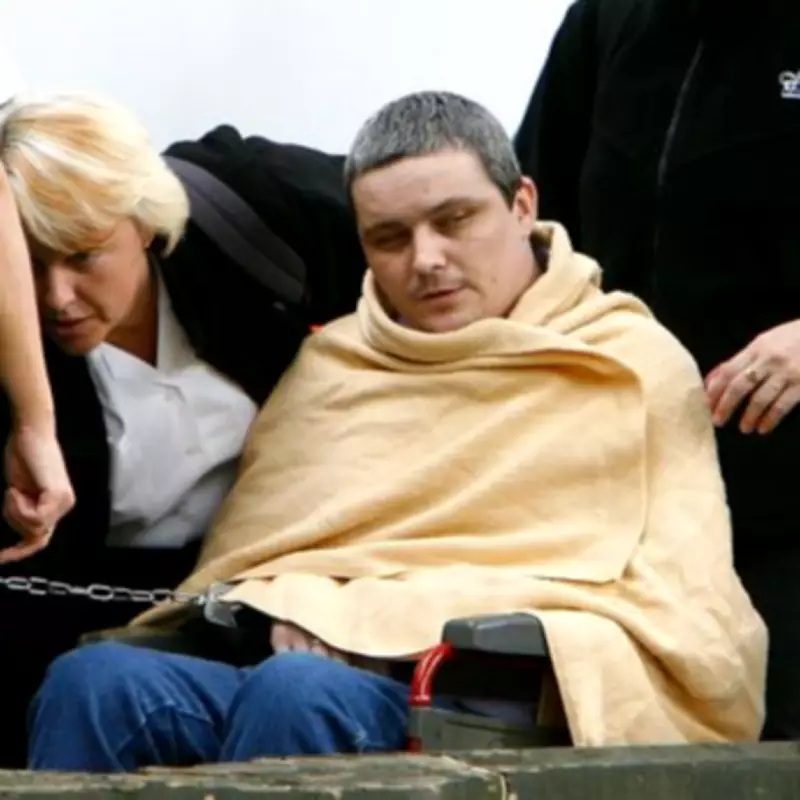
Ian Huntley Dies After Prison Attack, Sparking Family Funeral Dispute
Notorious child killer Ian Huntley has died following a violent attack inside HMP Frankland prison, more than two decades after murdering ten-year-old friends Holly Marie Wells and Jessica Aimee Chapman in 2002. The 52-year-old succumbed to his injuries seven days after being allegedly assaulted by fellow inmate Anthony Russell, a convicted rapist and triple killer.
Violent Prison Attack and Fatal Injuries
Prison officers discovered Huntley lying unconscious in a pool of his own blood, initially assuming he was already dead. His extensive injuries included severe brain trauma, multiple skull fractures, and a broken jaw. Medical staff placed him in a medically induced coma at a nearby hospital, where he remained under constant surveillance until his life support was withdrawn on Friday, March 6, following consultation with his mother, Lynda Richards.
According to prison sources, Russell reportedly shouted "I've done it!" to other inmates as guards escorted him away in handcuffs following the assault. The attack occurred at the high-security facility where both men were serving life sentences for their respective crimes.

Family Conflict Over Funeral Arrangements
The aftermath of Huntley's death has revealed significant family discord regarding funeral arrangements and next-of-kin responsibilities. Prison authorities have reportedly informed the Daily Mail about ongoing "disagreements" within Huntley's family concerning who should claim responsibility for his remains.
Former Metropolitan Police superintendent Nusrit Mehab, now a senior lecturer in criminology and criminal justice, explained the complex legal procedures: "His body will be released to the next of kin or an appointed representative. I don't know what his situation was - he's been in prison for a long time and doesn't have a lot to do with his family."
Mehab continued: "If his family are the legal guardians, they can claim it. If he's put somebody else in as a representative, or made a will, then they become the legal claimants, and if nobody comes forward, then it falls on the public health authority to do it."
State-Funded Secret Cremation Expected
With no family members willing to claim Huntley's body, authorities now anticipate arranging a secret, state-funded cremation costing approximately £3,000. According to Manchester Evening News reports, the service will occur at an undisclosed location with minimal attendance.
Mehab elaborated on standard procedures for unclaimed remains: "If nobody claims the body, then the prison service and local authority will arrange it. That will be a low-cost funeral or cremation - on the taxpayer. There'd be no public ceremony and it will likely be a quiet cremation rather than a funeral."
The Ministry of Justice guidelines permit prisons to contribute up to £3,000 toward reasonable funeral expenses, covering undertaker charges, coffin costs, hearse hire, and cremation or burial fees. These funds cannot be used for headstones, floral tributes, obituary advertisements, or wake expenses.
Daughter's Outrage and Family History
Huntley's 27-year-old daughter, Samantha Bryan, expressed profound relief at her father's death and vehement opposition to any funeral service. The beautician told The Sun on Sunday: "We should flush his ashes down the toilet. He shouldn't have the dignity of a funeral and grave. I will not be going. A funeral is pointless for a man like him."
She added: "I don't want there to ever be any possibility of freaks or weirdos going to a resting place or memorial, to show him some kind of twisted respect."
Samantha only discovered her biological relationship to Huntley at age 14 during a school crime project, where she encountered a pixelated photograph of herself and her mother, Katie, in connection with Huntley's crimes. Katie, now 45, escaped Huntley's abuse after becoming pregnant at 16 and shares her daughter's opposition to any memorial.
"I just cannot get out of my head what he did to Holly and Jessica and how he left them in a ditch," Katie told reporters. "For that reason why should he be given the dignity of a grave?"

Security Concerns for Any Memorial Service
Former superintendent Mehab highlighted significant security considerations should any family members decide to hold a funeral service: "It will be a very high profile death, so there will still likely be security concerns. So they might want a private burial in an undisclosed location, which usually happens, with minimal attendance."
Mehab explained that high-risk criminals typically receive "anonymous, unpublicised disposals" to avoid attracting public attention or creating sites that might attract inappropriate visitors. In such cases, ashes may be scattered by local authorities or stored as unclaimed remains if no family members accept them.
The complex situation underscores the challenging legal and emotional aftermath surrounding the death of one of Britain's most notorious criminals, whose 2002 crimes shocked the nation and whose prison death has now reignited difficult family dynamics and public debate about appropriate memorials for convicted killers.