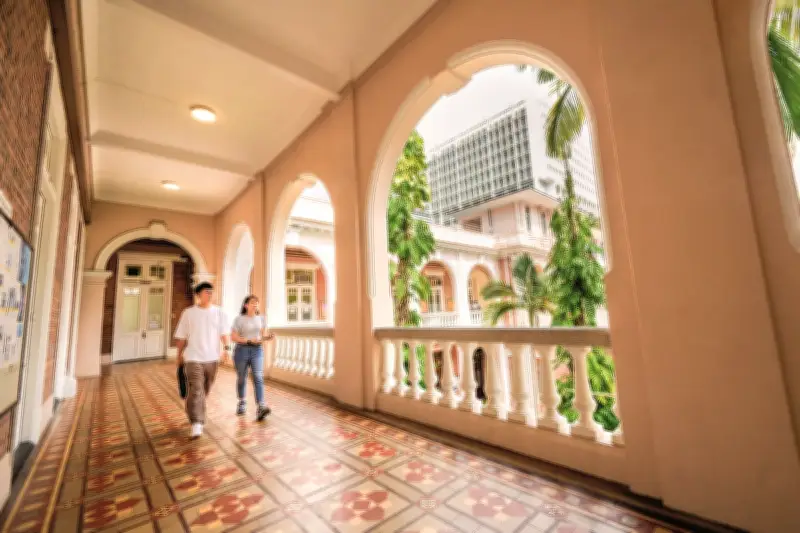
Five universities in Hong Kong have secured positions among the world's top 100 in the latest QS World University Rankings, according to the 2025 edition released on Wednesday. The University of Hong Kong (HKU) leads the pack, placing 26th globally, up one spot from the previous year.
Hong Kong's Top Performers
The Chinese University of Hong Kong (CUHK) ranks 47th, while the Hong Kong University of Science and Technology (HKUST) comes in at 60th. The Hong Kong Polytechnic University (PolyU) is ranked 67th, and the City University of Hong Kong (CityU) takes 95th place. All five institutions maintained or improved their positions compared to the 2024 rankings.
Global Context
Massachusetts Institute of Technology (MIT) retains the top spot globally, followed by Imperial College London at second and the University of Oxford at third. The University of Cambridge and Harvard University round out the top five. In Asia, the National University of Singapore ranks 8th globally, while Peking University is 14th and Tsinghua University is 20th.

Assessment Criteria
The QS World University Rankings evaluate institutions based on eight indicators: academic reputation (40%), employer reputation (10%), faculty-student ratio (20%), citations per faculty (20%), international faculty ratio (5%), and international student ratio (5%). For the 2025 rankings, QS also introduced sustainability, employment outcomes, and international research network as new metrics.
According to Ben Sowter, QS senior vice president, "Hong Kong continues to demonstrate its strength in higher education, with all five of its top universities maintaining or improving their positions. This reflects the territory's commitment to academic excellence and internationalization."
Impact on Students
The strong performance of Hong Kong universities is expected to attract more international students and researchers to the region. Local students also benefit from world-class education opportunities without needing to travel abroad. The rankings highlight Hong Kong's role as a key education hub in Asia, competing with institutions in Singapore, mainland China, and Japan.