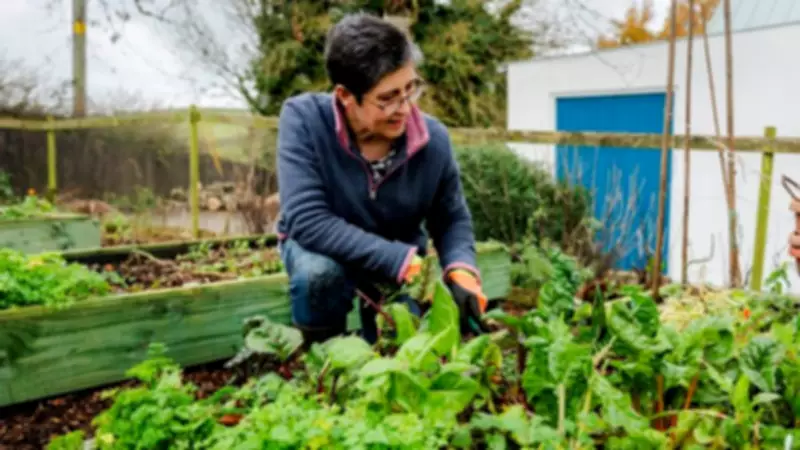
Variety is the spice of life, and many allotment holders agree when it comes to protecting their edibles. Vegetable growers champion companion planting – the art of cultivating specific crops alongside others to enhance yield. Ingredients that complement each other on the plate often thrive together in the soil, such as basil with tomatoes, beetroot with onions, dill with cucumbers, and lettuce with salad rocket, according to 'no dig' pioneer Charles Dowding, who delivers courses from his garden at Homeacres, Somerset. His latest book, Grow Together, presents 50 planting combinations designed to increase harvests. He maintains that maximizing available space and carefully timing crops so that one begins to develop as another is harvested will significantly improve yields. Multi-sowing, succession planning, overlapping plantings, and interplanting all serve to increase harvests.
Companion Planting for Pest Control
Speaking to Hannah Stephenson, gardening broadcaster and author Pippa Greenwood notes that certain companion planting techniques can discourage pests. "For instance, growing onions in alternate rows between carrots deters the carrot fly because of the smell of the onion, and the smell of the carrot confuses the onion fly. It means they can't scent out the plant they are looking for." Growing marigolds with tomatoes and cucumbers seems to work quite well in that it helps to repel or confuse pests like glasshouse whitefly. Additionally, placing open-scented flowers near edible crops attracts beneficial insects like hoverflies, whose larvae prey on aphids. You want pollinating insects to come into the area because they will pollinate your crops.
Skepticism and Practical Advice
Dowding, however, remains skeptical about the notion that pests can be deterred by scent alone. "I've tried a lot of those combinations, and I've never found that onions keep carrot root fly off. It's more in deciding what to plant close to something. It's a question of working out whether there's space and time." He is equally unconvinced by the traditional approach of using sacrificial crops such as nasturtiums to draw pests away from cabbages. "I've never yet heard that anyone growing nasturtiums doesn't have any problem with caterpillars on their brassicas. I have nasturtiums, and they get eaten sometimes, but then I have caterpillars on the brassicas. If anything, you're inclined to be increasing the pest numbers because you're giving them more to eat."

Five Companion Planting Combinations to Improve Harvests
Celeriac and Garlic
Timing is everything, says Dowding. "When I plant the garlic the previous October, I plant it in lines across a bed, which makes a space for a row of something else between it, and usually during May, the garlic still has a month of growing. Celeriac plants are often coming ready around early May, and you can pop them in the rows between the garlic. The garlic is going to finish, and you've got time to start something close to it, which is not competing with it, because it's only a small seedling, but that will be getting its roots down, and once the nearby garlic is harvested, it could grow really quickly."
Chard and Dwarf French Beans
For this pairing, transplant the beans while direct-sowing the chard simultaneously, ideally at the start of July, Dowding recommends. Alternate rows of French beans with sowings of chard, and once the French beans have finished producing, the chard will begin to dominate the space. "When they've finished, we just cut the beans at ground level and put them on the compost heap and then the chard is free to really go for it. It also benefits a bit from the nitrogen nodules on the French beans."
Spring Onions and Beetroot
Maximize your yield by pairing these vegetables together, as spring onions won't overshadow the beetroot due to their vertical growth habit and foliage that stays clear of the beetroot. "I put multi-sown plants of both of them at the same time – any time in April, May or June, allowing beetroot 30cm spacing between each clump. In the spaces between, I pop in multi-sown clumps of spring onions at the same time. By early July, there's a lovely harvest of spring onions. You get two harvests from one bed. Later on, you get the beetroot."

French Marigolds with Tomatoes
"French marigolds are great – they're small, compact plants. I've got 250 of them on the go now. I just dot them around the garden, often on the ends of beds and underneath plants as well. I plant them around my tomatoes because they secrete something called limonene, which deters aphids."
Florence Fennel between Ridge Cucumbers
"Fennel has always been famous for not getting on with any other plant, and I just don't find that is true. It's very happy growing close to other plants, and other plants are happy growing close to it," says Dowding. He suggests pairing fennel with ridge cucumbers for late summer and autumn harvests. The cucumbers will blanket the ground during late summer, while the fennel can be gathered in autumn. Sow fennel seeds towards the end of July, then transplant them in mid-August – locate spaces to tuck the plants amongst the cucumber foliage, removing any diseased cucumber leaves. "It feels a bit like an act of faith sometimes because you're doing that and you think, how can they possibly grow? But I just give them a dribble of water every now and then, and within a month the cucumbers finish, and you've already got some decent-sized fennel plants by that stage. From planting mid-August, we get a nice fennel harvest in October."