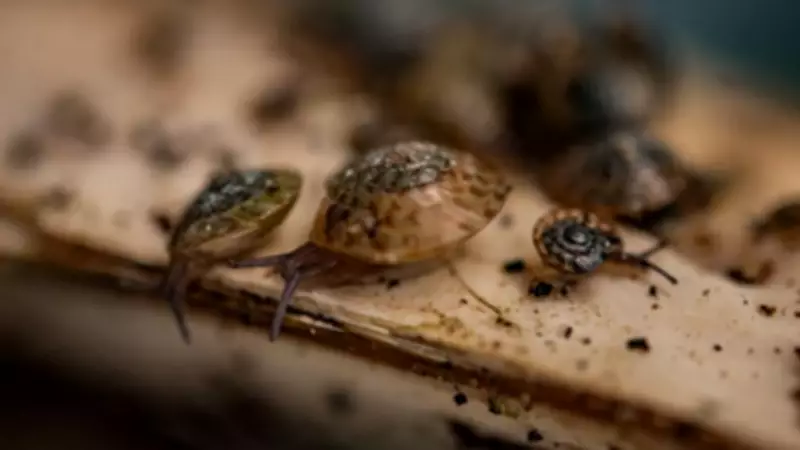
In a landmark conservation achievement, a button-sized snail species once believed to be lost forever has been officially saved from extinction. The greater Bermuda snail (Poecilozonites bermudensis) has been confirmed as safe and secure following an intensive international breeding and reintroduction programme that saw more than 100,000 individuals carefully returned to their native habitat.
Rediscovery and Rescue Mission
The remarkable story began a decade ago when a small surviving population of the greater Bermuda snail was rediscovered in an alleyway in Hamilton, Bermuda's capital. This discovery sparked hope for a species that had been presumed extinct, leading to an urgent conservation response. An expert partnership was formed between the government of Bermuda, conservation researchers from the Canada-based organisation Biolinx Environmental Research, and Chester Zoo in the United Kingdom.
Specialist Breeding Programme
Chester Zoo played a crucial role in the rescue mission, with conservationists caring for thousands of snails at their specialist facility before carefully reintroducing them to Bermuda. The zoo's team received several of the rediscovered snails with the hope of breeding them off-site and returning them to the wild. Starting with fewer than 200 individuals, the team faced the significant challenge of establishing a viable breeding population.

Tamas Papp, Invertebrates Assistant Team Manager at Chester Zoo, expressed the significance of this achievement: "It's every conservationist's dream to help save a whole species - and that's exactly what we've done. The greater Bermuda snail is tiny, but this is one of the biggest success stories in conservation."
Scientific Breakthrough and Release
Keepers at Chester Zoo adapted existing snail husbandry methods to find the optimal conditions for P. bermudensis to multiply, developing what has become the first conservation breeding guide for this particular species. Gerardo Garcia, Animal & Plant Director at Chester Zoo, was among the team that bred the snails in specially designed pods at the zoo before painstakingly releasing them in protected woodland habitats across Bermuda.
"The fact that the snails are firmly established in six areas is massive," said Dr Garcia. "These were not the only sites chosen for the introductions, but they are the ones where the colonies are growing and expanding in range. That itself is really important information, because not much was known about P. bermudensis."
Ecological Importance
The conservation success was announced on Reverse the Red Day, which marks the global movement to undo biodiversity loss and ecosystem damage. Snails are among the least researched animals on the planet and among the most vulnerable to extinction. Endemic snails in Bermuda have been particularly affected by multiple threats including habitat loss, climate change, and the introduction of predatory species such as 'wolf snails' and carnivorous flatworms.
Dr Kristiina Ovaska from Biolinx explained the broader ecological significance: "Bringing back the snails into their natural habitats is important for the conservation of this species and is part of restoring damaged ecosystems. The snails function both as prey for larger animals and as consumers of live and decaying vegetation, so they are vital for turning over nutrients within their habitat."
Monitoring and Future Prospects
The reintroduction process was meticulously planned, with Dr Garcia describing the monitoring approach as 'like a war game', with expanding populations represented by flags on a map. An assessment of how the snails are faring is forthcoming in Oryx, The International Journal of Conservation, confirming the establishment of six successful colonies across the Bermuda archipelago.
Dr Mark Outerbridge, a Wildlife Ecologist at Bermuda's Department of Environment and Natural Resources, reflected on the programme's success: "It has been extremely gratifying to be involved with this reintroduction programme and to see these snails back in Bermuda's ecosystem again. It is remarkable to think we only began with less than 200 snails and have now released more than 100,000."

Broader Conservation Impact
The success of the P. bermudensis project has received wider recognition and allows the Chester Zoo team to focus their efforts on a second rare species of snail, the lesser Bermuda land snail (Poecilozonites circumfirmatus). While climate change and environmental issues may affect the newly established snail colonies in the future, the conservation team is now confident they possess the knowledge to reinforce populations quickly and effectively if needed.
Ruth Davis OBE, UK Special Representative for Nature, praised the achievement: "Bringing Greater Bermuda snails back from the brink of extinction is a remarkable achievement. This is an example of not only brilliant conservation science, but what is possible when we collaborate across borders to restore nature and reverse biodiversity loss."
This conservation triumph represents what experts describe as a "once in a career" moment, demonstrating the vital role that zoos and international collaboration can play in preventing extinction and restoring damaged ecosystems.