Third Major Floating Offshore Wind Farm Secures Celtic Sea Lease Agreement
A significant leasing agreement has been finalized for a massive floating offshore wind farm in the Celtic Sea, marking the third such project to advance in the region. The 1.5 gigawatt development, led by Ocean Winds, will span both Welsh and English waters, contributing to the UK's clean energy ambitions.
Details of the Ocean Winds Project
Ocean Winds, a joint venture between Spanish company EDPR Renewables and French firm ENGIE, has entered into an agreement with the Crown Estate for this floating wind farm. This deal follows similar leases granted last year to Norwegian energy venture Equinor and Gwynt Glas, a partnership between EDF power solutions and Irish Government-owned ESB, each for 1.5 gigawatt schemes. While the Gwynt Glas project is located solely in Welsh waters off Pembrokeshire and Equinor's is in English waters, Ocean Winds' development will cross both jurisdictions.
All three projects were secured under the Crown Estate's offshore wind leasing round five. Initially, no bidder emerged for the cross-border site after a competitive process, prompting the Crown Estate to re-engage with the market, ultimately leading to the agreement with Ocean Winds.

Economic and Energy Impact
Once operational by the mid-2030s, these three floating wind farms will have a combined capacity of 4.5 gigawatts, generating enough clean electricity to power more than four million homes. They are expected to create over 5,000 direct and supply chain jobs, providing a substantial £1.5 billion economic boost. However, the distribution of supply chain jobs between Wales and the wider UK remains unspecified.
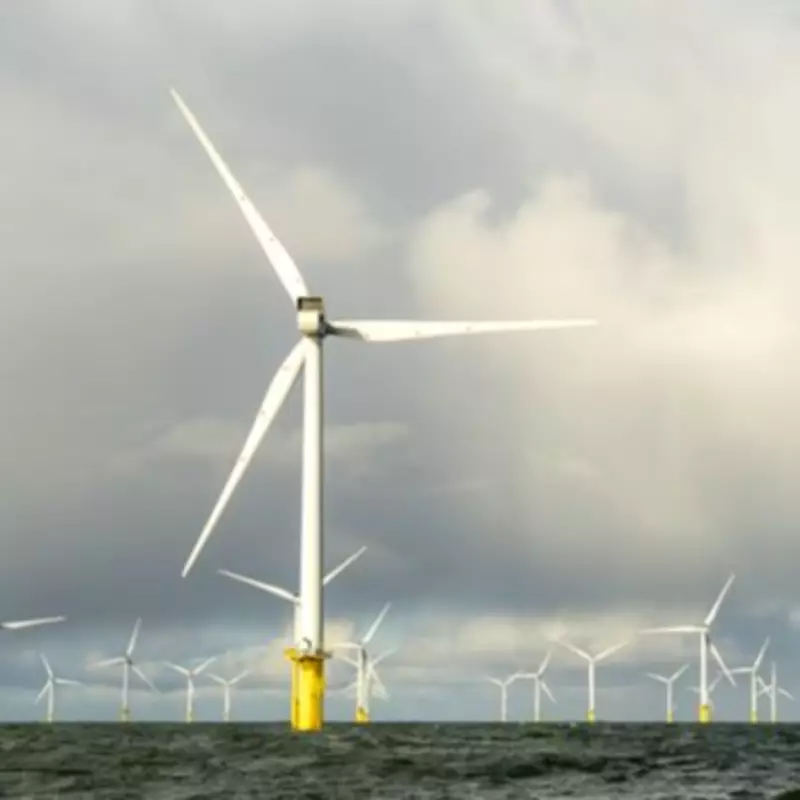
To ensure commercial viability, all three operators will seek contract for difference support from the UK Government. The turbines, which could reach heights of 300 meters—comparable to London's Shard building—will be mounted on floating platforms roughly the size of a football pitch and anchored to the seabed with massive chains.
Political and Planning Context
In its Senedd Election manifesto, Reform stated it would block all new onshore and offshore renewable projects in Wales. However, since the Celtic Sea projects are not a devolved planning matter, implementing such a policy would require Reform to form the next Westminster government.
Company Background and Next Steps
Ocean Winds is a global leader in floating wind technology, having delivered the world's first semi-submersible floating wind farm, WindFloat Atlantic, in Portugal in 2020. The company also has experience with fixed-bottom offshore wind projects in the UK, including Moray East and Moray West.
Moving forward, Ocean Winds will focus on developing project designs, conducting onshore and offshore site surveys, completing Environmental Impact Assessments (EIA), engaging with the public, and securing necessary planning consents.
Statements from Key Figures
Julia Rose, head of offshore wind at the Crown Estate, emphasized the excitement around round five, noting it establishes innovative technology at commercial scale in the UK, supporting new jobs, energy security, and the clean energy transition. She highlighted Ocean Winds' agreement as a testament to the attractiveness of the UK's offshore wind sector.
Adam Morrison, UK country manager at Ocean Winds, stated that signing the lease demonstrates their commitment to commercial-scale floating offshore wind in the UK. He outlined plans for early-stage development work and engagement with local stakeholders to deliver lasting community benefits while supporting energy security and net zero goals.
Michael Shanks, Minister for Energy, called this a big step forward for Britain's clean energy future, citing momentum behind floating offshore wind and the UK's expertise in the field. He highlighted the project's potential to create skilled jobs in Wales and southwest England, reinforcing offshore wind as the backbone of a secure energy system.

Rebecca Evans, Welsh Government Cabinet Secretary for Economy, Energy and Planning, noted that the agreement marks a major step in making Britain a clean energy superpower. She pointed to continued investor confidence in Wales, with the projects expected to create thousands of skilled jobs and enhance energy independence for future generations.