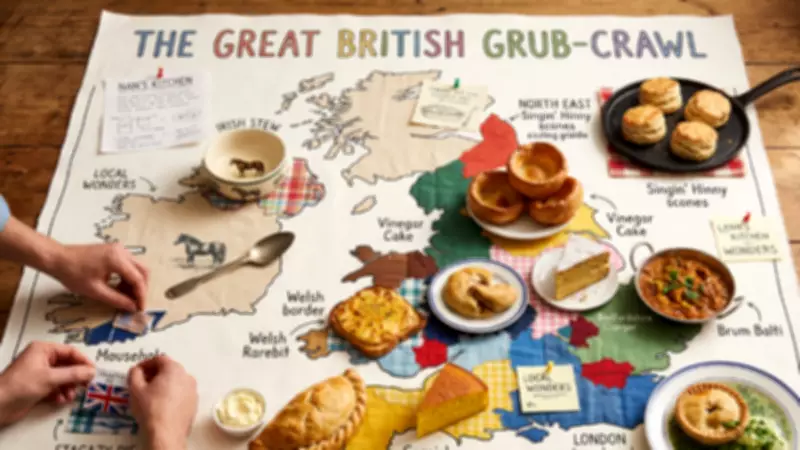
Food, whether you call it grub, scran, nosh, or chow, holds a special place in our hearts and memories, deeply intertwined with family and love. For many, childhood meals like Irish stew or chocolate slab loaves evoke vivid images of loved ones, such as a nan's hands peeling potatoes, connecting us to our roots through shared culinary experiences. The United Kingdom is a vast, edible patchwork quilt, with every valley, coastline, and industrial town boasting dishes born from necessity, local ingredients, or a touch of historical eccentricity.
East London's Working-Class Heritage
The Cockney tradition of Pie, Mash and Liquor is a cherished piece of working-class heritage, with pie and mash shops serving as beloved institutions since the 1840s. In East London, 'liquor' refers not to alcohol but to a bright green parsley sauce made from the poaching water of eels used in jellied eels. Enthusiasts often order double pie, double mash, and double liquor, generously topped with chilli vinegar for an authentic taste.
Cornwall's Rich Culinary Legacy
Cornwall enjoys a rich culinary heritage, where clotted cream must be made locally with Cornish milk to earn its name. Beyond the debate over jam or cream first, Cornish pasties are crimped in Cornwall, a tradition allegedly started as a 'handle' for miners with arsenic-covered hands, who would toss the crust to mine ghosts known as 'knockers'. Another unique dish is Stargazy Pie, featuring pilchards baked with their heads poking through the crust, gazing at the stars. This pie originates from Mousehole, pronounced Mow-zel, and celebrates fisherman Tom Bawcock, who braved stormy seas to save his village from starvation, with the fish heads left out to allow oils to drain back into the pie.

The Midlands and Beyond
In the Midlands, the Bedfordshire Clanger offers a portable meal solution from the 19th century, combining a savoury end with gammon and potato and a sweet end with jam or apple, separated by a pastry wall. Moving to Tyneside in the North East, the Singin' Hinny is a lard-based scone that sizzles on a griddle, its name derived from the hissing sound and local term of endearment 'hinny'. In Yorkshire, Vinegar Cake emerged from World War II rationing, using vinegar to react with baking soda for a light, moist sponge, showcasing British ingenuity.
Yorkshire Pudding and Welsh Rarebit
Yorkshire Pudding, while not strictly originating in Yorkshire, became the gold standard due to North England's high-heat coal-fired ovens, producing crispier, fluffier puddings. Toad-in-the-Hole, a dish of sausages in Yorkshire pudding batter, has confused foreigners for centuries, originally allowing any meat to be hidden within. Welsh Rarebit, originally called Welsh Rabbit as a joke about Welsh poverty, is a sophisticated melted cheese on toast made with ale, mustard, Worcestershire sauce, and strong cheddar, grilled to a bubbly perfection.
Cornwall's Saffron Cake and Birmingham's Balti
Back in Cornwall, Saffron Cake is a yeasted fruit bread bright yellow from saffron, a spice linked to ancient Phoenician traders who exchanged it for Cornish tin. By the 1800s, it was central to Methodist Tea Treats, community parties featuring oversized saffron buns. In Birmingham, the Brum Balti, first cooked in the 1970s in the Balti Triangle, is cooked and served in the same thin metal dish. Recently, restaurant owner Zaf Hussain campaigned for UNESCO protection to prevent 'balti fraud', emphasizing its roots in Birmingham and proper preparation.
Britain's food heritage continues to evolve, with new stories and dishes enriching the culinary patchwork quilt. From family memories to regional specialties, these dishes tie us to our loved ones and communities, celebrating a diverse and delicious history.