Architect's Work Stress Symptoms Revealed as Brain Tumour After Seizure
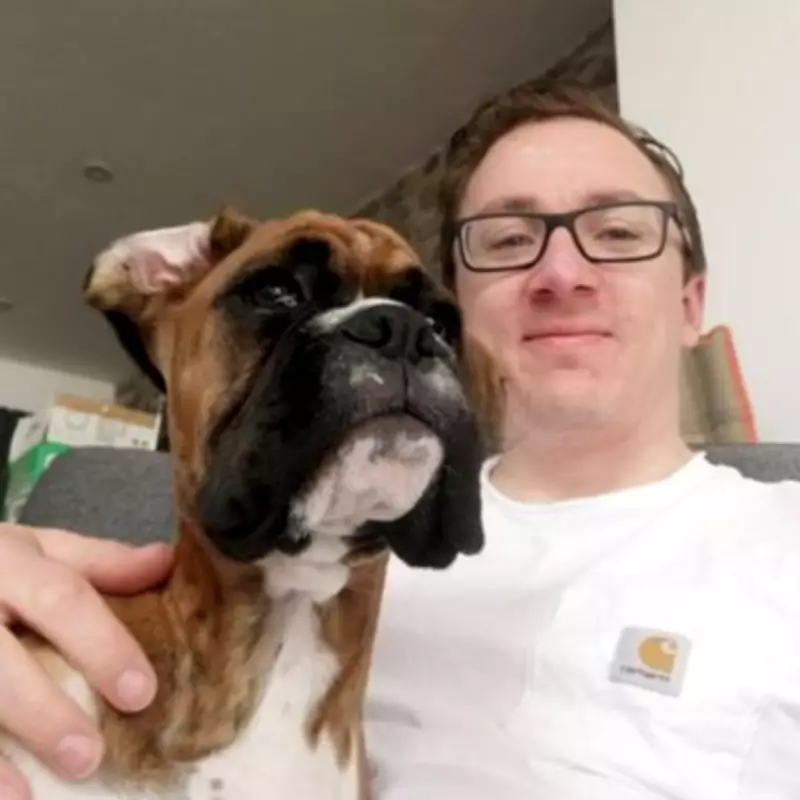
An architect from Wales initially dismissed his persistent headaches and dizziness as symptoms of work-related stress, but a sudden seizure uncovered a life-altering truth: a large brain tumour. Craig Alexander, now 38 and residing in Monmouth, Wales, had endured these symptoms for years, attributing them to exhaustion and dehydration from his demanding career as an architect.
Years of Misattributed Symptoms
Craig, who was 35 at the time, also experienced tremors and visual disturbances, which he similarly blamed on stress. However, in early May 2023, his condition took a dramatic turn. While in a car with a colleague, he suffered a tonic-clonic seizure, also known as a grand mal seizure, causing him to lose consciousness and jerk uncontrollably for several minutes.
He was immediately rushed to Hereford Hospital, where an MRI scan revealed a massive tumour measuring 75mm by 35mm, located deep and central in his brain. The diagnosis was an astrocytoma, a type of brain tumour that develops from star-shaped cells called astrocytes.

Catastrophic Surgery and Recovery
Following the discovery, Craig underwent a seven-hour craniotomy to obtain a biopsy, along with subsequent radiotherapy and chemotherapy. The surgery's impact was severe due to the tumour's centre-right location, leaving him unable to walk or speak post-operation. He described the experience as akin to having a stroke, calling it incredibly traumatic.
"Looking back, there were warning signs, but I put it all down to tiredness, dehydration, and long working hours," Craig reflected. "Nothing prepares you for being told you have a brain tumour. One moment I was working, travelling, and living my life as normal, and the next I was facing major brain surgery and the very real possibility of losing my independence."
Ongoing Challenges and Advocacy
Due to the catastrophic risk of further impairment, surgical options are no longer available for Craig, meaning he must live with the tumour. He received private speech and physiotherapy because of NHS waiting times, and while he has almost completely recovered, he still drags his left foot occasionally and has a noticeably weaker left side.
The chemotherapy and radiotherapy treatments caused extreme fatigue, with Craig sleeping 15 to 18 hours daily, and he continues to struggle with ongoing tiredness. As a result, he has had to give up his career and now requires regular scans to monitor the tumour's condition.
"Radiotherapy and chemotherapy treatment saved my life, but it has also changed it forever," he stated. "I've had to give up my career, live with ongoing fatigue and uncertainty, and learn to accept a new version of myself. Brain tumours don't just affect your health; they take away your future plans, your confidence, and your sense of normality."
Supporting Brain Tumour Research
Craig is now an advocate for further research into brain tumours and is backing the unveiling of a manifesto for Wales by the prominent charity Brain Tumour Research. The manifesto, presented at the Senedd, demands immediate action to revolutionise outcomes for brain tumour patients by expanding access to clinical trials, embedding whole genome sequencing into standard care, and committing to targeted research funding.
He highlighted issues with the healthcare system, noting a lack of joined-up care. "Something as basic as getting a blood test before a contrast MRI became a major ordeal; at one point, I had to travel to Hereford from Wales just to have my bloods taken," Craig explained. "There is a real lack of joined-up care and follow-up, and it often felt like I was falling through the cracks. When you're dealing with a brain tumour, you shouldn't also have to fight the system to get the most basic parts of your care."
Dr Karen Noble, Director of Research Policy and Innovation at Brain Tumour Research, emphasised the urgency of the situation. "Brain tumours are the leading cause of cancer death in children and young people, yet patients in Wales are being locked out of innovation," she said. "Our manifesto for Wales is a clear, evidence-based roadmap to change. The time to do things differently is now."