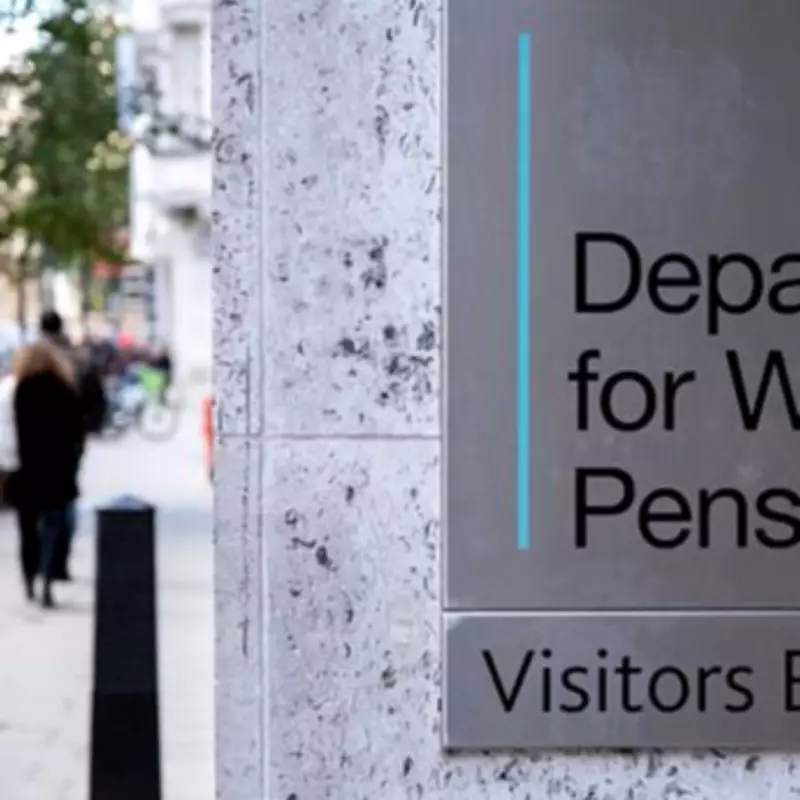
DWP Issues Stark Warning Over 37-Week Delays for Disability Benefit Claims
The Department for Work and Pensions has issued a critical warning regarding extensive delays affecting a key disability benefit, with some claimants facing waits of up to 37 weeks for decisions. The DWP attributes these prolonged delays to significant backlogs and inefficient systems that are hampering the processing of applications.
Access to Work Benefit Under Scrutiny
The Access to Work benefit, designed to assist individuals with health conditions in securing or maintaining employment, is at the center of this issue. This program is a crucial component of the government's strategy to achieve an 80% employment rate, as announced previously. However, the Labour Party government has now acknowledged that new applicants are experiencing substantial delays in receiving support through this benefit.
Helga Swidenbank, the DWP director of accessibility, disability and disputes, provided insight into the situation. "When a customer calls our Access to Work helpline, we have a voice recording that will tell them how long it is likely to take for a decision to be made," she explained. "At the moment, we are saying 37 weeks, so that information is out there and accessible to customers."

Parliamentary Committee Expresses Concern
During a recent committee session, the 37-week figure sparked immediate concern among members. Committee member Blake Stephenson exclaimed, "Thirty-seven weeks!" prompting committee chair Sir Geoffrey Clifton-Brown to interject, "Can I stop you there? I hear Blake complaining. He is quite right to do so—37 weeks is more than six months."
Neil Couling, Director General of DWP Services and Fraud, attempted to offer some optimism, stating, "In the report, the average time taken was 109 days. It is starting to turn. I am not saying this is acceptable or that I am pleased with this, but I am encouraged that it is now down to 106." He emphasized that once momentum is gained, the numbers begin to decline, adding, "The situation is starting to turn, through the actions we have taken. But we prioritise those in work, or those about to start work, and then the payment backlogs first, because to us that seemed like a logical way to deal with the problem that we had."
Impact on Constituents and Employers
Despite these assurances, concerns persist about the real-world impact of these delays. Mr. Stephenson continued, "Yes. I just cannot imagine the frustration that our constituents would feel on hearing an automated voice message tell them that it could take 37 weeks for them to have a decision. That is why I was exasperated."
Labour MP Amanda Hack, a guest at the work and pensions committee session, highlighted the human cost behind the statistics. "It is very hard not to be distracted by the 37 weeks figure—I had my first baby quicker than 37 weeks," she noted. "We do not really appreciate the fact that, behind the figure, there is a person waiting for their claim, or an employer waiting to employ somebody. That is a really difficult premise—the fact there is an individual sitting behind each claim. There is clear evidence that the backlog is having an impact, whether that is on job security for those with a current open claim, or on employers taking on a new person."
The DWP's warning underscores ongoing challenges in the benefits system, with delays potentially affecting thousands of individuals seeking support to enter or remain in the workforce. As the department works to address these backlogs, the focus remains on improving efficiency and reducing wait times for vulnerable claimants.