Lincoln Mother's Emotional Appeal for More Blood Donors After Son's Life Saved
A Lincoln mother whose son was saved by blood donors after he fell critically ill as a newborn is making an urgent plea for more people across the East Midlands to donate blood. Meghan Lusby's son, Joey Thacker, now two years old, suffered serious complications following his premature birth and survived only because of multiple transfusions from NEO blood donors.
Specialist Blood Needed for Vulnerable Newborns
The heartfelt appeal comes as the NHS revealed that just one in four blood donors possesses the specialist blood required by babies in neonatal intensive care units. Health officials are urging more people to come forward and donate to help seriously ill children and adults throughout the region.
Newborns can only receive blood that lacks cytomegalovirus (CMV), a common and typically harmless virus that most adults encounter during their lives. While CMV remains dormant in the body for most people, it can prove fatal to infants with underdeveloped immune systems who are fighting for survival.

Joey's Harrowing Medical Journey
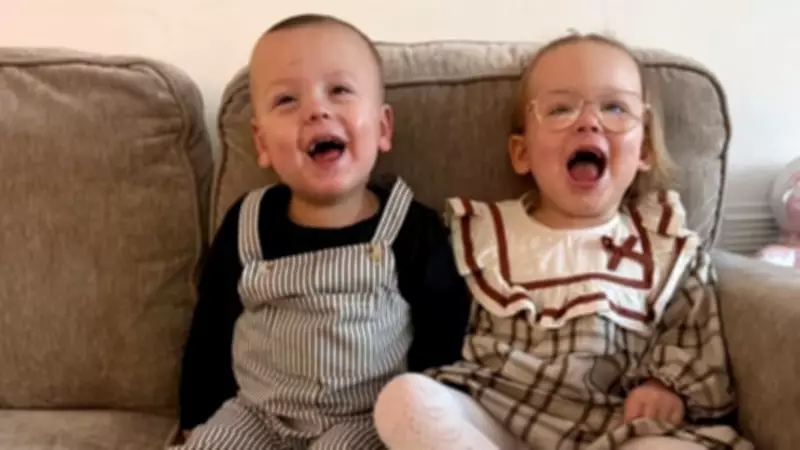
Joey and his twin sister, Eva, were admitted to neonatal intensive care after being born at just twenty-seven weeks gestation. While Eva made steady progress, Joey's condition deteriorated rapidly. At merely two days old, he required emergency surgery for a bowel perforation.
His tiny body then went into septic shock, necessitating an emergency blood transfusion to keep him alive. Joey remained at Nottingham's Queen's Medical Centre for eight long months, where further blood transfusions provided the strength he needed to undergo additional surgeries.
He also required emergency transfusions to stabilize dangerously low blood pressure during this critical period. Meghan Lusby, twenty-six, who lives with her partner Cobie Thacker, shared her emotional experience.
"Every time Joey went into surgery the doctors weren't sure if he was going to make it," she revealed. "It was life or death, basically. But it wasn't just the doctors who saved his life, it was blood donors too. Joey would not be here if the hospital did not have the blood he needed in that moment."
Life After Intensive Care
As a result of his early complications and numerous surgeries, Joey has been diagnosed with cerebral palsy and short bowel syndrome. Despite these challenges, his progress has exceeded medical expectations, and he has grown into a bright and inquisitive little boy who loves playing football.
Joey's twin sister, Eva, also received a small number of blood transfusions due to low haemoglobin levels, which is common among premature babies. Meghan, who works in clinical coding at Lincoln County Hospital, has become a blood donor herself following her family's experience.
"I'm a blood donor and I love receiving the text message after I have donated," she explained. "I got one saying my blood had gone to a children's hospital, which felt like a full circle moment."
The Vital Role of NEO Blood Donors
Approximately two hundred thousand of the nation's eight hundred thousand blood donors had their most recent donation labeled with a distinctive blue 'NEO' tag, indicating it is suitable for transfusion to neonates. Long-standing donor Nigel Vaughan, seventy, from Derby, possesses this valuable NEO blood type.
He is preparing to make his two hundred and fiftieth donation in April and takes particular pride that his B negative blood can help the tiniest patients. Nigel's own experience as a baby inspired his lifelong commitment to blood donation.
He required surgery to treat pyloric stenosis, a serious condition affecting newborns where the passage between the stomach and small bowel narrows. This medical emergency motivated his mother to begin giving blood regularly.
Nigel, who serves as an emergency responder for St John Ambulance, reflected on his donation journey. "My earliest memories are of accompanying my mum to give blood," he recalled. "As soon as I was old enough I started donating myself. Knowing my blood can go to babies is quite special."

"My daughter and my daughter-in-law now give blood and it's great to know I'm passing on the blood donation baton, just like my mum before me," he added. "I'll carry on donating as long as I can. There's no easier way to save a life."
Current NHS Blood Supply Needs
Every week, hospitals throughout England order around five hundred units of red cells suitable for neonatal patients, representing approximately half a percent of overall red cell demand. Red cells constitute the blood component most widely used to treat vulnerable newborns.
NHS Blood and Transplant has released this data to highlight how donated blood serves as a lifeline for even the smallest patients, while simultaneously calling for more people to become regular donors. A single donation has the potential to help up to six babies or three adults.
While stocks of most blood types currently remain adequate, there exists a particular need for more donors with specific blood types as Easter and the May bank holiday period approach. The NHS specifically requires more B negative, O negative, Ro, and Black heritage donors during this time.
During holiday periods, stock levels frequently decline as people spend valuable time with family. NHS teams will continue collecting blood every single day, including throughout the entire Easter weekend, to maintain essential supplies.
Official NHS Statement on Blood Donation
Gerry Gogarty, director of blood supply for NHS Blood and Transplant, emphasized the critical importance of regular donations. "Every donor can be proud that their generous act will save or improve the life of a seriously ill child or adult," he stated.
"And we know our donors feel especially touched if they see a blue 'NEO' tag on their donation bag, knowing their blood can help the most vulnerable patients," Gogarty continued. "The NHS needs new donors to maintain the supply of lifesaving blood to patients of all ages. Please register today and book an appointment. Giving blood is quick and easy, and you will save a life."
How NEO Blood Designation Works
A blood donation receives the 'NEO' tag if testing reveals no evidence of cytomegalovirus when the donor's blood was last examined. If that particular donation gets selected for a neonatal patient, it undergoes additional testing to confirm the donor's CMV status has not changed since the previous assessment.
The NHS consistently requires new donors to replace those who stop donating each year. There remains an ongoing and pressing need for more donors of Black heritage to assist patients with sickle cell disease who require ethnically matched blood for effective treatment.
Individuals can register as blood donors and schedule their first appointment through the GiveBloodNHS mobile application or via the official NHS Blood and Transplant website. If immediate appointments prove unavailable, prospective donors are encouraged to book for future dates to ensure continued blood supply stability.