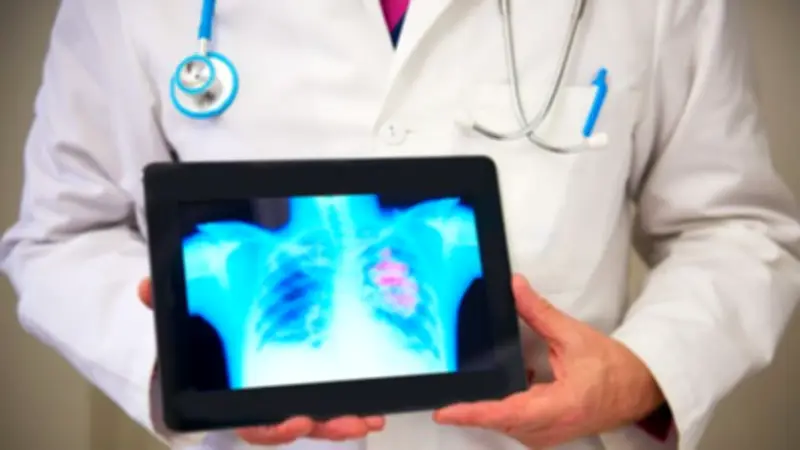
The Department of Health has announced a significant expansion of artificial intelligence tools across the National Health Service, aiming to accelerate cancer diagnoses and improve care for millions of patients. A ring-fenced funding of £20 million will be used to deploy AI-assisted analysis for chest X-rays to every NHS trust in England by 2029.
Patient Story: From Collapse to Diagnosis
Peter Allinson, a 59-year-old hill walker from Manchester, experienced severe breathlessness during a hike and was urgently referred to Manchester University NHS Foundation Trust. Using the AI-assisted chest X-ray tool, doctors diagnosed him with sarcoidosis and began treatment within two weeks. He said: 'When I collapsed on that hillside, I genuinely thought my life was over. To go from that terrifying moment to having a diagnosis and being on treatment within two weeks was just remarkable. I’m so grateful for how quickly everything moved and for the care I received. The speed of the diagnosis made a real difference - I feel like I’ve been given my life back.'
Current Usage and Pilot Programme
Currently, only about half of trusts are using the technology. Alongside the rollout, an £8 million pilot programme will be launched across 13 NHS organisations to explore how AI can help deliver faster diagnosis and treatment for conditions such as heart failure, strokes, and lung cancer.

Impact on Patients
Government figures indicate that the technology is already making a difference. More than four million patients have received either a quicker lung cancer diagnosis or an all-clear after AI tools assisted with analysis. The system acts as a 'second pair of eyes' for radiologists, and data from 25 NHS trusts shows that AI can reduce analysis times to an average of four days, compared with up to eight days for more complex cases previously.
Government Response
Health and social care secretary James Murray said the rollout would help tackle delays in diagnosis. He stated: 'For too many patients, a cancer diagnosis tragically comes too late. These AI tools are already changing that - giving radiologists a sharper eye, cutting waiting times and getting people the life-saving treatment they need faster. Rolling this out to every NHS trust in the country means millions more patients will benefit, and that is exactly the kind of change this government is determined to deliver - regardless of where you live. This is what shifting the NHS from analogue to digital looks like in practice.'
Digital Government minister Ian Murray added: 'AI is not a future promise - it is already saving lives in our NHS today. For someone waiting to find out whether a shadow on their lung could be cancer, getting that answer in four days instead of eight means four fewer days of uncertainty - and a much quicker path to treatment or reassurance.'
Charity and Medical Organisation Support
Charities and medical organisations have welcomed the expansion. Roy Castle Lung Cancer Foundation chief executive Paula Chadwick emphasised the importance of faster diagnosis: 'In lung cancer, we are already seeing the benefit to patients of this technology, in ensuring faster X-ray reporting and diagnosis. Reducing the time to receive X-ray results cuts down anxiety and uncertainty.'
Cancer Research UK chief executive Michelle Mitchell said the investment would bring innovation into everyday care: 'We welcome this investment in cutting-edge technology at a national level. It's so important to be able to move beyond individual pilots and implement these innovations more broadly to ensure as many people as possible can benefit.'
Dr Stephen Harden, president of the Royal College of Radiologists, noted AI's potential but stressed it would support, not replace, clinicians: 'AI has significant potential to support radiologists in identifying serious conditions more quickly and helping patients receive a diagnosis sooner. Radiologists will remain central to diagnosis, clinical decision-making and patient care.'