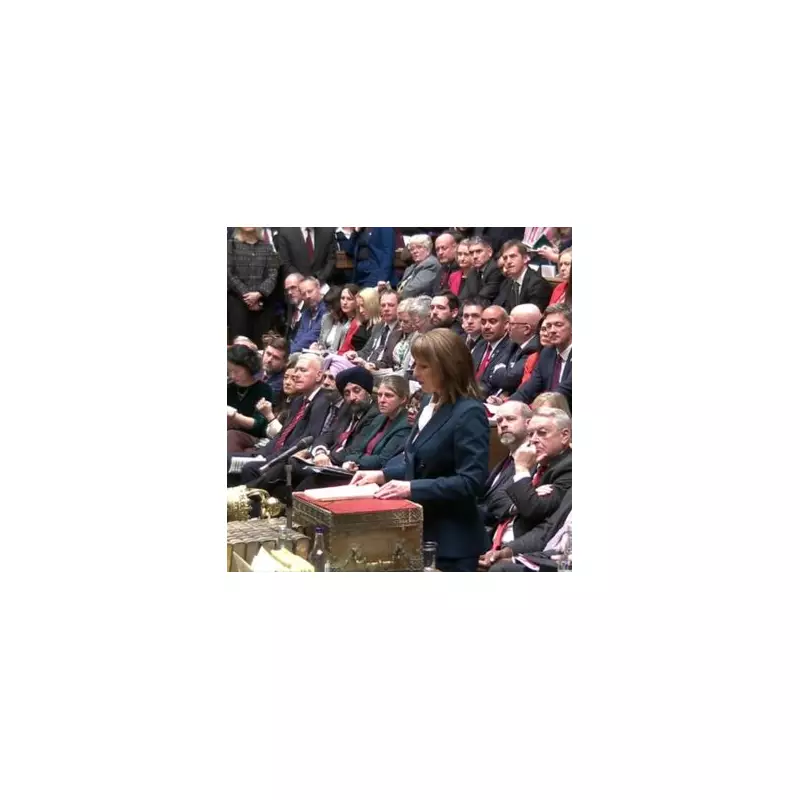
Chancellor Rachel Reeves delivered her landmark Autumn Budget on Wednesday in a Commons address that was thrown into chaos after the Office for Budget Responsibility prematurely leaked key details.
The Labour Chancellor opened her speech by describing the leak as "deeply disappointing" and a "serious error on their part", referring to the OBR. Despite the disruption, she outlined sweeping economic reforms aimed at rebuilding Britain's economy.
Major Tax and Economic Measures
In one of the most significant announcements, Reeves revealed that £8,000 of the £20,000 tax-free ISA allowance must now be invested in stocks and shares, effectively capping the cash ISA allowance at £12,000 for most savers. Those over 65 will be exempt from this change.

The Budget extends existing freezes to personal tax thresholds for another three years until 2030-31, while tax rates on dividends, property and savings income will increase by 2 percentage points, raising an estimated £2.1 billion.
Capital gains tax relief on disposals to employee ownership trusts will be reduced, generating £900 million for the Treasury. Corporation tax will see changes too, with the writing down allowance main rate being reduced to raise £1.5 billion.
Support for Families and Public Services
In a major welfare reform, the controversial two-child benefit cap is being removed at an estimated cost of £3 billion by 2029-30. The Chancellor also announced substantial investment in public services, with £4.9 billion allocated to the NHS following efficiency savings elsewhere.
Education received significant attention, with £5 million earmarked for secondary school libraries and £18 million to improve playgrounds across England. An additional £10 million had previously been announced for primary school libraries.
Compensation payments for victims of the infected blood scandal will be exempt from inheritance tax, addressing concerns raised by MPs across the House.
Transport and Environmental Measures
Electric vehicle drivers will face new costs from April 2028, with a 3p-per-mile tax introduced for battery electric cars, rising annually with inflation. Fuel duty will remain frozen until next September.
The gambling industry faces significant changes, with remote gaming duty on online casinos increasing from 21% to 40% from April 2026. Meanwhile, bingo duty of 10% will be abolished entirely.
Property owners of high-value homes will see a new council tax surcharge on properties worth over £2 million, expected to raise £0.4 billion in 2029-30.
Devolution and Regional Investment
The Chancellor emphasised her commitment to devolution, announcing that seven mayors will receive £13 billion in flexible funding to invest in skills, business support and infrastructure within their regions.
Additional funding allocations include £370 million for the Northern Ireland executive, £505 million for the Welsh government and £820 million for the Scottish government.
Business rates retention pilots in the West of England, Liverpool City Region and Cornwall will be extended until 2029.
Fiscal Rules and Economic Outlook
Reeves told MPs that borrowing will fall as a share of GDP in every year of the forecast, with headroom against government targets doubling to £21.7 billion. She emphasised that this meant meeting stability rules a year early.
The Office for Budget Responsibility has increased its forecast for economic growth this year from 1% to 1.5%, though it downgraded expectations for the following four years.
Looking forward, the Chancellor announced she will follow International Monetary Fund recommendations by assessing fiscal rules just once per year at the Budget, rather than twice yearly.
Throughout her address, Reeves maintained that her approach represented a middle way between austerity and reckless borrowing, declaring: "My choice is a Budget for fair taxes, strong public services, and a stable economy. That is the Labour choice."