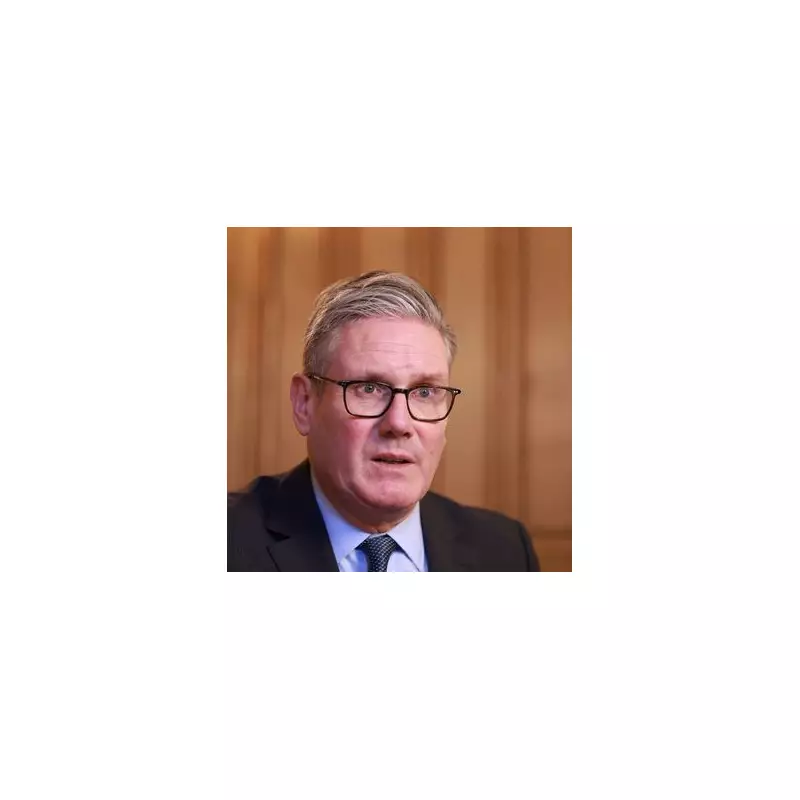
Prime Minister Sir Keir Starmer has firmly rejected calls to apologise for breaking a key election pledge not to raise taxes, following Chancellor Rachel Reeves' Autumn Budget which introduced £26 billion in tax increases.
Confrontation Over Broken Promises
The Prime Minister faced a direct challenge from Sky News' Beth Rigby during a tense exchange. Rigby accused Starmer of misleading the public, stating: "You told people in the run-up to the election we will not raise your taxes, people are taxed too high."
She highlighted that 800,000 people would be dragged into paying taxes and 1 million people would be pushed into higher tax bands as a result of the Budget measures announced on November 26. "You've broken your promises! Just acknowledge it please! Please be honest," Rigby insisted.

Defending the Decision
Starmer responded by defending the government's position, emphasising his commitment to tackling child poverty. "I absolutely do believe you've got to lift children out of poverty," he stated.
The Prime Minister pointed to the two-child benefit cap that had been in place for nearly a decade, arguing it had resulted in hundreds of thousands of children living in poverty. "I'm not going to apologise for lifting half a million children out of poverty!" he declared.
Political Fallout and Conservative Response
Chancellor Rachel Reeves also declined to apologise when questioned on BBC Radio 4's Today programme, describing the tax rises as "fair and necessary choices" made within existing economic forecasts.
Conservative leader Kemi Badenoch launched a strong attack on the government in Parliament, calling the Budget a "complete shambles" and citing criticism from Andy Haldane, former chief economist of the Bank of England, who described Labour's fiscal approach as "the single biggest reason why growth has flatlined."
The political controversy continues to develop as the government faces criticism from both opposition parties and economic experts over its significant departure from pre-election tax commitments.