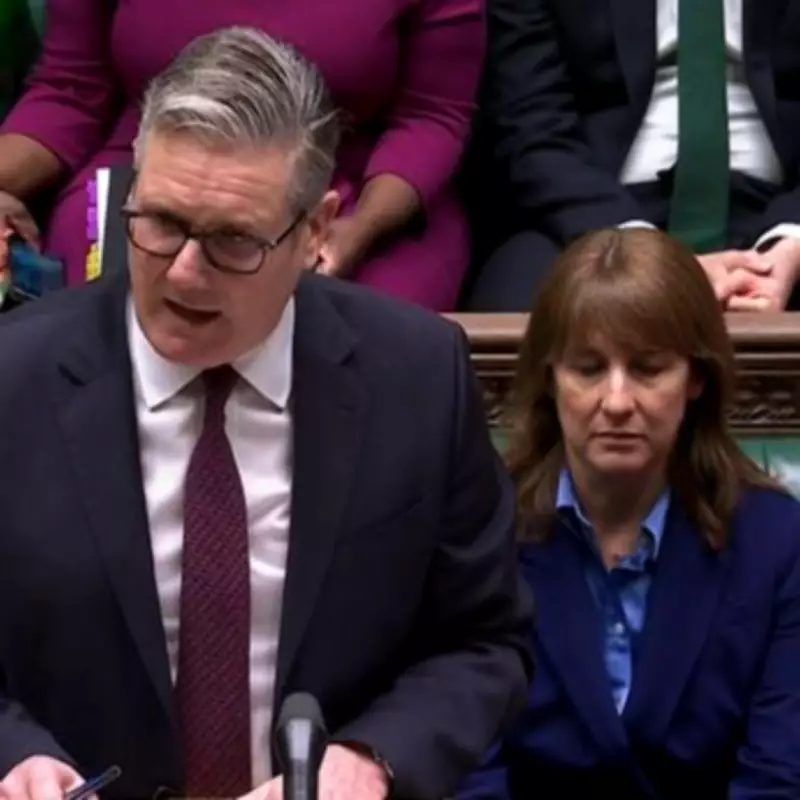
Prime Minister Sir Keir Starmer has broken his silence with a powerful and emotional response during today's Prime Minister's Questions, directly addressing the growing controversy surrounding former ambassador Peter Mandelson. The session saw the Prime Minister grilled by Opposition Leader Kemi Badenoch, resulting in some of the most dramatic exchanges witnessed in the Commons this parliamentary term.
A Declaration of Public Anger
Sir Keir Starmer did not mince his words when questioned about Lord Mandelson, who was appointed as the UK's ambassador to the United States in 2024. The Prime Minister admitted he felt "as angry as the public" about the situation, setting a tone of shared national outrage that resonated throughout the chamber.
In a damning assessment of Mandelson's conduct, Starmer declared: "Mandelson betrayed our country, our parliament and my party." This triple betrayal accusation formed the cornerstone of the Prime Minister's argument, suggesting violations at national, democratic, and political levels that demanded immediate action.

Revelations of Systematic Deception
The Prime Minister revealed troubling details about Mandelson's conduct, explaining how the former ambassador had lied repeatedly to government officials when questioned about his relationship with convicted sex offender Jeffrey Epstein. These deceptions occurred both before and during Mandelson's tenure as ambassador, according to Starmer's account.
"I regret appointing him," the Prime Minister stated unequivocally. "If I knew then what I know now, he would never have been anywhere near government." This frank admission of regret highlighted the gravity of the situation and the Prime Minister's determination to address what he clearly views as a serious failure in the appointment process.
Concrete Actions Announced
Sir Keir Starmer outlined specific measures being taken in response to the Mandelson revelations. He confirmed that yesterday, with his support, the cabinet secretary had decided to refer material to the police for further investigation. This represents a significant escalation in the official response to the controversy.
More dramatically, the Prime Minister announced: "I've instructed my team to draft legislation to strip Mandelson of his title." This unprecedented move would see a sitting government actively working to remove an honorific title from a former senior official, underscoring the severity with which Starmer views Mandelson's actions.
Royal Consultation and Privy Council Removal
The Prime Minister further revealed that he had spoken with King Charles III this morning and agreed that Mandelson should be removed from the list of privy councillors. The grounds for this removal were stated as Mandelson having "brought the reputation of the Privy Council into disrepute."
This consultation with the monarch and subsequent action represents a constitutional dimension to the scandal, extending beyond party politics to affect Mandelson's formal standing within the British establishment.
Opposition Scrutiny and Further Revelations
Following the Prime Minister's statement, Opposition Leader Kemi Badenoch continued her questioning, pressing Starmer on his knowledge of Mandelson's relationship with Jeffrey Epstein. The Prime Minister responded by explaining that the "sheer depth" of Mandelson's relationship with Epstein was "not known" to him or his team at the time of the appointment.
Starmer elaborated: "[Mandelson] lied about that to everyone for years. New information was published in September showing the relationship was materially different to what we'd been led to believe." He emphasized that when this new information came to light, immediate action was taken: "I sacked him."
Later in the PMQs session, the Prime Minister added further detail, stating that Mandelson had "misrepresented" the extent of his relationship with Epstein and had "lied throughout the process." These additional comments reinforced the narrative of systematic deception that formed the basis of the government's response.

The dramatic exchanges during today's Prime Minister's Questions have thrust the Mandelson controversy back into the political spotlight, with the Prime Minister taking an unusually personal and emotional stance against a former senior figure from his own party. The announced measures—from police referral to title-stripping legislation—represent one of the most comprehensive responses to a political scandal in recent parliamentary history.