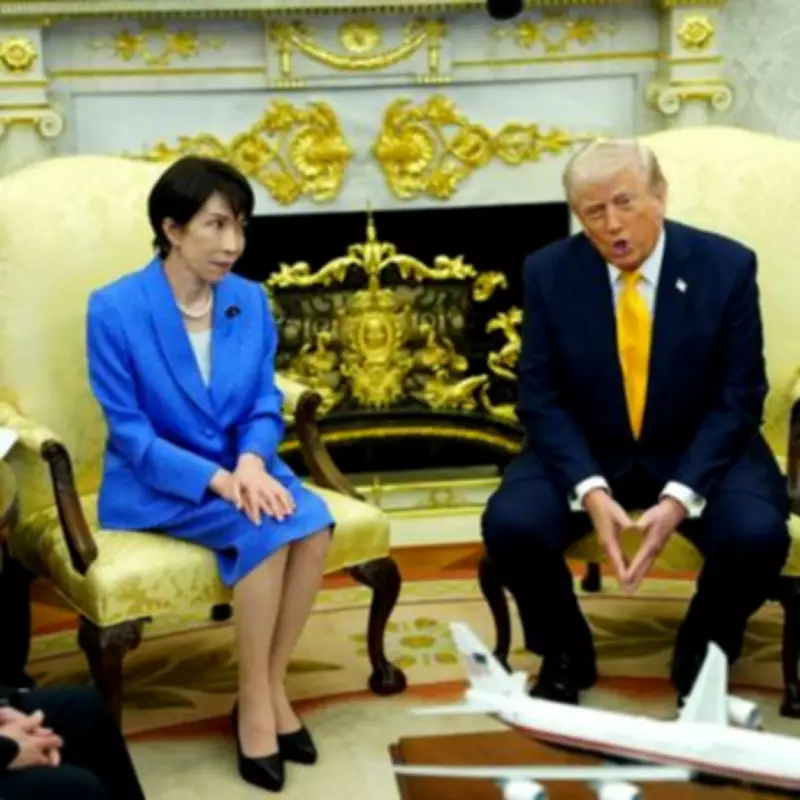
Trump's Inappropriate Pearl Harbor Remark Creates Awkward Silence During Japanese PM Visit
United States President Donald Trump created a moment of profound discomfort during a White House meeting with Japanese Prime Minister Sanae Takaichi when he made an ill-advised joke referencing the Pearl Harbor attack. The incident occurred during discussions that were primarily focused on the escalating conflict with Iran and global energy security concerns.
The Controversial Exchange
The Oval Office meeting proceeded relatively smoothly until a Japanese journalist questioned President Trump about why he hadn't informed US allies, including Japan, about his intention to bomb Iran. Trump responded by explaining the strategic advantage of surprise in military operations.
"One thing, you don't want to signal too much," Trump stated. "We went in very hard, and we didn't tell anybody about it because we wanted surprise."

The president then made his controversial remark: "Who knows better about surprise than Japan?" This initial comment drew some uneasy laughter from those present, but the atmosphere shifted dramatically when Trump pushed the joke further.
"Why didn't you tell me about Pearl Harbor? OK? Right?" Trump added, referencing Japan's surprise attack on the United States Pacific Fleet at Pearl Harbor in December 1941, which dragged the US into World War II.
Historical Context and Immediate Reaction
The reference to Pearl Harbor, which former President Franklin D. Roosevelt famously called "a date which will live in infamy," immediately hushed the room. To the suddenly silent audience, Trump continued: "He's asking me... no you believe in surprise much more than us. And we had to surprise them, and that's what we did."
The awkward moment occurred despite what had been described as warm public exchanges between the two leaders earlier in the day. Trump had praised Takaichi as a "popular powerful woman," while the Japanese prime minister had appealed to Trump's desire to be seen as a peacemaker.
Broader Meeting Context: Iran Conflict and Energy Security
The meeting between Trump and Takaichi took place against the backdrop of significant international tensions. During their discussions, Takaichi joined leaders from five other nations in issuing a joint statement strongly condemning Iranian attacks on shipping and oil and gas facilities, as well as what they termed the "de facto closure" of the Strait of Hormuz.
The leaders expressed "deep concern about the escalating conflict" and called on Iran to immediately cease threats, mine-laying, drone and missile attacks, and other attempts to block the strategic strait to commercial shipping. They urged compliance with UN Security Council Resolution 2817, which denounced Iran's attacks on neighboring countries.
Prime Minister Takaichi emphasized Japan's opposition to Iran's nuclear program development, stating through an interpreter: "Iran's development of nuclear weapons must never be allowed. That is why we, Japan, have been urging them and also reaching out to other partners in the world."
Additional Meeting Details and Broader Implications
The White House meeting, which was followed by a dinner, had been intended to provide Japan's new prime minister with an important opportunity to engage with Trump before her planned visit to China. However, the ongoing conflict in Iran and Trump's unsuccessful efforts to secure Japanese assistance in safeguarding the Strait of Hormuz resulted in the postponement of the China trip.
Trump has repeatedly expressed frustration that US allies, including Japan, have declined his request to help protect this vital route for oil and gas transportation. Before leaving Japan, Prime Minister Takaichi had admitted she anticipated her meeting with Trump would be "very difficult."
During the meeting, Trump also revealed that he had advised Israeli Prime Minister Benjamin Netanyahu against initiating an attack on the Iranian section of the world's largest gas field, stating: "Yeah, I did, I did. I told him, 'Don't do that.'"

The Pentagon has indicated it requires an additional $200 billion for the conflict with Iran, though Trump stated this emergency spending would also support other military needs. When questioned about deploying US ground troops to Iran, Trump firmly stated: "No. I'm not putting troops anywhere," while asserting his authority to deploy military forces as he sees fit.