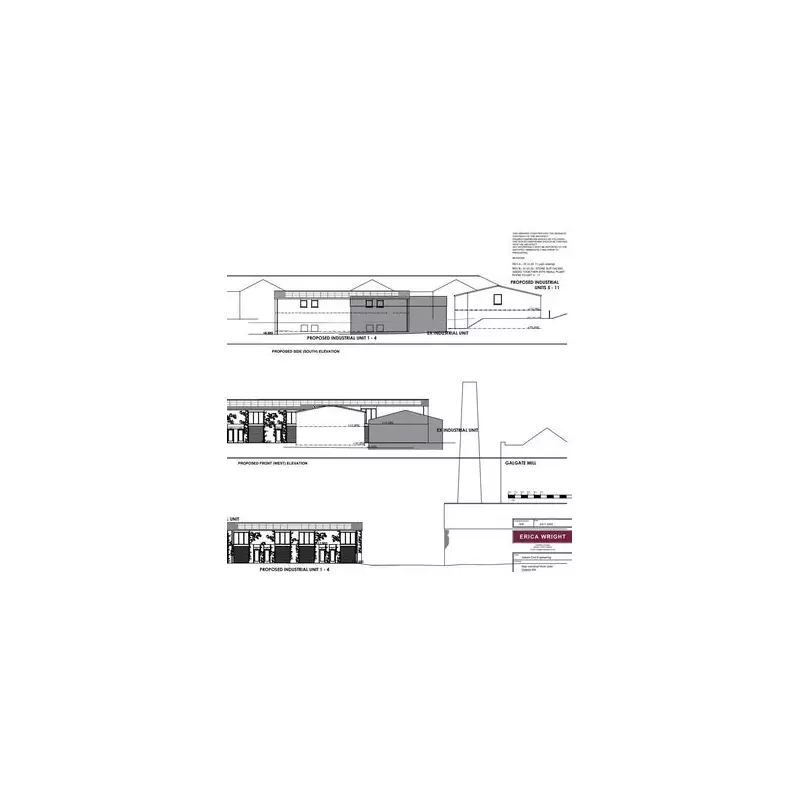
Lancaster City Council has given the green light to significant design alterations for a pair of new industrial buildings planned for a site adjacent to the historic Galgate Mill. The planning committee approved the variations, which will modify the appearance and functionality of the units on Chapel Lane in Galgate.
Details of the Approved Design Variations
The application was submitted by Rob Lowery of Askam Civil Engineering Ltd, a Lancaster-based firm working in collaboration with Erica Wright Architecture Ltd from Kirkby Lonsdale. While full planning permission for the two industrial buildings was already in place, the new approval covers a series of specific design changes.
The key modifications include:

- The removal of several side and ground-floor windows.
- The addition of extra roller shutter doors and pedestrian doors on the north elevation.
- A reduction in first-floor openings.
- The replacement of some glazed areas with further roller shutter doors.
The overall scheme will provide individual business units, parking facilities, a vehicle turning area, and landscaping. The site is located north of Galgate Mill, an area characterised by a mix of commercial and residential properties.
Heritage Context and Neighbouring Concerns
The location is of notable heritage significance. A council planning report highlighted that the Galgate Silk Mills, two Grade II listed buildings of national importance, stand on either side of Chapel Lane. Other significant buildings include a five-storey brick structure from 1852, now used for student housing, and a converted sandstone corn mill from 1792, which currently houses factory units.
During the committee meeting on 1 December 2025, councillors raised questions about the impact on neighbouring properties, particularly Ellel House, a Grade II listed care home. Councillor Alan Greenwell queried the effect on residents. Planning officer Andrew Clement confirmed changes to the parking layout and a slightly reduced landscaped area to the south, but highlighted that the use of natural stone materials on the building facing the home would have a mitigating effect.
Committee chairwoman Councillor Sandra Thornberry sought reassurance that the changes were not excessive, to which Mr Clement responded that the fundamental industrial use of the buildings remained unchanged from the previously approved scheme.
Addressing Light Pollution and Final Approval
Further concerns were voiced by Councillor Tom Fish regarding potential light pollution from the development. He asked if conditions could be imposed regarding the height of light posts or their operating times. Mr Clement advised that a lighting assessment had been conducted and that standard planning conditions would be used to control illumination, aiming to prevent significant light spillage, particularly to the east into woodland areas.
With these points addressed, the planning committee voted to approve the design variations, subject to standard conditions. The decision allows Askam Civil Engineering to proceed with the updated plans for the industrial units, balancing modern business needs with the sensitivities of the site's historic surroundings.