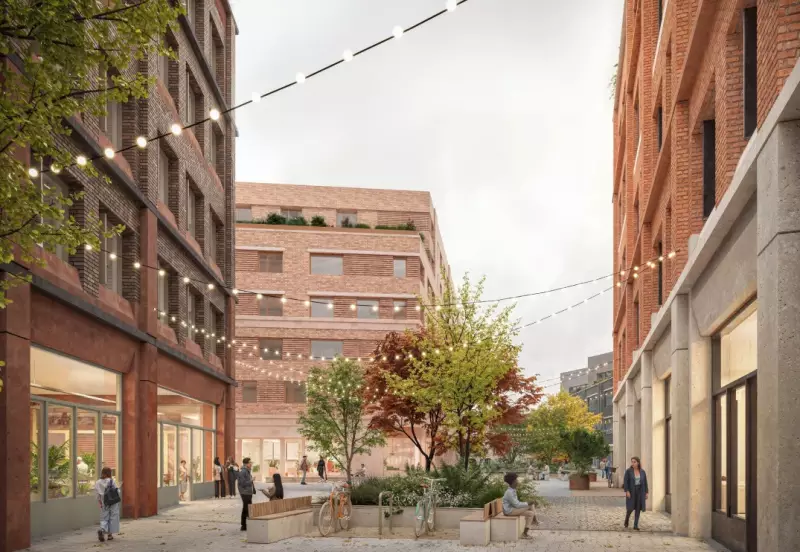
Ambitious plans to redevelop an entire city block and establish a key gateway in the heart of Digbeth, Birmingham, have been officially approved by the city council.
What the Phoenix Yard Development Involves
The substantial scheme, known as Phoenix Yard, will see a plot of land adjacent to Digbeth High Street transformed. Developers secured permission to construct two primary blocks, one rising to six storeys and another to four storeys, designated for commercial and education purposes.
In a broader outline permission, the project also paves the way for up to 205 residential units, 576 student bedspaces, and 228 co-living private bedrooms. Furthermore, the plans include the potential for up to 450 hotel rooms across two additional blocks, with the council report noting the approval seeks permission for any combination of these proposed uses.

Council Debate and Co-Living Concerns
During a council planning meeting, the proposals received significant praise for their design. Councillor Gareth Moore acknowledged there was a lot to like about the attractive plans. However, he voiced strong opposition to the co-living element, which he described as basically glorified HMO living, stating it was a use he could not support.
Councillor Martin Brooks echoed the general commendation for the scheme but offered a different perspective on co-living. He suggested that given the site's proximity to the city centre, it was quite a good location to have that kind of co-living concept.
The chair of the planning committee, Councillor Lee Marsham, lauded the proposals as maybe the best scheme we've seen in quite a while. A council officer present confirmed that the applicants had demonstrated a clear need for co-living accommodation, leading to the conclusion that as part of the broader mix that this scheme is bringing, we're happy to support it in this particular instance.
Public Benefits and Heritage Impact
A report published ahead of the decision highlighted the scheme's extensive benefits. These include the provision of much-needed homes and commercial floorspace, the potential for a new hotel, high-quality public realm, and the productive reuse of brownfield land.
The development promises a generous amount of public realm, with a central square intended to foster social interaction. An amenity lawn, rooftop terraces, and a resident's park are also part of the vision.
The council officer addressed concerns about the loss of employment land and potential harm to the Digbeth High Street conservation area, classifying the latter as less than substantial harm and at the lowest end of the scale. It was concluded that the heritage benefits of the scheme carry greater weight.
To make way for the new development, all existing buildings on the application site are set to be demolished, with the exception of Smithfield Garage, which will be partially bulldozed and refurbished. Following discussions, the planning committee voted to approve the plans, marking a significant step forward for the regeneration of this key area near major projects like Smithfield and HS2.