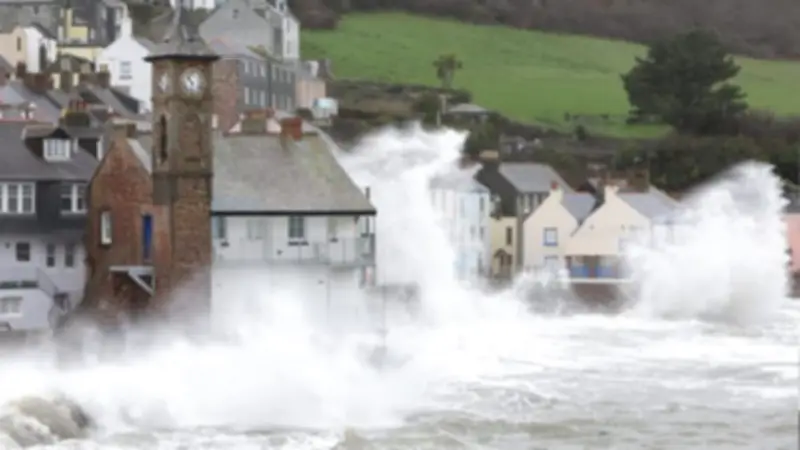
Storm Dave has passed, and Storm Eddie is on the way. But this raises a question: how severe must a weather front be to earn a name, and who decides what that name should be?
The Met Office, the UK's national weather service, has the answers. Naming storms is a carefully coordinated process designed to enhance public safety. This decade-old tradition helps emergency services, communities, and individuals share information about severe weather more effectively and prepare for potential impacts. By using a consistent name, the Met Office ensures that vital safety advice is not lost in a sea of confusing technical data.
Who Names Storms?
This year's list of storm names is a collaboration between the Met Office, Met Éireann in Ireland, and the KNMI from the Netherlands. Together, these meteorological experts select names that reflect shared culture and history while adhering to a specific set of rules. The Met Office welcomes suggestions for future names through its online form.

When Is a Storm Named?
A storm receives a name only when it has the potential to cause 'medium' or 'high' impacts across the UK, Ireland, or the Netherlands. Will Lang, head of situational awareness at the Met Office, said: “Naming storms helps to make communication of severe weather easier and provides clarity when people could be impacted by the weather.” The decision usually coincides with the issuing of amber or red weather warnings for wind, rain, or snow. Experts assess the storm's risk levels, focusing on the most critical threats to life and property before assigning a name from the alphabetical list.
Exceptions to the List
There are exceptions. When Atlantic hurricanes or tropical storms reach our shores, the Met Office retains their original titles to prevent confusion. You might hear these systems described as 'ex-hurricane Ophelia', ensuring international tracking remains clear and consistent. If the system is forecast to cause significant local impacts, it is simply referred to as 'Storm Ophelia' while keeping its original US-designated name.
Alphabetical Order and Excluded Letters
Names are always used in alphabetical order, starting with 'A' at the beginning of the storm season in September. To align with international conventions, the letters Q, U, X, Y, and Z are never used due to fewer available names.
The Impact of Naming Storms
The impact of naming is clear. Studies show that almost 90% of people in high-risk areas take action when a storm is named. “Year after year, storm naming proves effective for that,” said Eoin Sherlock, a forecaster at Met Éireann. Whether it is securing garden furniture or checking on a vulnerable neighbour, that simple name acts as a powerful trigger for community action.