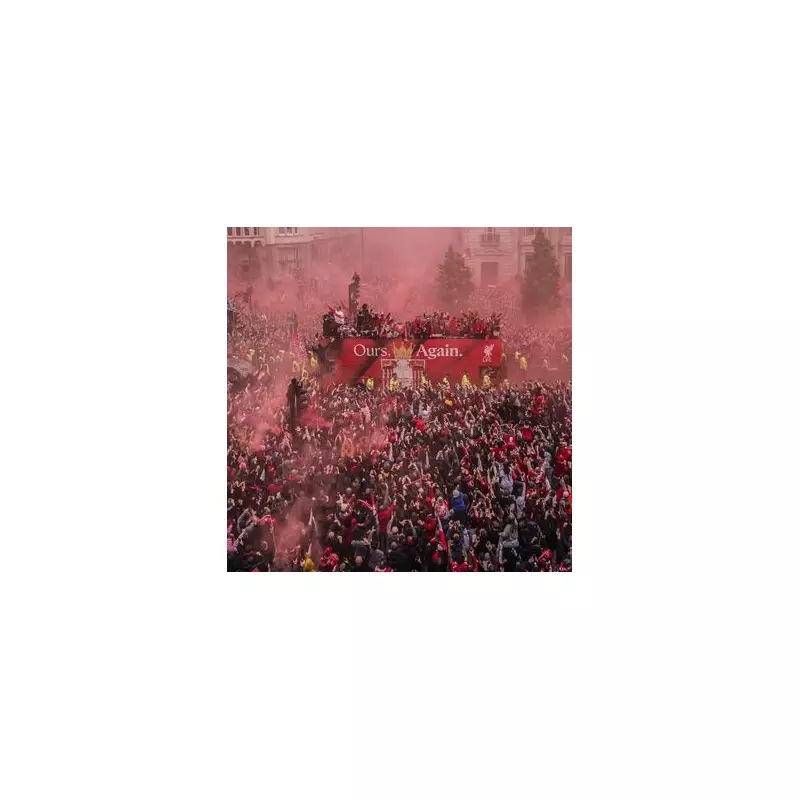
Liverpool Football Club has achieved a significant financial milestone, emerging as the highest-earning English club in the latest Deloitte Football Money League rankings. This marks the first time Liverpool has topped the domestic financial table, while Manchester United has slumped to its lowest-ever position in the prestigious annual report.
Manchester United's Decline and Liverpool's Rise
Manchester United, once considered the commercial benchmark in football with ten Money League titles in its 29-year history, now languishes in eighth place globally. The Red Devils' fall from grace is partly attributed to a substantial drop in broadcast income, which decreased from €258 million to €206 million following their exclusion from the Champions League during the 2024-25 season.
United's financial challenges are expected to intensify this campaign, with reduced matchday income due to their absence from European competitions. Early exits from domestic cup tournaments mean Old Trafford will host just 20 competitive matches throughout 2025-26, further impacting revenue streams.

Real Madrid Breaks Billion Euro Barrier
Real Madrid leads the global rankings, becoming the first football club to surpass the one billion euro revenue threshold with €1.161 billion (£1.01 billion). The Spanish giants are followed by Barcelona, Bayern Munich, and Paris Saint-Germain, marking the first time no English club features in the Money League's top four positions.
Liverpool occupies fifth place globally, benefiting from their Champions League comeback in 2024-25 and a seven per cent increase in commercial revenue from non-matchday activities at Anfield. This represents a remarkable achievement for the Merseyside club, which now leads England's financial rankings ahead of Manchester City and Arsenal.
Industry Analysis and Future Prospects
Tim Bridge, lead partner of Deloitte's Sports Business Group, provided insight into the shifting financial landscape. "The clubs with the biggest football club brands and position in the market have an opportunity to broaden their reach and offer more to fans on a matchday, offer more to fans on a non-matchday, and become a more 365-days-a-year touch point," Bridge explained.
Regarding Manchester United's situation, Bridge noted: "If you went back 10 or 15 years, and you looked at Manchester United's matchday revenue it was the industry leader. If you looked at their ability to generate commercial revenue, it was the benchmark by which everybody then went to market and set their strategy. I don't think that remains the case."
Impact of International Competitions
The expanded FIFA Club World Cup has significantly influenced club finances, with Deloitte reporting that participation delivered an average 17 per cent boost in broadcast revenues for the ten Money League clubs involved. This international competition, held during summer months, has contributed to the strong performances of continental European clubs in the latest rankings.
Bridge emphasised that future success requires both on-pitch achievements and commercial diversification: "The trick to staying (in the top five) is maintaining both of those. It used to be you only had to maintain one of them. Now, in 2026, we're at a point where the highest revenue generating clubs are probably broader than football."
Premier League Representation and Outlook
Despite the absence of English clubs from the top four positions, the Premier League remains strongly represented with nine clubs in the top 20:
- Tottenham Hotspur (ninth)
- Chelsea (tenth)
- Aston Villa (14th)
- Newcastle United (17th)
- West Ham United (20th)
Manchester City's sixth-place finish represents their lowest position since the Covid-19 affected 2019-20 season, while Arsenal maintains a strong presence in the upper echelons of the rankings.
Looking ahead, Premier League clubs may anticipate improved fortunes in the 2027 Money League, which will capture the impact of the new broadcast agreement running through to 2029. However, Bridge's analysis suggests that sustained success will require clubs to excel both commercially and competitively in an increasingly sophisticated global market.