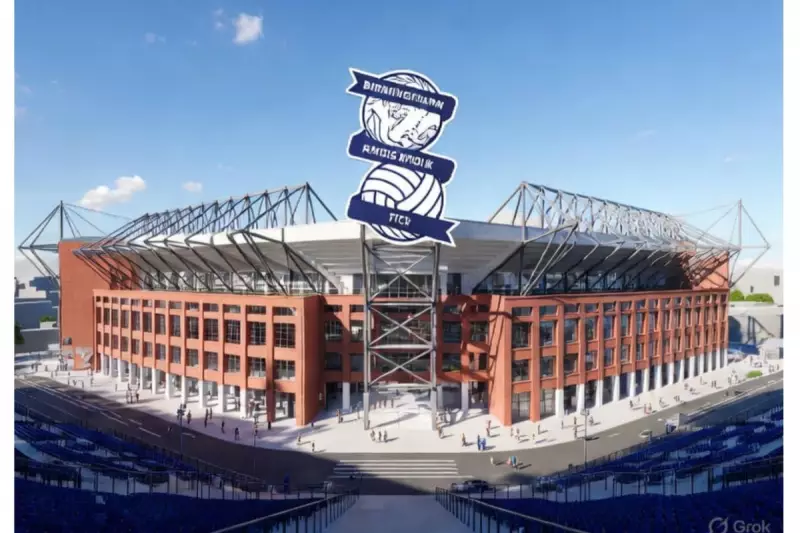
Birmingham City Football Club is poised to leave its historic home of nearly 120 years, St Andrew's, for a spectacular new stadium that could reshape the city's skyline.
A Modern Sporting Colossus
The Championship club's proposed new ground is set to become one of England's largest football stadiums, with capacity for approximately 62,000 spectators. The venue has been designed as a multi-sport facility, with American football matches featuring on the wishlist, reflecting the interests of the club's US owners.
Chairman Tom Wagner has created considerable anticipation by describing the project as "a stadium you can see from every place in the city" and visible from up to 35 miles away, indicating a bold, towering structure that will become a dominant Birmingham landmark.

Industrial Heritage Meets Modern Design
In a unique creative decision, the club has enlisted Steven Knight, creator of the Birmingham-based television series Peaky Blinders, to collaborate with architects on the stadium's design. The final concept is expected to pay homage to the city's industrial heritage, potentially incorporating some form of 'chimney' design element that will likely prove divisive among supporters.
The club has set an ambitious target to complete the entire project by the end of 2029, which would allow Birmingham City to begin hosting home matches at their new ground for the 2029/30 season. Wagner has openly acknowledged that this timeline represents a significant challenge.
AI's Vision for the Blues' Future Home
Ahead of the official stadium design reveal scheduled for 3pm today, artificial intelligence has been utilised to generate potential visualisations of what Birmingham City's new home might look like.
The AI-generated designs present intriguing interpretations of how the stadium might incorporate industrial design elements while creating a modern, world-class sporting venue capable of hosting international events, including potential NFL matches.
As Birmingham City prepares to turn the page on 12 decades at St Andrew's, the club stands at the threshold of a new era, with a stadium project that aims to transform both its sporting fortunes and the city's architectural landscape.