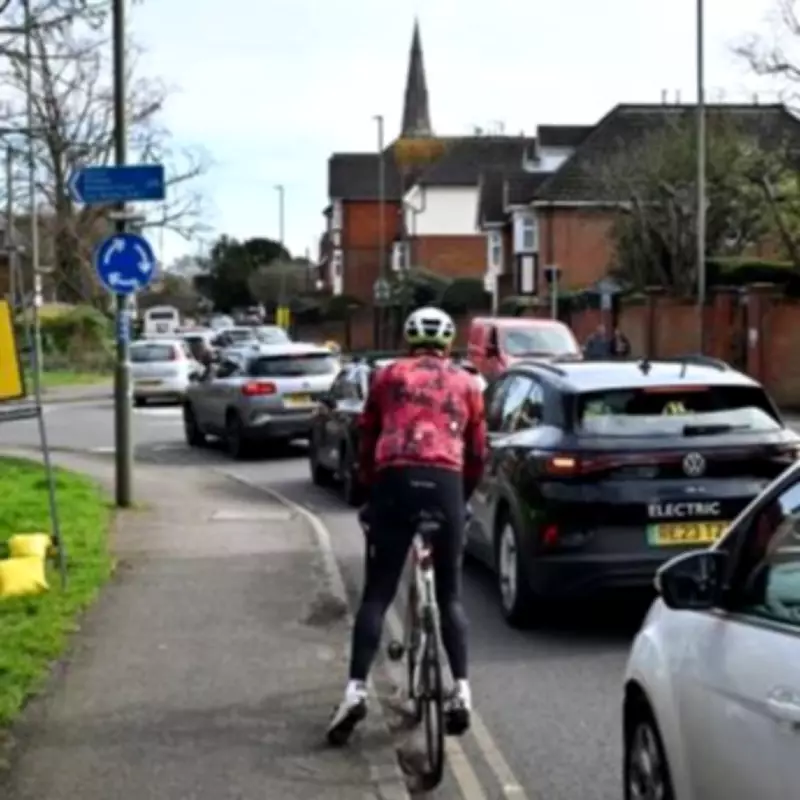
Highway Code Rule 59 Sparks Debate Over Mandatory Hi-Vis for Cyclists
A contentious proposal could see cyclists required to wear high-visibility clothing under potential changes to the Highway Code, igniting a fierce debate over road safety and personal responsibility.
Union Calls for Mandatory Hi-Vis to Enhance Visibility
Thomas O'Connor, assistant general secretary of Ireland's National Bus and Rail Union, recently presented recommendations to a Joint Oireachtas Committee on transport and road safety. Speaking at Leinster House, Ireland's Parliament, O'Connor argued that navigating hazards is a "deluge" for bus drivers.
He stated, "The requirement for mandatory high-vis clothing for all cyclists and scooters, from the perspective of a bus driver, would make the roads a safer place, as it would make potential hazards easier to spot." O'Connor emphasized that experienced bus drivers often prevent accidents through defensive driving, and hi-vis clothing would simplify this task.

Cycling UK Challenges the Evidence Behind Hi-Vis
In response, Cycling UK has strongly opposed the idea, citing a lack of scientific support. The organization explained, "There is no sound evidence that hi-vis clothing makes a positive impact on cyclists' safety." They warned that the rule is frequently misused to shift blame onto cyclists when drivers fail to see them, rather than addressing inadequate observation by motorists.
Cycling UK further noted, "Rule 59 advises light-coloured or fluorescent clothing, yet a cyclist wearing a yellow jacket as they ride past a field of oil seed rape is less conspicuous against that background than someone wearing a black jacket and white shorts." This highlights concerns about the effectiveness of hi-vis in all environments.
Public Reaction and Broader Safety Concerns
The proposal has elicited mixed reactions from the public. One commenter suggested, "I'd rather see a headline that says 'Cyclists will be forced to follow the same rules of the road as all other road users, as well as have mandatory third party insurance, a cycle MOT, a proficiency test, and pay road tax.'"
Another supported the idea, stating, "I agree as there's far too many people cycling in the dark that can't be seen. And if they don't they should be fined. £100.00 should do it." However, a dissenting voice shared personal experience, saying, "I have experience of being invisible on several occasions whilst riding a hi vis motorcycle, hi vis clothing, blue lights and horns," questioning the reliability of hi-vis alone.
A further comment raised issues about common sense, asking, "To be honest when I cycled I wore reflective belt out of my need for self preservation. The number of cyclist with no lights, no reflectors and obvious suicidal tendencies astounds me. Why should they need to be taught common sense?"
Background on Highway Code Rule 59
Rule 59 of the Highway Code currently outlines recommendations for what cyclists should wear on the road, advising light-coloured or fluorescent clothing to improve visibility. The debate centers on whether this should be upgraded from guidance to a mandatory requirement, potentially affecting cyclists across the UK and Ireland.
As discussions continue, the clash between union-driven safety measures and cycling advocacy groups underscores broader tensions in road safety policy, with implications for all road users.