A new report has issued a stark warning that the UK risks creating a 'two-tier' motoring system, disproportionately affecting households earning under £40,000 a year who lack a private driveway. The analysis from Autotrader highlights a significant wealth divide in the nation's transition to electric vehicles (EVs).
The Driveway Divide and Income Barrier
The research reveals a telling disparity in EV consideration based on income. While over 80 per cent of households earning above £40,000 annually would contemplate an electric car for their next purchase, this figure drops to 48 per cent for those earning below that threshold. Access to home charging emerges as a critical, but complex, factor.
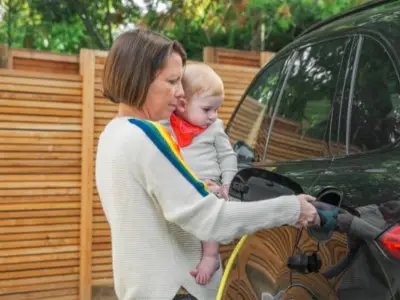
Contrary to common assumptions, the survey found that 70 per cent of lower-income households do have a driveway. However, this leaves a significant 30 per cent – representing hundreds of thousands of homes – without this facility. For these motorists, the switch from petrol and diesel engines presents a far greater practical and financial challenge, forcing reliance on a public charging network that is often sparse and expensive.

The Looming Risk of a Two-Tier System
The core of the warning centres on the potential emergence of an unequal motoring landscape. Households without driveways face the prospect of depending solely on public chargepoints, a situation exacerbated by a current lack of readily available on-street charging infrastructure across much of the UK.
This reliance comes with a heavy cost penalty. Public charging is substantially more expensive than home charging, eroding the potential fuel savings that make EVs attractive. Ian Plummer, Commercial Director at Autotrader, emphasised the danger: "If lower-income households can't access affordable vehicles, we risk creating a two-tier system where the benefits of cleaner, cheaper motoring accrue to those already better off."
Call for Action and Path Forward
The report challenges the government and industry to address these barriers head-on. It notes that campaigners are urgently pushing the Labour Party government to act on the charging infrastructure shortfall. Furthermore, Autotrader's data suggests that having a driveway is "not the clear-cut indicator of electric consideration – or likelihood to buy – as previously thought," indicating other factors like vehicle cost and battery concerns are also pivotal.
Issuing a direct warning to policymakers, Ian Plummer outlined the necessary steps: "The path forward is clear: more choice at lower price points, greater transparency on battery health metrics, and practical charging solutions for people without driveways. Do that, and we unlock EVs for everyone – not just the few." The findings underscore that without targeted intervention, the EV revolution could deepen existing inequalities rather than providing universal benefits.