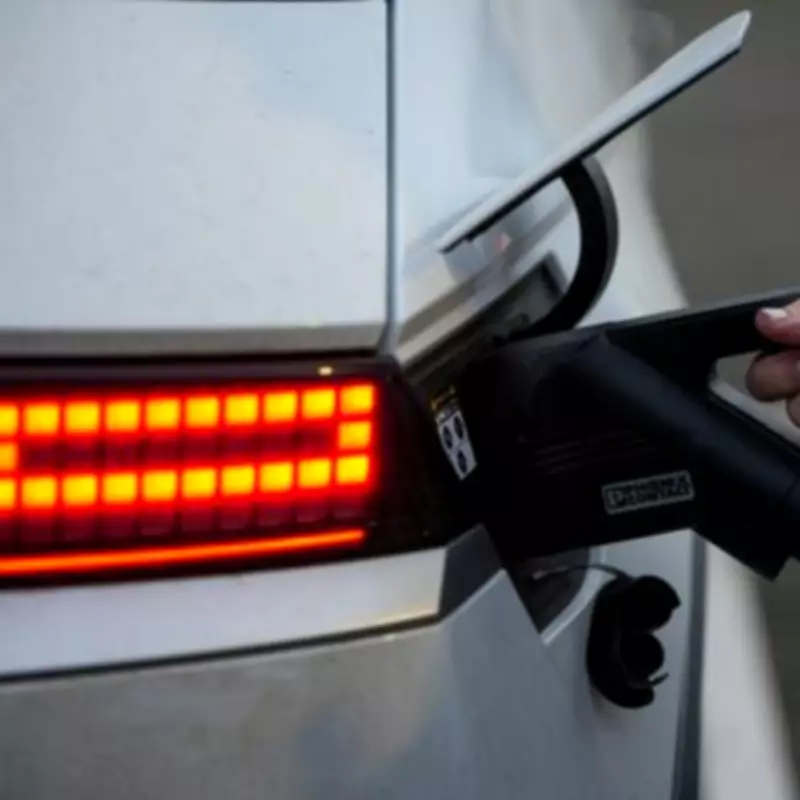
Electric vehicle batteries could soon charge in mere minutes and offer significantly extended range, thanks to a groundbreaking development in battery technology. This advancement promises to revolutionize the efficiency and practicality of EVs, addressing key concerns for drivers.
High-Temperature Testing Yields Impressive Results
Donut Lab has reported remarkable outcomes from high-temperature testing of its solid-state battery. The battery cell was tested at temperatures of 80°C and 100°C after being placed on an aluminium profile and a steel plate with light pressure applied. Astonishingly, it was able to utilize up to 110 percent of its capacity, demonstrating better efficiency than at room temperature.
Overcoming Heat Sensitivity in Batteries
Ville Piippo, Chief Technology Officer at Donut Lab, explained the significance of this breakthrough. "Traditional lithium-ion batteries are highly sensitive to heat, with an upper operating temperature limit typically around 60 to 70 degrees Celsius," he stated. "High temperatures increase the risk of damage to battery cells and shorten their service life. They can also cause accelerated reactions inside the cell, and in the worst cases, significantly raise the risk of thermal runaway."

This new solid-state battery technology appears to mitigate these risks, potentially leading to safer and more durable EV batteries that can withstand extreme conditions without compromising performance.
Low Awareness of Government EV Grants
Despite such technological progress, many drivers remain unaware of financial incentives to switch to electric vehicles. A recent study revealed that almost two-thirds of people, specifically 64 percent, had no knowledge of the Labour Party government's £3,750 car grant designed to assist in transitioning to fuel-free vehicles.
Current EV Sales and Government Targets
Data from the Society of Motor Manufacturers and Traders indicates that electric vehicles currently account for just under 25 percent of new car sales. This figure remains substantially below the government's target of 33 percent, as mandated under the Zero Emission Vehicle policy. The gap highlights the need for increased public education and support to accelerate EV adoption.
As battery technology advances with breakthroughs like Donut Lab's solid-state battery, the future of electric vehicles looks increasingly promising. Faster charging times and extended ranges could make EVs more appealing to a broader audience, potentially helping to meet environmental goals and reduce reliance on fossil fuels.