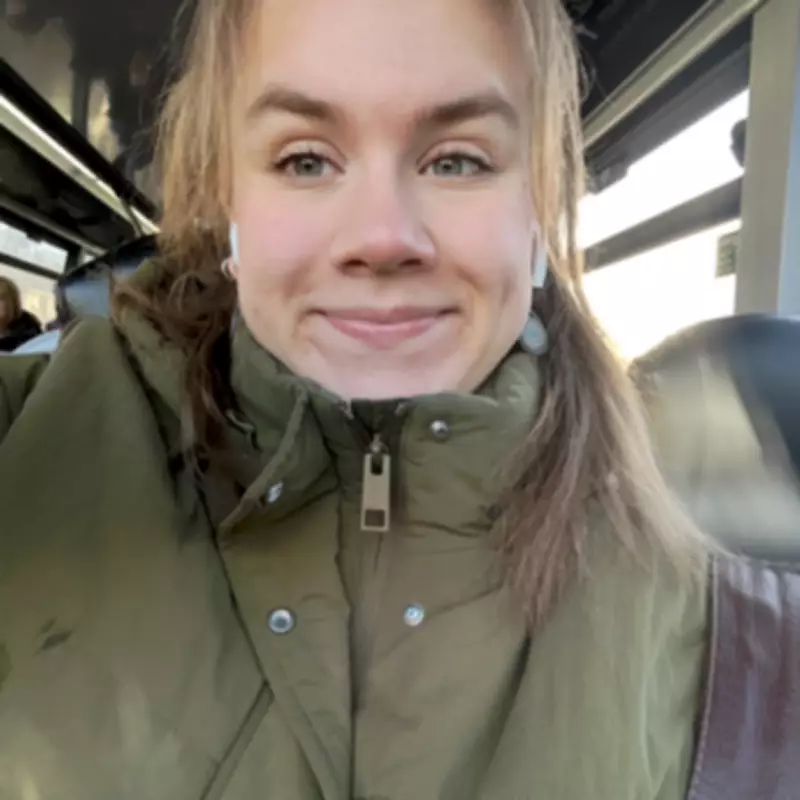
A Terrifying Journey Home on Birmingham's Number 24 Bus
What began as an ordinary commute home from work transformed into a deeply unsettling experience that has permanently altered one Birmingham woman's relationship with public transportation. Amy Gaffney, a social video producer, recounts her September journey on the number 24 bus into Birmingham city center, an episode that left her questioning her own reactions and the broader safety measures in place for women travelers.
The Unsettling Encounter That Changed Everything
After working from eight to four, Amy boarded the bus and chose a seat on the lower floor toward the back, deliberately avoiding the upper deck due to safety concerns about distance from the driver. Despite the daylight and initially empty bus, her sense of security quickly evaporated when three individuals decided to occupy the seats surrounding her.
"I was in the left corner, facing forwards, and another man chose to sit opposite me, on a seat just to the right," Amy recalls. "His two friends - one man and one woman - sat on the nearest seats on the right side of the bus."

Despite the availability of numerous other seats throughout the vehicle, the trio positioned themselves around her, immediately triggering her vigilance as a young woman in the UK, where statistics show one in three women will experience some form of abuse in their lifetime according to charity White Ribbon.
From Unwanted Attention to Physical Intrusion
The situation escalated when the man opposite noticed the title of Amy's book, Boy Parts by Eliza Clark. What began as an inappropriate comment - "Are you looking at boy parts? Show me! Show me!" - rapidly progressed to persistent harassment and physical intrusion.
"He kept yelling: 'Are you looking at pictures of boys? I want to see!'" Amy describes. "Then, he tried to snatch the book out of my hands."
This moment crystallized the impossible dilemma women often face in such situations: whether to ignore the harassment and risk provoking anger, or attempt polite engagement to prioritize immediate safety while potentially encouraging further interaction.
The Psychological Toll and Safety Calculations
Feeling trapped and uncomfortable, Amy contemplated exiting at the next stop but faced additional barriers. "I'd have to step over the trio to leave," she explains. "Plus, I was worried that if they followed me, I'd have no idea where I was."
As the journey continued toward Birmingham city center, the man opposite engaged in loud conversations about shoplifting and mistreatment of an ex-girlfriend, all while casting periodic glances toward Amy. Throughout this ordeal, she remained hyper-aware of her surroundings, mentally mapping escape routes and assessing potential risks - a reality familiar to many women navigating public spaces.
A Critical Safety Resource Unknown to Most
Only three months later, while investigating women's safety on public transport for BirminghamLive, Amy discovered the SeeSay reporting system. By texting 81018 with details of problematic situations, information is passed to Safer Travel to help address safety concerns on transportation networks.
Shockingly, in a poll of 34 individuals aged 18-30, only 15% knew this reporting number existed, with just one person able to recall it from memory. This knowledge gap highlights a critical disconnect between safety initiatives and public awareness.
Broader Context of Women's Safety Concerns
Amy's experience occurs against a backdrop of concerning statistics about violence against women in England and Wales. In the year ending March 2025, one in eight women experienced domestic abuse, sexual assault, or stalking. During the year ending June 2025, nearly 200 rapes were recorded by police daily - a figure the government acknowledges likely represents an underestimate of actual occurrences.
These sobering numbers contextualize why many women feel heightened anxiety when confronted with anti-social behavior on public transportation. The government has itself declared violence against women and girls a 'national emergency,' underscoring the seriousness of these safety concerns.

Safety Initiatives and Bystander Responsibility
National Express buses collaborate with Safer Travel's Project Empower campaign, which educates transportation staff and encourages reporting of unwanted sexual behavior to authorities. Additionally, Transport for West Midlands and Safer Travel have developed educational videos about women's safety, promoting a 'Recognise, Report, and Upstand' approach that empowers bystanders to intervene safely.
These initiatives aim to create safer travel environments where everyone understands their role in protecting vulnerable passengers. However, as Amy's experience demonstrates, awareness of these resources remains limited among the very populations who might need them most.
Reflections on a Changed Relationship with Public Transport
Since the incident, Amy finds herself overthinking every seating choice and remaining hyper-vigilant during bus journeys. "Was I being dramatic? Judgemental? Should I have just sat at the front?" she initially questioned herself.
However, reflecting on the broader context of women's safety statistics and the government's own emergency declaration, she now recognizes that her concerns were valid and shared by countless women across the country. The fundamental right to use public transportation without fear or harassment remains an ongoing challenge that requires continued attention, education, and systemic support.