Wales Rail Investment: £14bn Promise Faces Funding Allocation Concerns
The Welsh Government and Transport for Wales (TfW) have recently launched their ambitious infrastructure investment operating model for railways in Wales, titled Today, Tomorrow, Together. This vision document outlines a comprehensive plan for railway development, with estimates suggesting a total cost of up to £14 billion. However, significant concerns persist regarding whether Wales will receive a fair deal in terms of funding allocation and strategic control.
Funding Sources and Historical Precedents
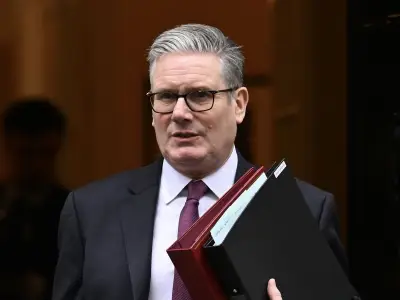
The presence of UK Prime Minister Sir Keir Starmer at the launch event at Taff's Well tram-train depot initially suggested potential substantial funding from the UK Government. Unfortunately, historical experience does not bode well for such expectations. There is little concrete evidence that the much-promoted collaboration between Welsh and UK governments actually materializes in the realm of transport policy and expenditure.
First Minister Eluned Morgan has explicitly stated that the railway network in Wales has suffered from chronic underfunding. The communication gap appears stark, with the UK Prime Minister seemingly either not engaging with the First Minister or disregarding her input. Similarly, the Secretary of State for Wales, Jo Stevens, may not have effectively advocated for Wales' case to HM Treasury, or her efforts might have been ignored.

Current Investment and Financial Shortfalls
Recent investments include over £500 million by Network Rail for re-signaling on the South Wales main line, though this did not involve enhanced infrastructure. Conversely, the £1.1 billion expenditure on Valley Lines electrification north of Cardiff saw only £125 million contributed by Westminster. The Barnett consequential contribution is notably restricted to train leasing and revenue support costs in England, limiting Wales' financial benefits.
The only guaranteed funding from the UK Labour government amounts to £445 million, announced in the 2025 Spending Review. This allocation will primarily fund five new commuter stations in southeast Wales, one at Deeside, and several junction improvements. While these projects are important for reducing peak-period traffic congestion, they fall far short of the £10 billion plus required to address the investment backlog and annual maintenance needs.
Strategic Vision and Structural Changes
The Today, Tomorrow, Together document may represent a strategic maneuver to frame railway investment based on economic necessity rather than population metrics. Major projects, such as signaling and electrification of the north, south, and Marcher main lines, could cost up to £6 billion. The vision lists an additional 40 schemes, including a direct service between west Wales and Bristol, though it notably omits mentions of the Heart of Wales Line or utilizing the Swansea District Line to shorten journey times to west Wales.
A key highlight of the plan is the proposed establishment of Great British Railways with a new railway business unit for Wales—GBR Cymru—which would replace Network Rail. This unit is intended to collaborate with TfW under a shared set of priorities aligned with the Welsh Government's vision and would answer to Welsh ministers. However, the document emphasizes that GBR Cymru will only bring greater investment if it is properly empowered and works in partnership with TfW as one cohesive team.
Legislative Hurdles and Historical Disparities
Achieving proper empowerment necessitates changes in the Railways Bill currently progressing through Westminster. The bill proposes a memorandum of understanding between the Welsh and UK governments rather than a specific clause transferring rail infrastructure responsibility and Barnett financial consequentials to Welsh ministers. This contrasts with the 2005 Railways Act, which granted such powers to Scotland but not to Wales.

This legislative gap has enabled successive Labour and Conservative Westminster governments to avoid applying the Barnett formula to railway capital expenditure in Wales, instead promoting 'England and Wales' investment schemes. Consequently, the Welsh Government and TfW lack their own high-level output statement (HLOS), a critical process for decision-making in rail infrastructure planning compared to the statement of funds available. In contrast, the Scottish Government retains sole control over its rail investment program.
Ongoing Concerns and Future Implications
The primary concern is that infrastructure strategy, priority setting, and funding allocation for Wales will continue to be determined by the Secretary of State for Transport in Whitehall and the GBR central board, as implied by last week's report. This arrangement is unsatisfactory, as it could have prevented projects like the Valley Lines electrification and may hinder the transport aspirations of any future Welsh Government post-Senedd elections.
Professor Stuart Cole CBE, Emeritus Professor of Transport (Economics and Policy) at the University of South Wales, underscores these issues, highlighting the need for genuine partnership and equitable funding to realize Wales' railway potential.