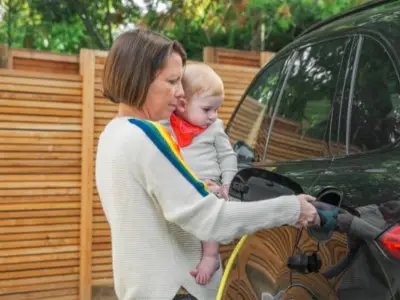
Plans for a new national pay-per-mile car tax have been officially confirmed by the Labour government, marking a significant u-turn after initial denials. The new scheme, set to begin in 2028, will see electric vehicle (EV) drivers charged an additional three pence for every mile they drive.
Government U-Turn on Pay-Per-Mile Tax
Transport Secretary Heidi Alexander initially told the House of Commons that "there are no proposals to introduce a national pay-per-mile scheme", firmly denying rumours of the new tax. She emphasised the government's support for drivers, highlighting record investments in road maintenance and infrastructure.
However, Downing Street later performed a complete u-turn, clarifying that Ms Alexander had "misspoke" during her Commons statement. This clarification confirmed that the pay-per-mile scheme would indeed proceed as part of Chancellor Rachel Reeves' Autumn Budget plans.

Financial Impact on Drivers
The new pay-per-mile car tax will have significant financial consequences for electric vehicle owners. According to analysis by Auto Express, a single journey from London to Oxford would cost nearly £2 in additional tax, while a return trip from London to Manchester would incur approximately £13 in extra charges.
The Telegraph estimates that the typical driver could face additional annual charges of up to £250 under the new system. This comes on top of existing Vehicle Excise Duty that EV drivers will already be paying by 2028.
Political Reaction and Industry Concerns
The announcement has sparked strong political opposition, with Conservative MP Charlie Dewhirst describing the policy as "yet another slap in the face from this government for the countryside and for our motorists" during Commons questioning.
Conservative shadow chancellor Mel Stride delivered a scathing assessment, stating: "If you own it, Labour will tax it. It would be wrong for Rachel Reeves to target commuters and car owners in this way just to help fill a black hole she has created in the public finances."
The automotive industry is expected to strongly oppose the measures, particularly as manufacturers struggle to meet challenging Zero Emission Vehicle (ZEV) Mandate sales targets. The policy is likely to be framed as an effort to ensure EV drivers contribute fairly to road maintenance costs, especially with the government facing a projected £1.8 billion shortfall in fuel duty revenue by 2031 as fewer drivers use petrol and diesel vehicles.