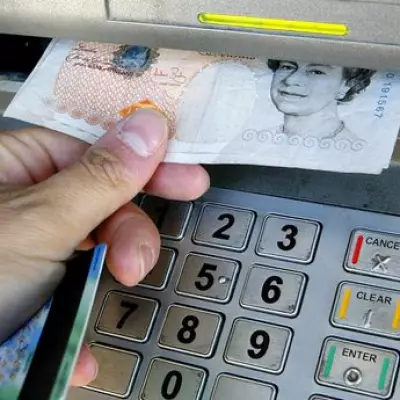
Building a healthy financial safety net is one of the first steps to achieving financial freedom, but making that money go as far as it can is crucially important. Keeping a cash pool in your current account is essentially leaving money on the table, as most current accounts offer interest rates far below the standard. In fact, you could be losing as much as £1,000 simply by not holding your money in the best place.
How Many People Miss Out on Savings Interest?
Research from the Building Societies Association (BSA) has shown that more than a third of people (34%) keep significant sums in current accounts, missing out on around £1,136 in interest income per year. Indeed, more than six million Brits have £10,000 or more in their current accounts, according to research by savings experts Spring. Derek Sprawling, head of money at Spring, said: "A current account should be seen as a tool for everyday spending, not a place to store large sums of money long-term."
Am I Earning Enough Interest on My Savings?
Whether you are earning enough interest on your savings depends on several factors, including the interest rate you receive, the type of savings account you have, and your financial goals. A rate that may seem reasonable could actually be lower than what other banks or financial institutions are offering, meaning your money may not be growing as effectively as it could. One of the most important things to check is your annual interest rate. Even a small difference in rates can have a noticeable impact over time. For example, if you have £20,000 in savings, earning 2% interest would generate about £400 per year, while a 4% rate would generate about £800 per year before tax.

What Is the Current Base Rate?
The Bank of England base interest rate is currently 3.75%. It was maintained at this level during the most recent Monetary Policy Committee decision in April 2026, following a 0.25% cut implemented in December 2025. This means savers should ideally be locking in a fixed-term savings account with interest of at least 3.8%, or ideally over 4%.
Where Should I Put My Savings?
There are different savings accounts designed for different needs, whether for long-term saving or building an emergency fund.
Easy-Access Savings Accounts
For cash you don't want locked away and can be easily taken out, you will need an easy-access savings account. These accounts allow you to deposit and withdraw money whenever you need to without paying penalties. It is highly flexible and ideal for building an emergency fund, making it a staple of personal finance. According to Martin Lewis' MoneySavingExpert.com (MSE), one of the best accounts currently on the market is Chase (part of JP Morgan), which pays 4.5% and includes a one-year first-time bonus. There is also Cahoot which pays 5% on up to £3,000 (no interest above), and Tembo which pays 4.55% on up to £20,000 (includes a one-year bonus).
Fixed-Term Savings Accounts
A fixed-term savings account (or fixed rate bond) lets you lock a lump sum away for a set period—usually 6 to 60 months—in return for a guaranteed, unchanging interest rate. One of the benefits of these accounts is that because the rate is fixed, you know exactly how much your money will grow. MSE has selected MBNA (part of Lloyds) as their top one-year fixed savings account as it offers a rate of 4.85%. Recognise Bank also offers the same rate of 4.85%. As for two-year fixes, Recognise Bank again comes out on top with 4.85%, while Hodge Bank follows at 4.83%. Three-year and five-year fixes are also available from most lenders, so it is important to understand what exactly you need before locking yourself in.

Expert Comment
Iona Bain, financial commentator and founder of the Young Money blog, said: "Over the last decade, we've become used to stagnant interest rates offering little return on our savings. But now, we're seeing successive base rate hikes. It is a double-edged sword, of course, but while households grapple with higher mortgage rates and increased living costs as a result, there is a silver lining in the form of significantly higher savings rates. Even if you feel like you can’t set any more aside at the moment, the BSA's research shows that reviewing where you're holding your existing savings can make a real difference; savers could potentially pocket over £1,000 just by shopping around for better rates."