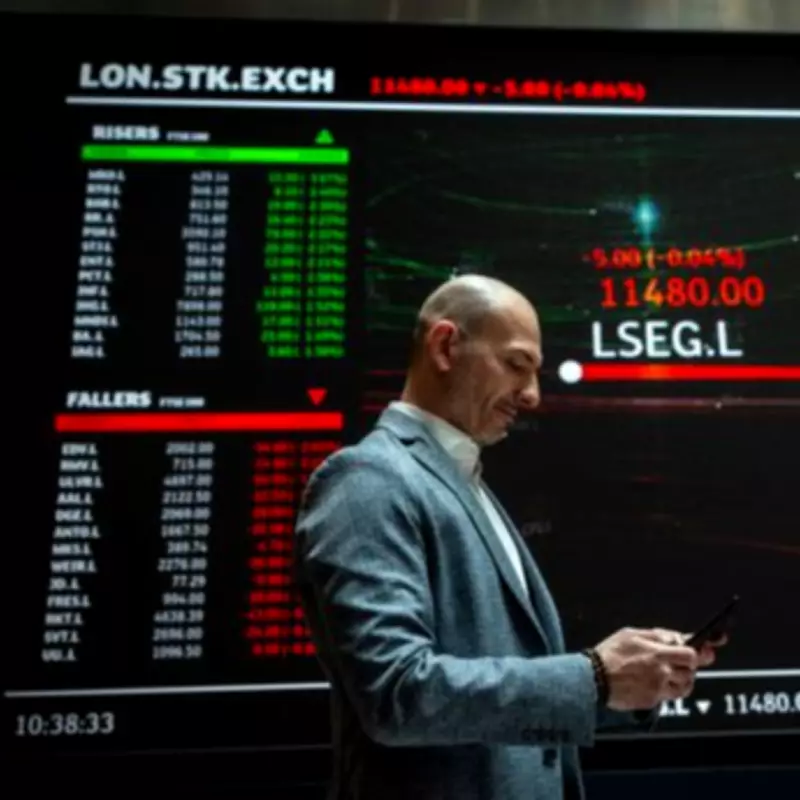
FTSE 100 Suffers Sharpest Decline Since Pandemic Era
London's premier stock index, the FTSE 100, has recorded its most severe monthly performance since the Covid-19 crisis, plummeting more than seven per cent throughout March. This dramatic downturn was precipitated by escalating military actions in the Middle East, involving the United States, Israel, and Iran, which have ignited the region's most serious conflict this century.
Historic Oil Price Surge and Market Volatility
The geopolitical turmoil has triggered unprecedented volatility in global energy markets. Brent crude oil, the international benchmark, experienced its largest single-month increase on record, soaring over 50 per cent to surpass $100 per barrel for the first time since Russia's invasion of Ukraine. By the end of March, Brent was trading at $107 per barrel, narrowly exceeding the previous monthly record set in 1990 during the Gulf War.
This surge was exacerbated by concerns over the Strait of Hormuz, a critical shipping channel that typically handles a quarter of global seaborne oil supplies and a fifth of natural gas. The effective closure of this vital route has placed intense strain on energy markets worldwide.

Government Borrowing Costs Skyrocket
The conflict has also prompted a dramatic reassessment of interest rate trajectories in the United Kingdom. Government short-term borrowing costs endured their worst month since Liz Truss's controversial mini-Budget, with the yield on two-year gilts jumping almost a full percentage point throughout March. This movement erased billions from the Chancellor's fiscal headroom and raised concerns about the UK's fiscal stability.
Longer-dated bonds faced significant pressure as well, with the 10-year gilt yield rising marginally above five per cent for the first time since the global financial crisis. Thirty-year gilts reached levels unseen this century, reflecting profound market anxiety.
Interest Rate Expectations Completely Reversed
Prior to the outbreak of hostilities, financial markets had anticipated the Bank of England would implement three interest rate cuts during 2026, responding to a deteriorating labour market and moderating inflation. However, fears that escalating energy prices would drive costs higher across the broader economy have completely reversed these expectations.
Markets now forecast between three and four interest rate increases before the end of 2026, representing a remarkable shift in monetary policy outlook within a single month.
Expert Analysis and Criticism
Jose Torres, senior economist at Interactive Brokers, observed that "President Trump's attempts to inject calm into markets appear to be losing impact each time" the conflict escalates.
Kathleen Brooks, research director at XTB, described the bond market movements as "astonishing" and contended that the government bears some responsibility for the situation. "It is unwilling to cut fuel duty or VAT on fuel in this environment. Instead it is blaming price gouging by petrol forecourt owners," she noted, adding that "there is absolutely no evidence of this" and that forecourt owners maintain slim profit margins of approximately six per cent per litre.
Sudden Halt to Impressive UK Asset Performance
The March downturn represents a sudden reversal for UK assets, which had demonstrated robust performance throughout early 2026. The FTSE 100 had surpassed the 10,000-point threshold for the first time in its history during January, continuing a remarkable run from 2025 when it was the world's top-performing major index.
Driven by investor appetite for mining exposure and attractive valuations, the index had been approaching the 11,000-point mark just before the conflict erupted. Government bonds had also rallied into 2026, supported by expectations of interest rate reductions and signals that ministers were prioritising public finance management.
Britain's government bonds experienced the most dramatic fluctuations among developed nations during March, with experts suggesting temporary price increases are less probable in the UK due to its regulated sectors and exposed energy market structure.