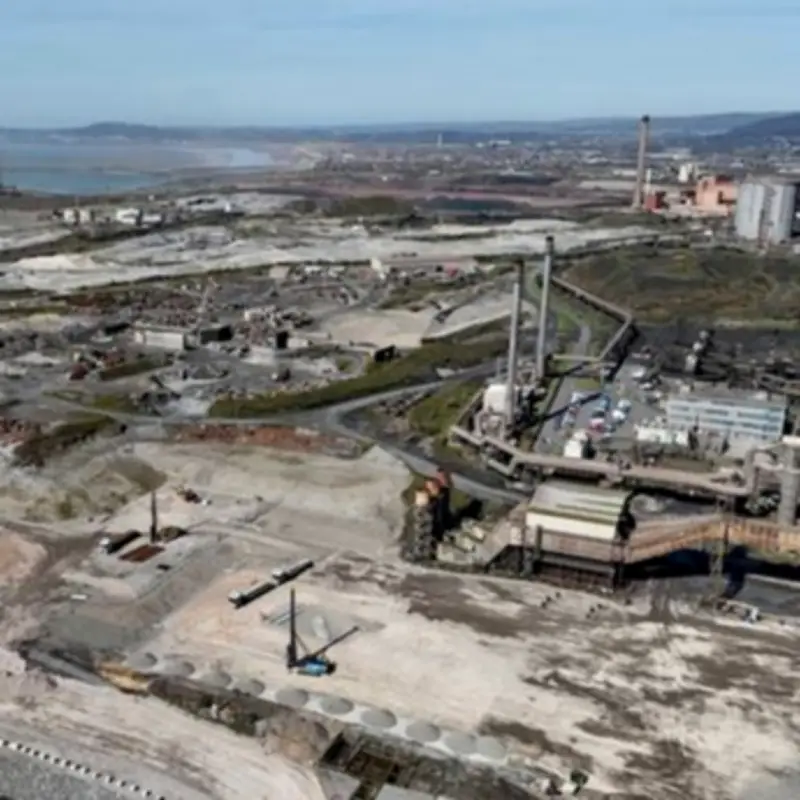
Tata Steel's new electric arc furnace at the Port Talbot steelworks may face a delay of up to 12 months due to challenges in securing sufficient electricity supply to the site, company executives have confirmed. Despite this, they remain optimistic that the delay could be shortened through ongoing negotiations.
Project Overview
The electric arc furnace is a £1.25 billion initiative, partly funded by the UK government, designed to be one of the largest such furnaces globally. It aims to replace the historic blast furnaces at the steelworks, marking a significant shift towards more sustainable steel production.
Power Supply Issues
Koushik Chatterjee, Tata Steel's chief financial officer, stated that the initial delay estimate of 18 months has already been reduced to 12 months, and the company is actively working to further minimize it. He emphasized that securing high-power electricity is critical for the transition. National Grid has formally notified Tata of delays in their connectivity project, which involves building a new substation at Margam and a second 275kV substation on the Port Talbot site, along with a 2km underground cable.

Chatterjee noted that discussions with National Grid and the UK government are ongoing to resolve the issues. He estimated the delay could range from six to eight months after the plant is built, but added that initial projections were around 18 months, now reduced to 12. The company is collaborating with partners to mitigate the impact.
Operational Adjustments
In a recent call, CEO TV Narendran explained that they are exploring options to secure at least one power line connection as soon as the plant is ready, allowing for trials and equipment testing. This would help avoid idle time while waiting for the full electricity connection. The company plans to compress the ramp-up schedule to catch up on the project timeline.
Fixed costs in the UK have dropped by 50% over the past two years, according to Chatterjee. Before the power access delay, the operational estimate for the furnace was late 2027 or early 2028.
Background and Impact
The decision to close the blast furnaces, ending primary steelmaking in Wales, was driven by cost-cutting and decarbonization efforts. Blast furnace four closed on September 30, 2024, ending a century of primary steel production. The transition to the electric arc furnace will involve recycling previously used steel, reducing carbon emissions by 90%. The project led to 2,800 job losses, with 2,162 employees leaving between September 2024 and July 2025.
Tata has reported losses of £4 billion in Port Talbot since 2007. The UK government contributed £500 million to the new furnace project, which Tata says will ensure a financially and environmentally sustainable future.
Recent Developments
A major fire recently hit the Tata site. Despite the challenges, a Tata spokesman stated that the electric arc furnace programme is progressing, with major components like EAF shells and conveyors set for imminent shipment. National Grid confirmed that construction is underway and good progress is being made, acknowledging the complexity of the engineering and environmental considerations.