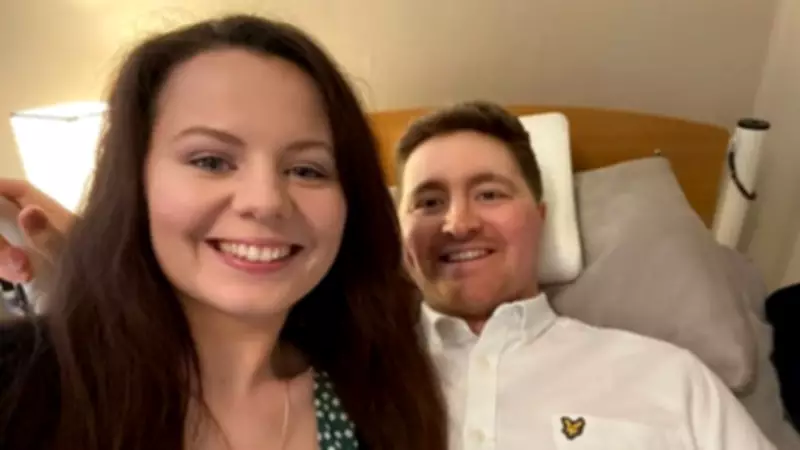
Family Transforms Grief into Hope with £34,000 Donation for Brain Tumour Research
When Harry Martin passed away from a glioblastoma brain tumour on May 16, 2021, at just 25 years old, his family and wife Sinead Nolan-Martin were left heartbroken. Married only two months earlier in a lockdown ceremony on March 25, 2021, Harry and Sinead had been together since they were 15, having known each other since age 13. Today, they have channeled their sorrow into action, donating £34,000 from Harry's Healing Fund to the Scottish Brain Tumour Research Centre of Excellence to support critical research into brain tumours.
A Legacy of Love and Resilience
Harry's mother, Eileen Martin, described the wedding as a moment of "profound joy in the midst of an unimaginably difficult journey." Just weeks after the celebration, Harry died at home, surrounded by loved ones. The family's fundraising effort now stands as a lasting legacy, driven by a determination to prevent other families from enduring similar pain.
Sinead shared her perspective on the diagnosis, stating, "I had never even heard of a glioblastoma before Harry's diagnosis. Now it has opened up a whole new world of awareness for us. Brain tumours are so underfunded and more awareness is desperately needed. You have a better chance of surviving breast cancer because treatments have evolved but, for brain tumours, nothing has changed. The only options in the UK are surgery, radiotherapy and chemotherapy."

Harry's Inspiring Journey and Military Ambitions
Before his diagnosis, Harry had set his sights on joining the British Army after being made redundant from Honda. He worked tirelessly on his mathematics, passed his Army entrance exams with outstanding results, and chose to train as an aircraft technician. Despite his diagnosis cutting short his military career, Harry remained proud of earning his place and embodied Army values of courage and determination throughout his battle.
Permanent Tribute on the Wall of Hope
Recently, the family placed 12 tiles in memory of Harry on the Wall of Hope at the Scottish Centre, each featuring a quote from his journals and Facebook posts. Sinead explained, "He wanted the lessons he learned about life to be his gift and legacy to others. Now, we find his words our inspiration to live by and hope that by sharing them, they'll provide comfort and inspiration to others as Harry would have wanted."
Research and Funding for Glioblastoma
The Scottish Brain Tumour Research Centre of Excellence is a collaboration between Brain Tumour Research and Beatson Cancer Charity, with researchers at the University of Edinburgh and the University of Glasgow aiming to identify new treatments for glioblastoma. This deadly cancer has an average prognosis of as little as 12 months, and treatments have not changed in 20 years. Brain Tumour Research and Beatson Cancer Charity have invested £2.4 million over five years, with more than half raised and a public appeal ongoing.
Sinead emphasized the urgency, saying, "Harry was the bravest person I know. Even when he understood exactly how serious his diagnosis was, he faced it with courage, honesty, and an incredible sense of purpose. Laying the tiles on the Wall of Hope in his memory means everything to us. It's a permanent reminder that Harry was here, that he mattered, and that his legacy is helping to create change."
The Broader Impact of Brain Tumours
Brain tumours kill more children and adults under 40 than any other cancer, with one in three people knowing someone affected. March is Brain Tumour Awareness Month, during which over 1,000 people in the UK will be diagnosed. Brain Tumour Research is calling for action through events like Wear A Hat Day on March 27.
Sinead's personal experience extends beyond Harry; a college friend died at 26 after nine months of treatment, and her grandfather passed away six weeks after a glioblastoma diagnosis. She urged, "More research into brain tumours is desperately needed. Until you are faced with this diagnosis, you don't realise how limited the treatment options are. We need greater awareness, more funding, and continued investment in research."

Family Reflections and Charity Mission
Eileen Martin reflected, "Harry had such an old head on young shoulders. He prepared us in ways no parent should ever have to experience. As a family, raising this money has given us purpose through our grief. We are so proud of the legacy he leaves behind."
Letty Greenfield, community fundraising manager at Brain Tumour Research, added, "Harry's determination to create meaning from his diagnosis is extraordinary. The £34,000 raised in his memory will directly support pioneering research. Stories like Harry's remind us that behind every statistic is a life tragically lost, and that is why urgent investment in research is so vital."
Brain Tumour Research campaigns for increased government and charity funding, aiming for a national annual spend of £35 million to improve survival rates in line with other cancers. This donation marks a significant step in honouring Harry's memory and advancing the fight against brain tumours.