Historic Friends Institute Closes, Leaving Birmingham Community Devastated
The poignant notes of Amazing Grace echoed from a piano in one of the last usable rooms at the Friends Institute on Moseley Road this week. An arts therapy group that has found solace there for years practiced for their final performance in the old room adorned with community paintings, ahead of the building's closure on Thursday, April 2.
They are among numerous local groups who will lose access to the historic building, originally gifted by Richard Cadbury to the people of Birmingham in the 1980s. The impending shutdown has sparked deep upset among those who rely on it most.
A Building Steeped in History and Community Use
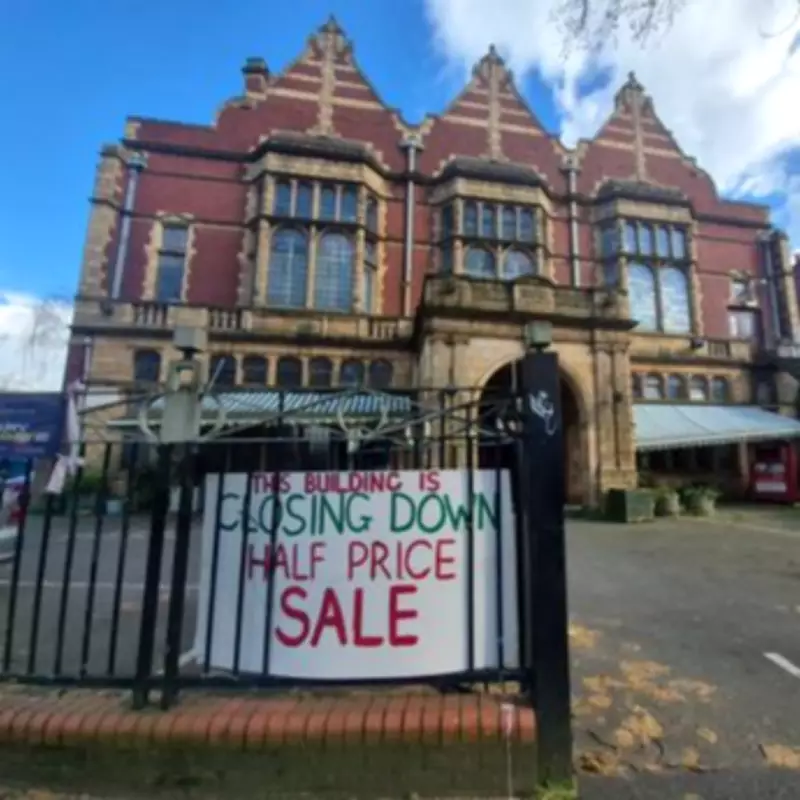
Birmingham City Council, acting as custodian of the listed building, is set to lock the doors at approximately 3pm on Thursday. This action will affect piano players, artists, participants in poetry and writing groups seeking friendship and support, and even those simply needing affordable cutlery from the charity shop that helps fund the music room.

Located at the junction of Sparkhill and Highgate, the once-resplendent building has hosted countless community activities over decades. These have included Boys Brigade meetings, football sessions, dance classes, parties, and knitting circles.
However, the building now shows severe signs of decay. The large stage in the performance theatre, marked by a hand-painted sign, is covered in rubble from a crumbling ceiling, rendering it unusable. Regular users report that an old roof leak and non-functional heating have warped the parquet floor, with a section of the ceiling requiring propping up for safety.
From Quaker Meeting House to Community Lifeline
The Friends Institute was constructed in 1897 under the patronage of Richard Cadbury, whose bust now rests on the floor under a microwave for 'safekeeping'. It initially served as a Quaker meeting house, later transforming into a coffee shop and hire space. Vintage hand-painted signs reveal it once housed the Birmingham Theatre School, Shakespeare in Education, Loudmouth Theatre Co, Banner Theatre Co, Women and Theatre Co, and Full Potential Arts.
Worn stone stairs and wooden bannisters, with paint and plaster flaking away, bear witness to countless footsteps over the years. In the old cafe area, racks of clothing and household items—bedsheets, baby walkers, cutlery, and warm clothes—are sold for pennies in a charity shop.
This organized chaos is set against a backdrop of a kitchen showing significant decay, with crumbling concrete around old cooker hoods, yet also featuring beautifully hand-painted nature scenes intended to uplift visitors.
The Heartbreaking Impact on Regular Visitors
Jayne Baggett, 60, who runs both the charity shop and the Moseley Road Community Conservation Trust, established in 2018 to prevent immediate sale of the building, is now delivering the painful news of closure to the community.
"It's been really difficult," she admits. "It really struck me when I told Isabella and Maria, and Isabella said she was devastated. This is not just a charity shop; it's much more than that—it's a community space."
Isabella Chiaradia, 52, has been bringing her sister Maria to craft sessions and shopping trips to help "get her out of the house" and foster new friendships. The closure represents a significant loss for them and many others.
A Community Space Filling Critical Gaps
Jayne, a former community-based researcher, emphasizes the vital role such spaces play. "Something that came up time and time again was missing community spaces. How important it is to people to have places to go that cost very little, where they can talk with each other, share time with each other," she explains.
She recounts how residents would ask for help with gas bills, school letters, housing issues, or bin problems. "I thought, hang on, where are the local services if people are so desperate they're asking me, a total stranger, to help them out?"

Her vision for the Friends Institute was to provide a hub where people could access resources, advice, and connections to relevant organizations. "What really struck me... was that thanks to the support of the community, I've been able to provide something of the space that I hoped people would get from formal services and local authorities that are supposed to provide these things—and they don't!"
With frustrated tears, she adds, "They get the funding. And we're doing it! Out of our love. Out of our feeling that everybody is equal and everyone is worthy of respect and consideration."
A Glimmer of Hope Amidst Closure
Despite the imminent shutdown, Jayne holds onto hope. "Absolutely!" she asserts. "I think that's part of it coming on so quickly; many of us still can't believe it's going to happen. It's such a vital space, this building is important to so many people, and it has so much potential."
She appeals for expertise, management support, or funding to develop a future plan. "We want to find people within the local authority who are willing to find a way forward instead of just giving up on it."
In the short term, activities are temporarily moving to Moseley Arts School to minimize disruption. However, the charity shop has no immediate relocation plan. "I don't want to move it!" Jayne insists. "The point was to keep the building open and enable people to participate in its future."
The charity shop will continue its half-price closing down sale until 3pm on Thursday, April 2, at the Friends Institute, 220 Moseley Road, B12 0DG, welcoming final support from the community.