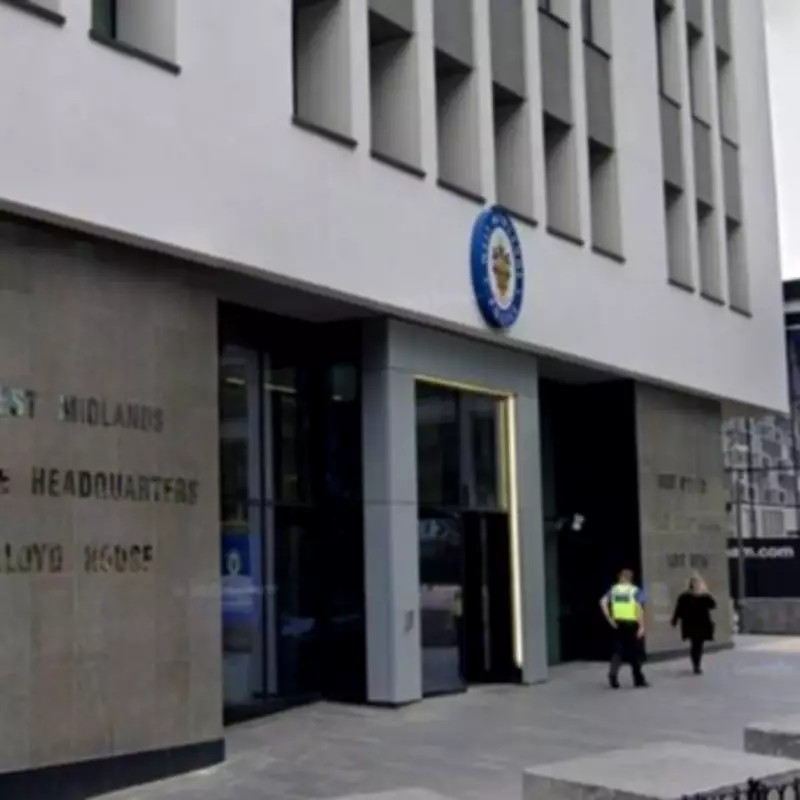
West Midlands Police have taken the drastic step of immediately disabling Microsoft Copilot across the force following a major controversy where artificial intelligence was used to help ban Israeli football fans from a match in Birmingham. The decision has drawn sharp criticism and comparisons to science fiction policing.
AI Evidence Leads to Controversial Football Ban
The controversy centres on a decision by the Birmingham Safety Advisory Group to prevent Maccabi Tel Aviv supporters from attending a Europa League fixture against Aston Villa last November. Incorrect evidence gathered from Microsoft Copilot was reportedly used as part of that decision-making process, leading to what officials have called a significant failure.
West Midlands Police and Crime Commissioner Simon Foster expressed his shock at how the artificial intelligence was deployed, stating he was particularly alarmed that its use wasn't properly managed or regulated. The fallout from the incident has been substantial, contributing to the retirement of former chief constable Craig Guildford, who had previously denied the AI's involvement before admitting to misleading MPs about its use.

Minority Report Comparisons in Police Panel
At a recent West Midlands Police and Crime Panel meeting, councillors pressed Mr Foster and acting chief constable Scott Green on the AI failure. One councillor explicitly compared the situation to the 2002 Tom Cruise film Minority Report, which depicts a future where police use psychic technology to arrest people before they commit crimes.
Councillor Jilly Bermingham raised serious concerns about the incident, asking for assurances that such problems wouldn't recur. "The most important lesson going forward is the use of AI which was found to be a key failure within the decision," she stated, questioning how the force would ensure AI remains safe from external manipulation and inaccuracies.
Force Takes Immediate Action on AI Systems
In response to the controversy, acting chief constable Scott Green has disabled Microsoft Copilot throughout West Midlands Police. Mr Foster confirmed this decisive action, explaining that the system won't be reactivated until police leadership is satisfied it can be properly regulated and managed.
"I suspect it will not be turned back on until the acting chief constable is satisfied it can be relied on and properly regulated and managed," Mr Foster told the panel. He emphasised that while artificial intelligence represents a positive development for modern policing, it must be deployed lawfully, ethically and responsibly.
The Police and Crime Commissioner has established an ethics panel within his office specifically to examine matters arising from AI use in policing. This panel will consider how to prevent similar incidents in future, particularly ensuring AI-generated information undergoes proper verification through established intelligence management structures.
Government Backs AI Despite Controversy
Despite the current controversy, Mr Foster noted that the Government's recent white paper clearly positions artificial intelligence as the future of policing in many respects. However, he stressed that robust management frameworks are essential to prevent inaccuracies and what he termed "hallucinations" in AI systems.
Panel chair Councillor Suky Samra echoed concerns about predictive policing technologies, referencing the Minority Report comparison directly. "We're delving into AI predicting future crime, which in this particular incident it was used for," she observed, asking Mr Foster about his reaction to learning how the technology had been deployed.
Mr Foster reiterated his shock, particularly that the AI-generated information wasn't properly cross-checked or filtered through normal intelligence management procedures established under Operation Parkmill. Acting chief constable Green clarified that AI isn't being widely used across the force currently, suggesting this incident represents a cautionary example rather than standard practice.

The controversy highlights growing tensions between technological advancement and traditional policing methods, with West Midlands Police now forced to reconsider how artificial intelligence integrates with their decision-making processes while maintaining public trust and legal compliance.