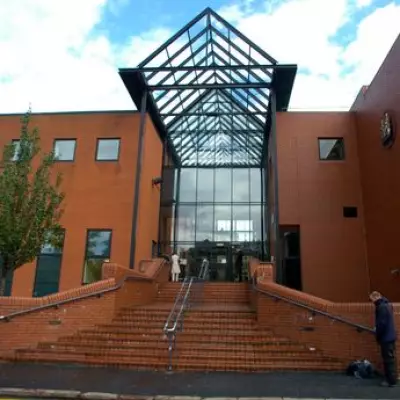
Stechford Masjid, located on Albert Road in Birmingham, has officially published its comprehensive Ramadan timetable for the year 2026. The schedule meticulously outlines the prayer times and meal arrangements for the holy month of fasting, providing essential guidance for the local Muslim community.
Key Dates and Predictions for Ramadan 1447
The mosque has aligned its timetable with the Umm al-Qura Calendar of Saudi Arabia, which forecasts that Ramadan fasting will commence on February 18, 2026. According to this prediction, the fasting period will continue until Eid al-Fitr, anticipated to fall on March 20, 2026, marking the first day of the following Islamic month, Shawwal.
It is important to note that all Islamic dates are subject to the actual sighting of the moon near the time. This means the start of Ramadan could shift by a day or two, depending on verified observations. The timetable carries a clear disclaimer to reflect this variability, emphasising the traditional reliance on lunar sightings.

Understanding the Fasting Routine
During Ramadan, fasting begins after an early morning meal known as suhoor or sehri, which concludes approximately one hour before sunrise. The fast is then maintained throughout the day until sunset, when it is broken with the evening meal called iftar. This daily cycle forms the core of the Ramadan observance, combining spiritual reflection with physical discipline.
Astronomical Calculations and Moon Sighting Controversies
The year 2026 corresponds to 1447 in the Islamic calendar, a lunar system that advances by 10 or 11 days each year. This discrepancy occurs because the lunar calendar does not align with the solar-based Gregorian calendar used in the Western world.
In contrast to traditional moon sighting methods, the Fiqh Council of North America relies solely on astronomical calculations to set dates in advance. This approach uses criteria established by Dr Yusuf Al-Qaradawi, head of the European Council for Fatwa and Research in Dublin, Ireland. The council determines whether the moon will be visible, which would indicate the new lunar month starts the next day; otherwise, it begins the day after.
Projected Start Dates Based on Astronomy
According to astronomical data, the new moon is expected on Tuesday, February 17, 2026, at 12:00 Universal Time. Calculations suggest the moon will not be visible on that day as it remains hidden below the horizon. Consequently, the Fiqh Council has already decided that the first day of Ramadan 1447 will be Thursday, February 19, 2026, with Tarawih prayers commencing on Wednesday night.
For Eid al-Fitr, the astronomical new moon is projected for Thursday, March 19, 2026, at 1:23 Universal Time. On this date, the moon is expected to be visible across North America, leading the council to set the first day of Shawwal and Eid al-Fitr on Friday, March 20, 2026.
Global Moon Sighting Perspectives
More broadly, it is thought that the first slim crescent of the new moon will not be visible anywhere in the world on February 17, 2026. This includes key regions such as Saudi Arabia, Morocco, the United Kingdom, Bangladesh, Pakistan, Indonesia, Egypt, and Turkey. This widespread lack of visibility casts doubt on a February 18 start date and suggests Ramadan is more likely to begin on February 19 instead.
However, it remains possible that Saudi Arabia could report a confirmed moon sighting on February 17 and adhere to its calendar's scheduled Ramadan start of February 18. This uncertainty highlights the ongoing debate between astronomical calculations and traditional sighting methods within the global Muslim community.
Varied Practices Among UK Islamic Organisations
In the United Kingdom, Islamic organisations follow diverse approaches. Some, like Green Lane Masjid in Birmingham, align with Saudi announcements, while others await news of British moon sightings. This diversity reflects the broader theological and cultural discussions surrounding the determination of Islamic dates.

Stechford Masjid's publication of the 2026 Ramadan timetable serves as a valuable resource for Birmingham's Muslim residents, offering clarity amidst the complexities of lunar calendar predictions. The mosque's efforts ensure that the community can prepare adequately for the spiritual and communal aspects of Ramadan, fostering unity and observance during this sacred time.