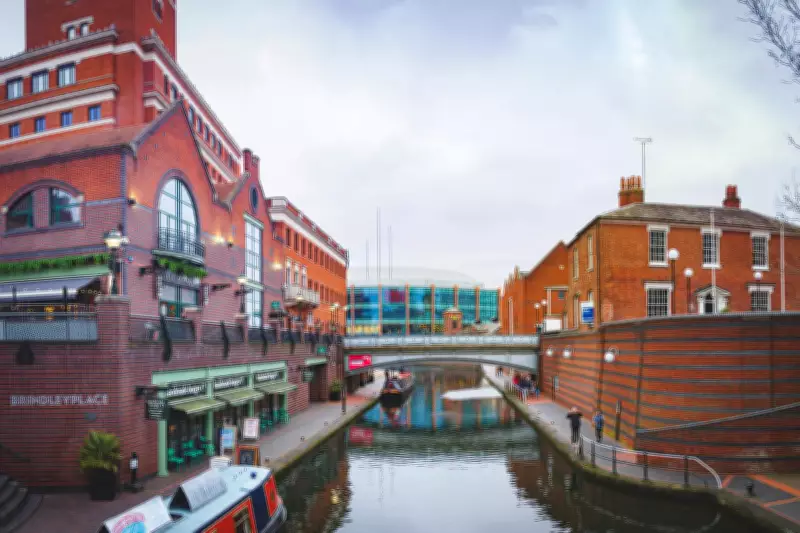
Reflecting on Birmingham's dramatic waterside revolution, Dr Steve McCabe delves into the often-overlooked history that lies beneath the city's iconic Brindleyplace development. The transformation of this area from industrial heartland to a bustling commercial and leisure hub mirrors changes seen in London's Docklands, yet Birmingham's story is uniquely tied to its intricate canal network.
The Canal System: Birmingham's Industrial Lifeline
While Birmingham lacks a river as strategically vital as the Thames, its canal system became utterly critical during the Industrial Revolution, earning the city its reputation as the 'workshop of the world'. These waterways once served as arteries of trade, transporting materials into the city and finished goods across Britain and beyond. However, with the rise of trains and motor vehicles, the canals fell into decline, leaving behind a landscape of abandoned warehouses and forgotten communities.
From Gas Street Basin to Broad Street: A Changing Landscape
In the 1970s, areas like Gas Street Basin were far from salubrious. This historic canal-side street, later featured as 'Heathbury Basin' in the soap opera Crossroads, has since been revitalised with trendy bars and restaurants. The broader transformation began in the mid-1980s with the decision to build the International Convention Centre (ICC) on Broad Street. Birmingham City Council's commitment to this £200 million project, though controversial at the time, sparked a frenzy of investment that reshaped the city's image.

The Forgotten Community and Hidden Bodies
Prior to redevelopment, the land now known as Brindleyplace was home to a local community that had existed since the completion of the Birmingham Canal in 1773. Housing was hastily built to accommodate workers from nearby workshops, warehouses, and factories, often in cramped and unsanitary conditions. As families moved to the suburbs in search of new opportunities, the community dwindled, and buildings like St Peter's Catholic Church, built in 1786, were decommissioned and demolished.
Notably, St Peter's had an adjoining cemetery for its congregation, many of whom were Italian immigrants working in the Jewellery Quarter. Over time, this cemetery was forgotten and covered over to create a playground for a primary school. When construction on the ICC commenced, excavation works uncovered bodies from this lost burial ground. Official records indicated 577 burials, but almost double that number were discovered, likely due to rapid interments during outbreaks of infectious diseases like plague or cholera.
A Personal Insight into the Secret Excavations
Dr McCabe reveals that he was among those who knew of the bodies, observing the excavation works from his office in Birmingham City Housing Department's Bush House in the late 1980s. The process of respectfully retrieving and reinterring the remains at Oscott Cemetery was intended to be secret but became an open secret among many in the city. This hidden chapter underscores the layers of history buried beneath Birmingham's modern facade.
Progress and Preservation: Balancing Regeneration with Heritage
The regeneration of Brindleyplace has undeniably transformed Birmingham, bringing new offices, apartments, and vibrant hospitality venues to the area. Gas Street is now vastly more pleasant than in the 1970s, and the ICC stands as a testament to the city's foresight. However, this progress has come at a cost, echoing the displacement seen in London's Docklands, where indigenous communities were often replaced by 'new money'.
As visitors enjoy pubs, clubs, and concerts in Brindleyplace, few are aware of the hard work and dedication of those who once lived and worked there, shaping Birmingham into the city it is today. While development has brought economic benefits, it serves as a reminder to honour the legacy of the past, ensuring that the stories of forgotten communities are not lost to time.