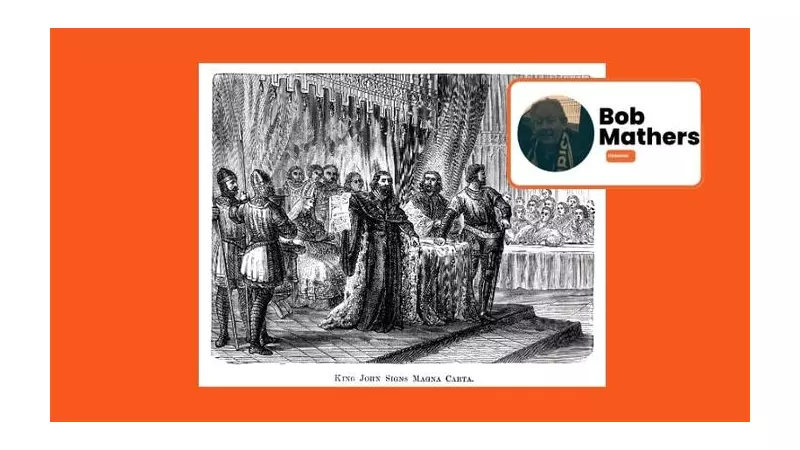
In the turbulent year of 1216, Bristol Castle emerged as an unexpected sanctuary for one of history's most important documents - the Magna Carta. While the original charter had been torn up just months after its creation, this medieval fortress provided the secure environment needed to resurrect the groundbreaking agreement that would ultimately shape constitutional law worldwide.
The Original Charter's Dramatic Failure
The story begins at Runnymede in July 1215, where King John reluctantly sealed the first Magna Carta under pressure from rebellious barons. This historic document represented a revolutionary step toward establishing that no individual, regardless of power, should be above the law. It guaranteed liberties to all free men while carefully preserving the king's feudal superiority.
However, the agreement proved short-lived. Within days, the barons realised that nothing had substantially changed. The charter was annulled, fighting resumed, and the document seemed destined for history's dustbin. The royal resistance centred strongly in Bristol, where King John felt most secure due to his personal connections to the area.

Bristol's Strategic Importance
John's relationship with Bristol began in 1189 when he married Isabella, heir of the 2nd Duke of Gloucester. This union brought him valuable estates near the town, along with lands across Cornwall, Devon, Somerset and Dorset. During the baronial revolt, John visited Bristol Castle twice while leading his mercenary army through the west country, rallying support at various strongholds including Hereford, Tewksbury, Leominster, Worcester and Gloucester.
The king's campaign ultimately proved fatal. In early October 1216, he contracted dysentery at Lynn and died at Newark Castle on October 18, leaving a nine-year-old heir and a kingdom divided by rebellion.
The Revival at Bristol Castle
With the political situation remaining dangerously unstable, William Marshal, Earl of Pembroke and often called 'the greatest knight' of his era, took charge as regent for the young Henry III. Displaying remarkable political wisdom, Marshal rode with the royal party to Bristol Castle, where he made a crucial decision that would change history.
On November 12, 1216, Magna Carta was reissued in Henry III's name at Bristol Castle. This revised version retained many original clauses while removing contentious elements, such as the barons' right to make war on an errant king. It became a document of reconciliation between the rebels and their new, blameless child-king.
What gave the Bristol Magna Carta immediate authority was the presence of Cardinal Guala Bicchieri, the new papal nuncio. While Pope Innocent III had annulled the Runnymede charter, Cardinal Bicchieri now physically attended the Bristol sealing as a principal signatory alongside William Marshal.
Lasting Historical Significance
This Bristol revival, occurring some sixteen months after the original charter's failure, ensured that Magna Carta entered the history books for all time. Away from rebel-held London's ferment, Bristol had provided the breathing space necessary for cool heads to de-escalate the constitutional crisis.
The document evolved from a temporary solution to an immediate problem into a powerful statement of intent about what the law of the land should be for everyone. It formed the basis for constitutions worldwide and remains a cornerstone of modern legal systems.
Local historian Bob Mathers, who is currently writing a book about Bristol's medieval history, emphasises the city's crucial role in this pivotal moment. His forthcoming work, 'Mediaeval Bristol: A Short History (1066-1497)', will explore how Bristol became England's most important port in the later Middle Ages and how key figures like William Marshal shaped the city we know today.