Archaeologists in South Wales have made a historic breakthrough, uncovering the remains of a Roman villa described as a profoundly important 'missing piece' in the nation's story.
A Discovery of 'Profound Importance'
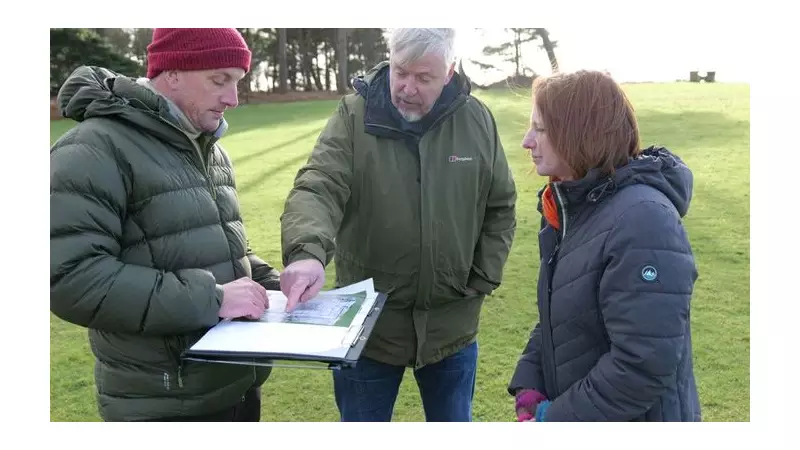
The significant find was made in Margam by the collaborative ArchaeoMargam project. This initiative brings together Swansea University’s Centre for Heritage Research and Training (CHART), Neath Port Talbot Council, and Margam Abbey Church. Funded by the council's Heritage, Culture, Tourism and Events strand of the UK Government’s Shared Prosperity Fund, the project aimed to highlight Margam's pre-industrial heritage.
Geophysical surveys conducted by the Llandough-based firm Terradat revealed the clear footprint of a Roman villa complex. Experts state its scale and level of preservation are unmatched in the region.

Shining a Light on an Elusive Era
Dr Alex Langlands, Associate Professor and Co-Director of CHART, who leads the project, expressed his amazement. "This is an amazing discovery," he said. "We always thought that we’d find something dating to the Romano-British period, but we never dreamed it would be so clearly articulated."
He emphasised that while Margam is famed for Bronze Age, Iron Age, Medieval, and Post-Medieval heritage, the Romano-British period was a virtual blank. "This is the missing piece of the puzzle," Dr Langlands stated, noting the villa's potential to reveal crucial information about the first millennium AD in South Wales.
The villa sits within a defended enclosure measuring roughly 43 by 55 metres. This could be a remnant of an earlier Iron Age settlement or a response to late-Roman instability. To the south-east lies a substantial aisled building, possibly used for agricultural storage or as a meeting hall in the post-Roman era.
Community Engagement and Future Revelations
Beyond the villa, the ArchaeoMargam project has actively involved the community. Excavations near the Abbey Church have engaged over 900 people, including local school pupils, the Young Archaeologists' Club, volunteers, and college students.
Councillor Cen Phillips, Neath Port Talbot Council’s Cabinet Member for Nature, Tourism and Wellbeing, said the find underlined the value of their heritage strategy. "This spectacular find underlines why we as a council set up our Heritage, Culture, Tourism and Events Fund," he commented.
The project's findings, including detailed updates on the Roman villa, will be shared at a free open day at Margam Abbey Church on Saturday, January 17. Professor Helen Griffiths of Swansea University added that the partnership was "delivering tangible cultural benefits to the communities we serve."
Dr Langlands concluded that the discovery cements Margam's status, potentially the namesake for Glamorgan, as one of Wales's most important historic power centres, positioned at the gateway between western uplands and the fertile Vale to the east.