Birmingham's Exempt Accommodation Sector: A £300 Million Annual Industry Under Scrutiny
An exclusive investigation has uncovered the staggering financial scale of Birmingham's supported exempt accommodation sector, described by critics as a 'cash cow' and a state-sanctioned scandal that has permanently altered the character of city neighbourhoods. New evidence reveals how massive weekly payments of public money are fuelling a £300 million annual industry, with profound consequences for communities across England's second city.
The Financial Engine Behind Neighbourhood Transformation
BirminghamLive's latest probe into this troubling sector reveals how the city's largest provider, responsible for managing over 5,000 properties, successfully commands up to £400 per week in public funds for every vulnerable benefit claimant they house. While entirely legal, these substantial payouts have created a financial incentive system that campaigners argue is fundamentally reshaping residential areas, with particular concern about the conversion of family homes into shared HMO-style properties.
Currently, more than 32,000 individuals reside in exempt accommodation across Birmingham, predominantly in former family homes located within deprived areas. Many residents face significant challenges including mental health issues, vulnerability, or histories of addiction, often sharing accommodation with former prisoners and those in recovery programmes.

From Modest Beginnings to Multi-Million Pound Operations
The sector's explosive growth is dramatically illustrated by the trajectory of Reliance Social Housing CIC, Birmingham's dominant provider. From a modest operation with a turnover under £500,000 and just seven employees in 2019, the organisation recently reported a staggering £135 million turnover for 2024-25, with profits reaching £1.65 million. Remarkably, £94 million of this income originated directly from Birmingham City Council through exempt housing benefit payments.
Other significant players in the Birmingham market include Ash Shahada (£25.5 million in claims last year), Concept Housing (£37.7 million), Sustain (£13.3 million), and Windrush Alliance. A newcomer, Dawson Housing, has rapidly established a £7 million business within just twelve months of operation.
Regulatory Concerns and Compliance Issues
Despite their financial scale, multiple providers face ongoing regulatory challenges. Reliance, Ash Shahada, Concept, and Windrush Alliance all remain under non-compliance notices from the Regulator for Social Housing, primarily concerning financial management and governance standards. Notably, none of these organisations have achieved the minimum requirements under Birmingham City Council's voluntary Quality Standards scheme, launched in 2023 to establish approved provider benchmarks.
The sector theoretically serves a vital social purpose, providing accommodation for individuals who might otherwise struggle to secure housing, including recent prisoners, people in recovery, those with mental health challenges, individuals with disabilities including autism, young care leavers, and refugees. Claims undergo assessment by Birmingham City Council on behalf of the Department for Work and Pensions before payments are authorised, with the system intended to prevent street homelessness and serve as temporary 'halfway house' accommodation towards independence.
Winson Green: A Microcosm of Systemic Issues
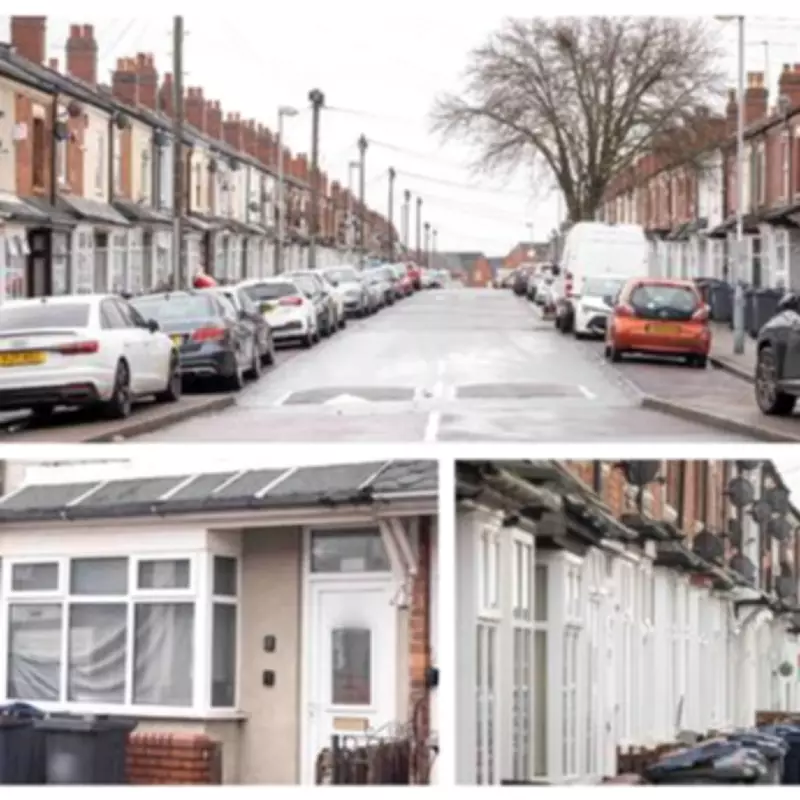
A detailed examination of three streets in Winson Green's Soho and Jewellery Quarter ward, a recognised hotspot for exempt accommodation, reveals the sector's local impact. Markby Road, Preston Road, and Willes Road have undergone dramatic transformation in recent years, shifting from family-friendly neighbourhoods to areas disproportionately populated with HMOs and exempt properties.
Residents report feeling unsafe venturing outside after dark, citing concerns about drug dealing and violence. Of approximately 450 houses across these three streets, at least 120 operate as licensed HMOs, accommodating private tenants, DSS claimants, city workers, NHS staff, students, and prison employees. Standard benefit claims for shared HMO rooms are capped at £341.58 monthly, approximately £85 weekly.

However, this cap disappears entirely for individuals deemed to require low-level 'support and care' within the exempt sector. Our investigation identified 37 exempt properties across the same three streets, housing 101 individuals requiring support. Analysis of Freedom of Information data reveals these claimants generate housing benefit payments totalling £29,641 weekly, equivalent to more than £1.54 million annually.
Stark Payment Discrepancies Raise Questions
The investigation uncovered significant variations in payments received by different providers, without clear justification. In the Winson Green sample area, Reliance consistently received higher payments per claimant than any other organisation:
- Reliance Social Housing: 11 properties, 30 claimants, average claim £395 weekly, highest claim £417.83
- Ash Shahada: 11 properties, 28 claimants, all claims fixed at £253.69
- Concept Housing: 2 properties, 5 claimants, all claims £230.79
- Windrush Alliance: 6 properties, 13 claimants, average claim £290 weekly, highest claim £293.85
- Dawson Housing: 1 property, 3 claims, all fixed at £301.68
Other providers in the area included Heartsease House CIC, Sahara Housing Association, NCE Ltd, Midland Supporting Shelter CIC, and Aspire, with claims ranging from £169.53 to £319.79 weekly.
Provider Response and Justification
A Reliance spokesperson defended their payment levels, stating that Birmingham has become a focal point for the sector because 'unmet national demand is being directed to the city.' They emphasised the importance of distinguishing between registered and non-registered providers, noting that different regulatory frameworks and government subsidy rules apply to each category.
'Local authorities face materially different levels of financial risk depending on provider status, which directly influences how rent levels undergo scrutiny and approval,' the spokesperson explained. 'Reliance assesses rent on a scheme-by-scheme basis through established internal processes, with rent levels subsequently reviewed and approved by the local authority.'
The company confirmed ongoing positive engagement with the Regulator of Social Housing regarding its regulatory status and collaboration with Birmingham City Council's exempt accommodation team on inspections, safeguarding measures, tenant feedback, and serious incident reporting. They also highlighted expansion of work supporting residents' transition to mainstream housing and return to their home areas.
Council Action and Acknowledgement of Limitations
Birmingham City Council outlined its response to sector challenges, describing a specialist multi-disciplinary team that investigates concerns about substandard practice in supported exempt accommodation. This team has reportedly strengthened support provision, tackled antisocial behaviour and crime, improved property standards, and saved taxpayers £8.7 million by refusing enhanced Housing Benefit claims where care, support, or supervision hasn't been adequately evidenced.
Inspections assess property conditions, support quality, management of antisocial behaviour and crime, and potential planning breaches, with findings directly informing Housing Benefit review processes. The council noted that the Department for Work and Pensions recently conducted a performance review of Birmingham's housing benefit allocation for supported exempt accommodation and has since approached the benefits service to share identified good practice with other local authorities.
However, council representatives acknowledged that existing powers remain insufficient. 'Additional powers are needed to prevent poor practice and raise standards in Birmingham,' they stated. Regarding Reliance's higher rent levels, the council explained that rent assessments must be broken down comprehensively, with some claims subject to renegotiation.
'If total eligible rent and service charge is comparable to similar accommodation providing similar service, this would be classified as acceptable for Housing Benefit calculation,' a council representative explained. 'If deemed higher than comparable properties of the same type, rent levels will be restricted to comparable levels. We engage landlords when restrictions may apply and renegotiate rent levels charged to tenants.'
Political Response and Growing Pressure for Reform
City councillors are now urging an internal audit of Birmingham City Council's housing benefits service to investigate potential evidence of providers or agents exploiting what campaigners describe as a 'lax' system. Local campaigners advocate for a broader probe involving specialist auditors to 'track the money' and determine whether public funds are being misused.
Independent MP Ayoub Khan, representing Birmingham Perry Barr, has secured an urgent parliamentary debate addressing these concerns. In response to these findings, BirminghamLive has relaunched its campaign demanding urgent review of what it describes as a 'broken system' and closure of existing loopholes.
The investigation raises fundamental questions about why Birmingham remains the national hotspot for exempt accommodation, responsible for almost half of all exempt claims across the country. As the sector continues to expand, with clear connections identified by West Midlands Police to organised crime, money laundering, fraud, and drug dealing, pressure mounts for comprehensive reform to ensure vulnerable residents receive appropriate support while protecting communities and public funds.