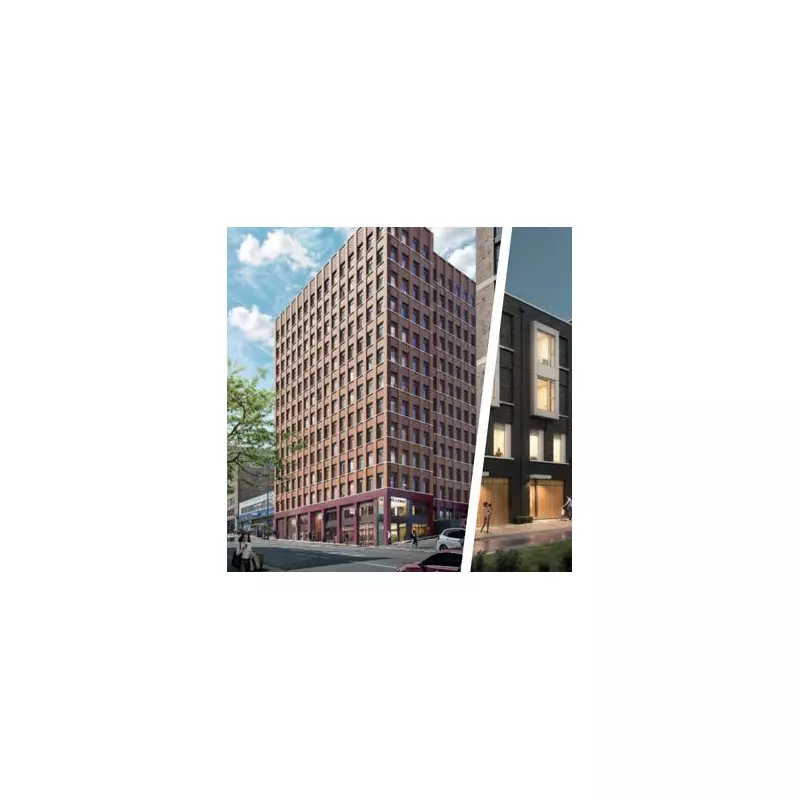
Historic Birmingham Factory Site Set for Major Residential Transformation
Birmingham City Council has granted full planning permission for a significant redevelopment project that will see a former city centre factory converted into hundreds of new homes. The ambitious scheme at 55 Holloway Head, known historically as Lee Bank House, represents a major step forward in addressing the city's pressing housing needs while breathing new life into a disused industrial building.
From Industrial Workspace to Modern Living
The proposals involve adding five additional storeys to the existing structure, transforming the largely vacant building into a 12-storey residential development. Originally constructed in the 1950s as a "flatted factory" for industrial purposes, the building has seen various uses over decades including workshops, offices and training facilities before falling into disuse.
The approved plans will create 215 modern apartments alongside nine townhouses, making a substantial contribution to Birmingham's housing stock. This mixed-use approach combines high-density apartment living with the more traditional townhouse format rarely seen in city centre developments.

Addressing Birmingham's Housing Crisis
During the planning committee meeting, Councillor Lee Marsham, who chairs the committee, highlighted the development's potential to help alleviate Birmingham's severe housing pressures. "What's particularly encouraging about this application is the inclusion of townhouses alongside apartments," he remarked. "It's refreshing to see this type of housing being brought into the city centre."
The councillor directly addressed the city's housing challenges, noting: "With over 25,000 households currently on Birmingham's social housing waiting list, and numerous families trapped in temporary accommodation, every new home makes a difference. If this development helps just one family escape those difficult conditions, it represents meaningful progress."
Affordable Housing Contribution
A key element of the approved scheme involves a substantial financial contribution toward affordable housing provision. While the development itself won't include on-site affordable units, the developers will provide £875,000 specifically for off-site affordable housing.
Council planning documents explain that independent assessments determined a six per cent affordable housing requirement for the site. Rather than incorporating affordable units within the development itself, the financial equivalent will be directed toward purchasing market housing elsewhere to accommodate those on the council's housing register.
Multiple Community Benefits
Council officers identified several additional benefits beyond the immediate housing provision. Their report highlighted expected improvements to the local streetscape, enhanced biodiversity measures, and the creation of a "distinctive place" that aligns with Birmingham's broader regeneration ambitions.
The development represents a significant urban regeneration opportunity, transforming a disused industrial site into vibrant residential space while contributing to the city's housing targets. The planning committee ultimately voted unanimously to approve the proposals, recognising both the quality of the design and the important contribution to addressing Birmingham's housing shortage.
This approval marks another step in Birmingham's ongoing transformation, repurposing historic industrial buildings for contemporary needs while tackling one of the city's most pressing social challenges through strategic housing development.