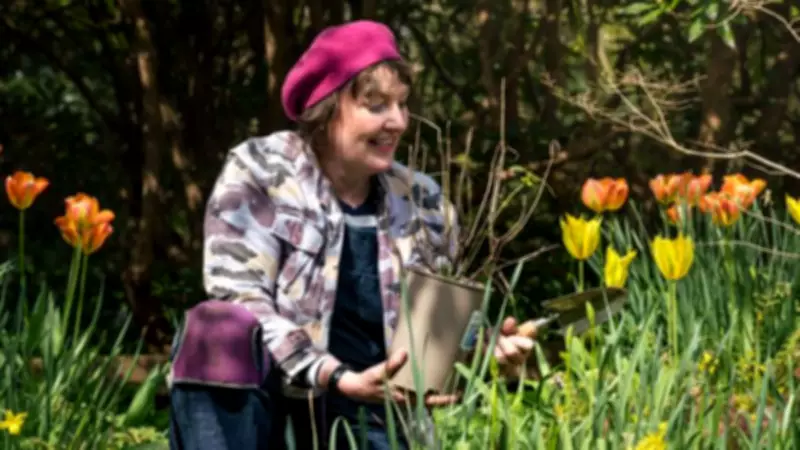
Top Spring Planting Tips from Garden Designer Ann-Marie Powell
Spring is just around the corner, and plants will soon be bursting into life. To bring some pizzazz to your garden, it's essential to carefully choose your plants and consider where to place them. Garden designer, television presenter, and author Ann-Marie Powell offers expert advice from her new book, A Year of Colour, to help you create a vibrant spring display.
1. Anemones: The Jolly Spring Welcome
Ann-Marie Powell recommends placing lots of pots by your back door as you come out of winter, so you can see them straight away, which will entice you outside. Her top pick is the sapphire anemone 'Mr Fokker'. "They are just so jolly and when they start coming out of the ground they are a bit like meerkats, where their heads are slightly nodding and their blooms are not fully open," she says. These flowers need a little sun to come out in all their glory and are ideal pot partners with daffodils, Muscari (grape hyacinths), and pansies. They also work brilliantly at the front of borders. "You wouldn't believe that a flower as glamorous and beautiful as this comes from a wizened old bulb," Powell notes, adding that their ferny foliage is pretty, and their seedheads look like silky little purses that can help feed birds.
2. Iris Reticulata: Early Signs of Life
For early spring colour, Powell loves Iris 'Pixie' and 'Angela', a paler blue with a purple glow and an orange blotch. "If you plant those together, you have a gorgeous awakening that is jazzed up with the bright orange and pale blue, an unusual combination which just makes your heart sing," she explains. Irises are short-lived, so they should sit in the uppermost layer of a pot, filled with violas, with other bulbs like tulips tucked underneath to pop up later in the season.

3. Tulips: Perennial Colour for Impact
Powell recommends perennial tulips, which don't need lifting and will come back year after year. Her favourite is Tulipa 'Sonnet' because it goes with everything, featuring beautiful pinky purple elongated blooms with apricot and yellow flames at the edges. "It's like a stained glass window when it is caught in the light," she says. This allows mixing with deep plummy maroons and blacks or bright oranges. After their first year in pots, these perennials do better in borders due to more nutrients in the soil. In borders, she plants in clumps of 12 for a purposeful, impactful look, setting them back at least 2ft (60cm) from the front to allow perennials to cover spent tulip leaves later.
4. Amelanchier x Lamarckii: The Spring Tree
If you plant one tree in your garden, Powell suggests Amelanchier x lamarckii, especially in spring. The 'Ballerina' variety is smaller, suitable for reasonably small gardens. "In early spring you get these beautiful white/pink/peach flowers on the bare branches," she says. Planting them on either side of a pathway frames the garden view beautifully. They can be grown in pots but require more care with watering and feeding.
5. Fabulous Foliage: Adding Early Season Interest
At this time of year, when flowers are limited, foliage can provide colour and excitement. Powell highlights the rich red young leaves and stems of roses, combined with plants like Rodgersia for shady spots with tricky soil. "All the ferns are coming up so you have the lime greens of matteuccias and the fresh green crosiers of Polystichum 'Herrenhausen'," she notes. She recommends placing them in a semi-shady border, layered with roses and other perennials to keep the display going as the season progresses.
By following these tips, you can create a stunning spring garden full of colour and life, using Ann-Marie Powell's expert plant selections and placement strategies to enhance your outdoor space.