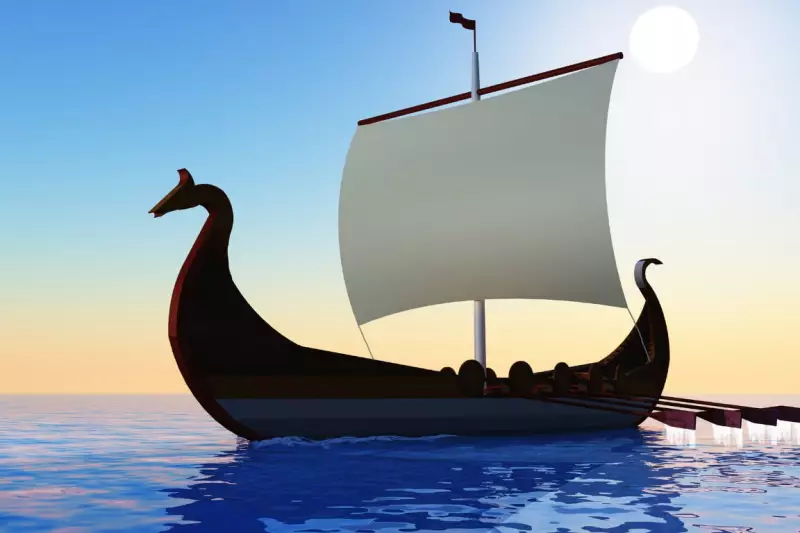
New discoveries are revealing that Viking ancestry is far more widespread across Britain than many people might assume. With the festive season approaching, a simple DNA kit has emerged as a popular gift, offering families the chance to uncover potential Norse roots hidden within their lineage.
The Enduring Legacy of Norse Settlers
The impact of the Vikings on Britain extends far beyond sagas and archaeological sites. For a significant portion of the population, their most personal legacy is written in DNA. From the coastal regions of Scotland and the Northern Isles to the historic Danelaw territories spanning the Midlands and eastern England, Norse settlers have profoundly influenced the genetic and cultural fabric of the nation.
This influence permeates everyday life, shaping language, local place names, and, crucially, many surnames still in use today. These names, often linked to warriors, crafts, farmsteads, and ancient settlements, serve as living clues to a family's past. It is this compelling link to personal history that has made DNA testing kits a sought-after Christmas present, promising a unique story of ancestral journeys that no conventional gift can match.

Key Surnames with Viking Origins
Experts highlight numerous surnames that point directly to Norse heritage. Here is a selection of notable examples:
Raven: Originating from the Old Norse 'Hrafn', this name carries deep mythological significance, associated with the god Odin and Norse warriors.
Gunn: Derived from 'gunnr', meaning battle, this surname is prevalent in northern Scotland and Orkney and is linked to an old Highland clan.
Harold/Harald: A name borne by leaders like King Harald Hardrada, it means "army ruler" and was common in Scandinavian and Anglo-Norse societies.
Ormsby: A toponymic name meaning "Ormr's farm". The suffix '-by', denoting a Viking farmstead, remains common in Yorkshire and Lincolnshire place names.
Thoresen/Thorburn: These names derive from Þórr, the god of thunder, clearly signalling Norse ancestry.
Haldane: From the Old Norse 'Halfdan', meaning "half Dane", this surname found in Scotland and northern England may indicate mixed Norse and native ancestry.
Croft: Coming from the Norse 'kropt', referring to a small enclosed field, this term became rooted in Scottish and northern English landscapes.
Tait: Common in the Borders and Northern Isles, it possibly comes from the Old Norse 'teitr', meaning glad or cheerful.
MacAulay: A Hebridean and Highland name from the Norse personal name Áleifr, suggesting descent from integrated Viking settlers.
Askew: Believed to come from 'askr' (ash tree) and 'skogr' (wood), referencing a settlement near woodland, found in Lancashire and Yorkshire.
Uncovering Your Own Viking Heritage
The process of tracing this heritage has been greatly simplified by modern genealogy services. Companies like MyHeritage DNA offer tools to build a free family tree or take a DNA test, with kits available for around £33. These tests can reveal genetic links to Scandinavia and historic Viking settlement areas.
For anyone curious about their surname or family history, this festive period presents an ideal opportunity to explore a potentially Viking past. The revelation of Norse ancestry could be the most personal and surprising gift of the season, connecting individuals directly to the dramatic history of the Norse settlers who helped shape Britain.