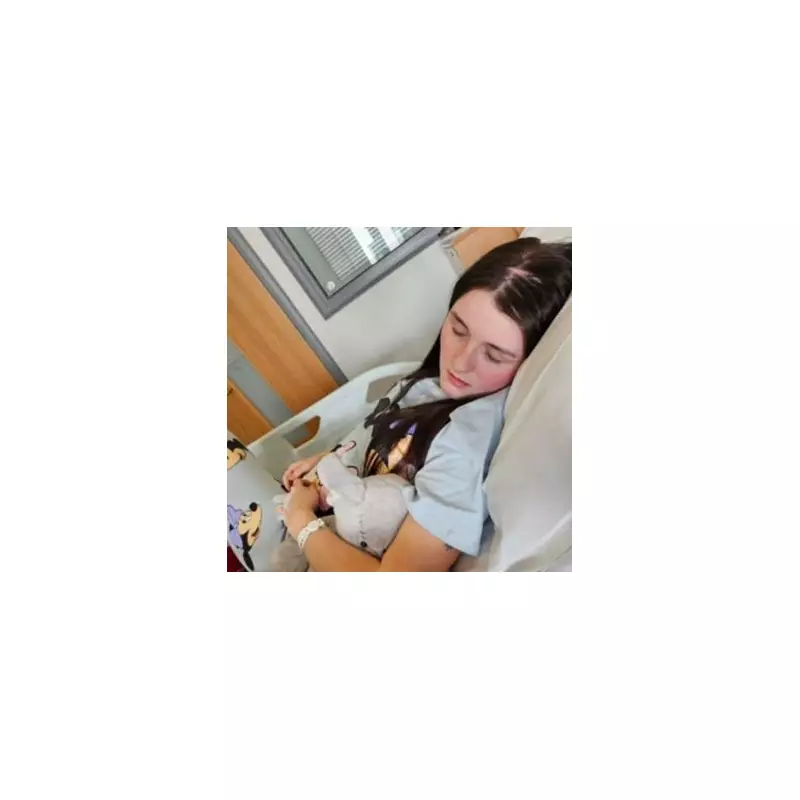
A teenager from Newcastle has revealed how her brain tumour symptoms were repeatedly dismissed by doctors as mere 'exam stress' until she collapsed and required emergency surgery.
Symptoms Dismissed as GCSE Pressure
Katie-Jo Bartlett, now 19, first began experiencing worrying symptoms during her GCSE exams in 2022. She reported seeing strange 'colours' on her exam papers, which made her feel nauseous. The retail worker also suffered from balance problems, walking unsteadily 'like a drunk person', and endured significant back pain.
Despite multiple visits to her GP, medical professionals consistently attributed her condition to the pressure of her studies. "Everyone thought it was GCSE stress and said I needed vitamins," Katie-Jo recalled.

Collapse Leads to Life-Saving Diagnosis
The situation reached a critical point in June 2022. The day after an exam, Katie-Jo accompanied her mother, Stacey, 43, to a doctor's appointment. While in the bathroom, she lost consciousness.
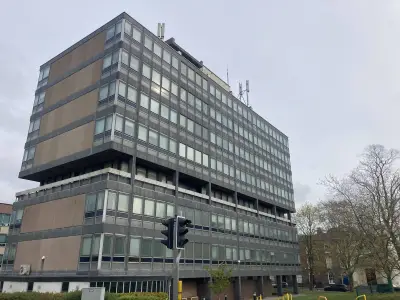
"Nobody could get in. Around 25 minutes later, I came back around, and there were lots of people around us," she said. Rushed by emergency ambulance to Northumbria Specialist Emergency Care Hospital, clinicians discovered she had severe hydrocephalus – a dangerous build-up of fluid on the brain.
She was transferred to the Royal Victoria Infirmary in Newcastle for urgent treatment to drain the fluid. Subsequent MRI and CT scans revealed the root cause: a brain tumour that was causing the fluid accumulation.
Living with a Permanent Condition
Katie-Jo underwent surgery which confirmed the tumour was benign (non-cancerous). However, due to its location, it could not be removed. On the night of her school prom, she had a permanent shunt fitted to drain fluid and relieve pressure on her brain.
"The doctors told me that if I didn't have that surgery there and then, I wouldn't be here," she stated. Following the diagnosis, Katie-Jo confessed she was 'terrified'. "Being so young, I didn't know what having a brain tumour meant for me."
She now lives with the tumour permanently and undergoes MRI scans every eight months to monitor it. She also manages fatigue as a side effect of the shunt. "I will live with the tumour forever... but it's stable. I will forever be grateful to the doctors for fixing me and for basically saving my life," she said.
Charity Stresses Importance of Awareness
Shannon Winslade, Head of Services at The Brain Tumour Charity, responded to the case: "We're really grateful to everyone who shares their - often heart-breaking - story to raise awareness of brain tumours."
The charity offers support via its Support and Information Line on 0808 800 0004.
NHS Warning Signs of a Brain Tumour
The NHS lists key symptoms that should prompt a visit to your GP:
- Headaches
- Seizures (fits)
- Persistent nausea, vomiting, and drowsiness
- Mental or behavioural changes
- Progressive weakness or paralysis on one side of the body
- Vision or speech problems
The health service advises that symptoms can sometimes develop very slowly, and it is essential to seek medical advice if you have concerns.