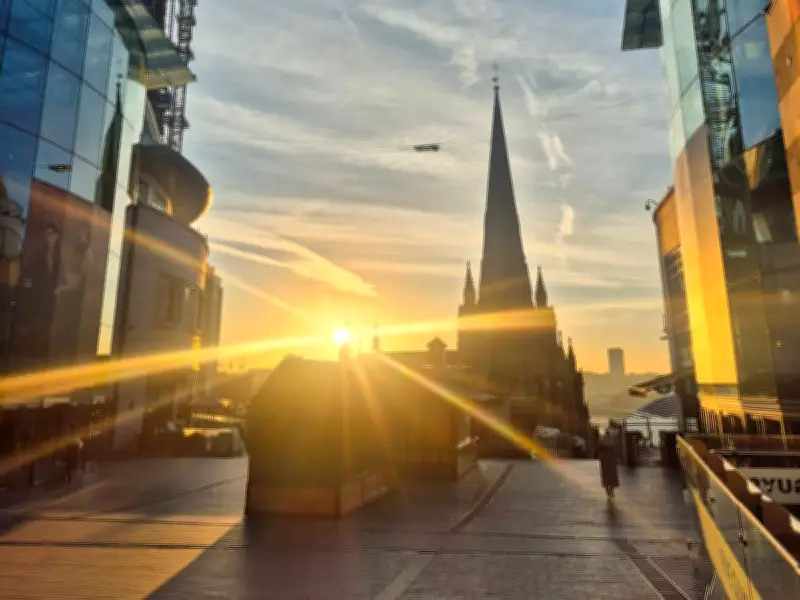
Nearly three decades have passed since construction workers broke ground on the new Bullring shopping centre in Birmingham, uncovering not only expected remains from St Martin's churchyard but also two unexpected skeletons buried in what was once a back garden.
A Blue Plaque and a Historian's Observation
A blue plaque on the wall of Waterstones in Birmingham commemorates William Hutton, the city's first historian, who lived on the site between 1771 and 1791. During his time there, he noted the rapid filling of St Martin's graveyard, writing: "Instead of the church burying the dead, the dead would have in time buried the church." Birmingham's population had surged from around 6,000 in the early 1700s to over 60,000 by Hutton's day.
Unexpected Discoveries During Construction
When work began on the Bullring in the late 1990s, archaeologists from the University of Birmingham expected to find and relocate bodies from St Martin's churchyard. They successfully removed 857 individuals. However, two additional bodies were found outside the consecrated ground, lying side by side in earth-cut graves with arms folded over their stomachs.

Mysterious Burials
Unlike typical Christian burials, only one body—a middle-aged woman—lay facing east. The other, a young adult male, had his head pointing north. Neither was found with a shroud pin, suggesting non-traditional burials. Author and archaeologist Simon Buteux described the placement as "fishy."
The bodies were reinterred at Quinton Cemetery along with other remains from the churchyard.
Theories and Speculation
The circumstances of their deaths and burials remain unknown. Theories include:
- A couple or mother and son
- Victims of clandestine killings
- Murderers denied proper funerals
- Individuals who committed adultery or suicide, considered unforgivable at the time
- Casualties of the Battle of Birmingham during the English Civil War on Easter Monday 1643, when Royalist and Parliamentarian forces clashed in Derrington (now Deritend)
The mystery endures as a poignant reminder of life and death in the area now occupied by the Bullring shops and car parks.